
Pakistan’s FY26-27 Budget Focuses on Export-Led Growth and Economic Stability
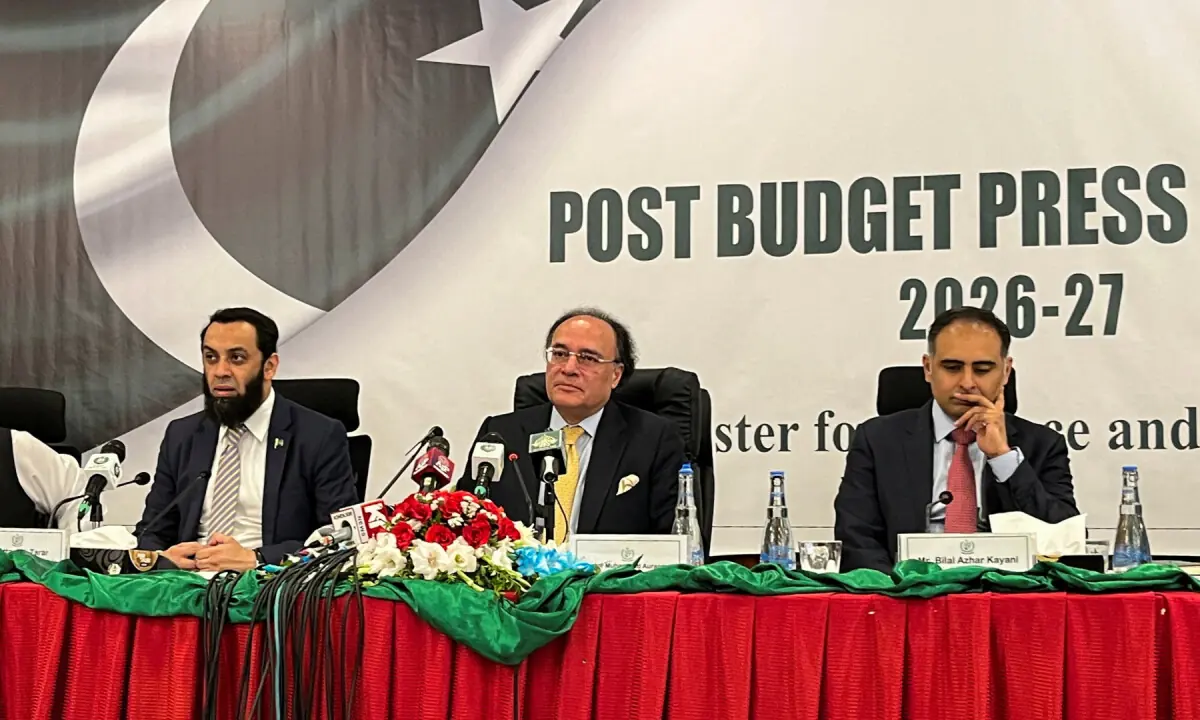
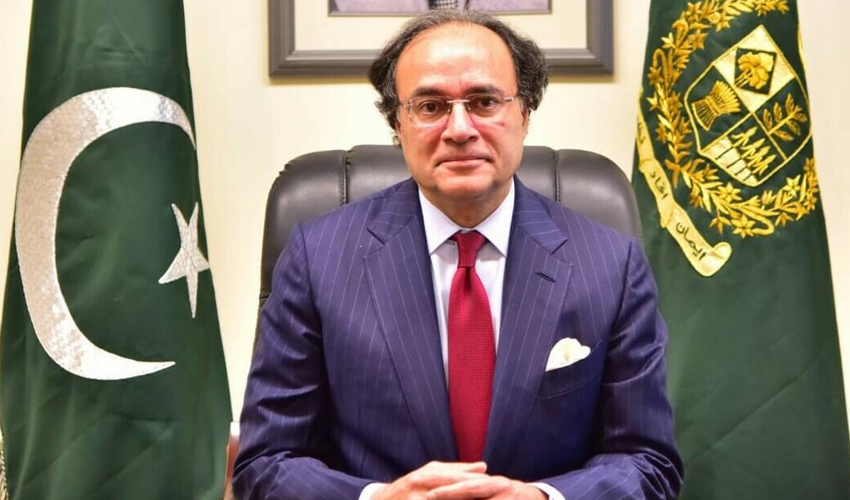
Finance Minister Muhammad Aurangzeb presented the proposed FY26-27 budget on Friday, prioritizing “export-led growth” through the abolishment of super taxes for exporters and businesses earning between Rs150 million and Rs500 million. The plan includes a three-year freeze on provincial development allocations to reallocate resources toward security and relief for the salaried, corporate, and real estate sectors.
How does the FY26-27 budget aim to drive economic growth?
The government intends to create an enabling environment for exports by abolishing the advance tax and eliminating the super tax for all exporters, according to Muhammad Aurangzeb. To further support this, the budget proposes an additional Rs70 billion subsidy for the Export Refinance Scheme (EFS).
FBR Chairman Rashid Mahmood Langrial stated the entire budget focuses on export-led growth, noting that poverty in Pakistan will not decline unless goods are sold abroad due to a limited local market. The government also maintained the 0.25 percent Final Tax Regime (FTR) for freelancers and the IT industry, with IT exports expected to reach $4.5 billion.
What tax changes affect businesses and salaried employees?
For businesses earning more than Rs500 million annually, the super tax will be reduced from 10 percent to 8 percent, Aurangzeb announced. Businesses earning between Rs150 million and Rs500 million will see the super tax abolished entirely.
Salaried employees in the lowest income brackets will see tax relief, with slabs of 5 percent and 15 percent reduced to 1 percent and 13 percent, respectively. Minister of State for Finance Bilal Azhar Kiani noted that priority was given to those earning up to Rs2.2 million.
Government employees and pensioners will receive a 7 percent increase in salaries and pensions. Aurangzeb stated this benchmark was determined based on the inflation index.
How is the government managing provincial and sectoral funding?
The federal government has implemented a three-year freeze on provincial development allocations. Aurangzeb credited the provinces for assisting with “pressing needs,” some of which are now reflected in the defense budget.
Agricultural financing has crossed Rs2 trillion, with a 15 percent year-on-year increase in credit. The Prime Minister’s Youth Business & Agriculture Loan Scheme (PMYB&ALS) totals Rs262 billion, with Rs125 billion specifically allocated for agriculture.
In the construction sector, the government proposed additional allocations for the Prime Minister’s Apna Ghar Programme. Information Minister Attaullah Tarar noted that 12 different industries feed into the housing sector.
What administrative and social shifts are planned?
Prime Minister Shehbaz Sharif has decided to merge the Board of Investment (BoI) and the Special Investment Facilitation Council (SIFC) to eliminate duplication and create a “one-window” system for foreign investors, according to Aurangzeb.
The government is also moving toward a new tax model utilizing automation and AI to reduce human intervention. This includes a proposed retailers’ scheme to widen the tax base and new taxes on social media earnings.
Aurangzeb described Pakistan’s population growth as an “existential issue,” noting the current population of 250 million. He called for a review of the National Finance Commission (NFC) award allocation driver to address issues like child-stunting and learning poverty.
What happens next for the economy?
The government may face challenges as the impact of the Middle East conflict is expected to spill over into the next fiscal year, though Aurangzeb claims the fiscal position has built-in redundancy for supply and price fluctuations.
The administration is likely to push for more public-private partnerships (PPP) to promote the private sector. Further shifts in the tax base may occur as the government implements digital monitoring to increase revenue collection.
Frequently Asked Questions
Is the petroleum levy increasing in the new budget?
No. Finance Minister Muhammad Aurangzeb clarified that there is no proposal to increase the petroleum levy, though the government may interchange amounts between petrol and diesel.
What is the status of taxes on solar equipment?
According to Muhammad Aurangzeb, imposing taxes on solar equipment was never part of the budget discussions.
Which social sector taxes are being removed?
Taxes on contraceptives and sanitary pads will be abolished to support the social sector, according to Minister of State for Finance Bilal Azhar Kiani.
Do you believe shifting focus from provincial development to export incentives is the right path for national economic growth?