
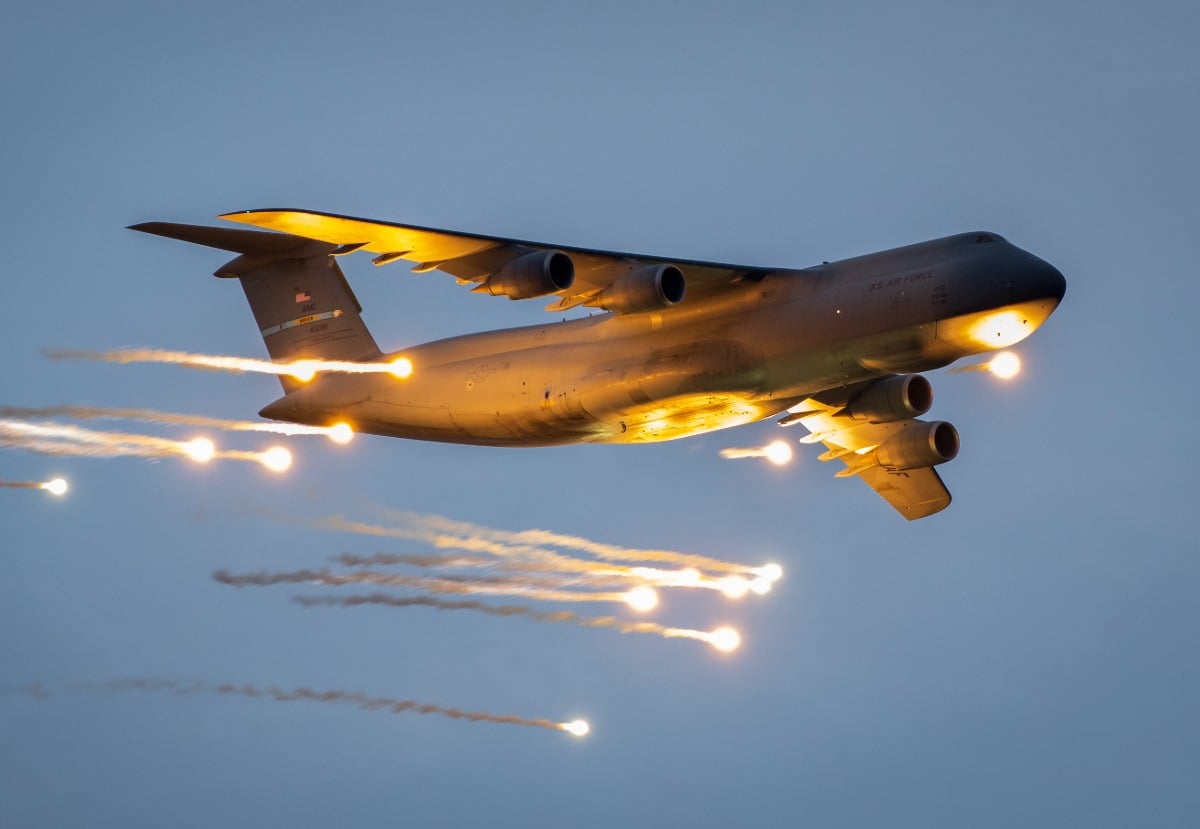
Pentagon drops $300M on tiny decoys that trick missiles
The U.S. Army awarded a $300 million contract modification to Alloy Surfaces Company on June 12, 2026, to produce infrared decoy flares through March 2031. According to official contract notices, the funding brings the total value of contract W15QKN-21-D-0014 to $328.8 million for decoys designed to protect military aircraft from heat-seeking missiles.
Why did the Army award a $300 million contract to Alloy Surfaces?
The Army requires a steady supply of advanced infrared countermeasures to protect aircraft from missiles that track heat rather than radar. The June 12 modification ensures the continued production of M211, MJU-series, and XM-219 decoys. These specific flares use proprietary ignition chemistry that Alloy Surfaces, based in Aston, Pennsylvania, owns.

U.S. procurement notices state this proprietary material allows the flares to burn at a spectrum that closely matches real engine heat. This makes them harder for modern missile seekers to distinguish from a real target. Because Alloy Surfaces is the sole source capable of meeting these performance standards, the Pentagon received only one bid for the contract.
How do infrared decoy flares protect aircraft?
Infrared decoys work by ejecting from an aircraft and burning at an intense temperature. This creates a heat signature that mimics the exhaust of a jet engine or helicopter. An incoming missile’s infrared sensor locks onto the hotter or more convincing signature, chasing the flare away from the actual aircraft.
The contract covers a wide family of decoys, including the MJU-49, MJU-50A/B, MJU-51A/B, MJU-52A/B, MJU-64/B, and MJU-66/B. These devices are the primary defense for pilots once a heat-seeking missile is already in flight and tracking the aircraft.
What are MANPADS and why are they dangerous?
Man-portable air defense systems, or MANPADS, are shoulder-fired missiles that a single soldier can operate. According to defense data, these systems are lethal because they are cheap, portable, and do not require a radar lock. This means a pilot cannot detect the launch via traditional radar warnings before the missile is already in the air.
MANPADS specifically target low-flying aircraft and helicopters. They home in on the thermal energy produced by engines, making the proprietary heat-matching chemistry of Alloy Surfaces’ flares critical for survival in contested airspace.
How are drone-launched missiles changing aerial warfare?
The threat from MANPADS is shifting from ground-based soldiers to aerial platforms. Ukrainian sources have reported Shahed-type attack drones equipped with MANPADS and air-to-air missiles. This evolution turns a traditional ground threat into an airborne one that can fly alongside explosive drone swarms.
Previously, Ukrainian Mi-8 and Mi-24 helicopter crews shot down Shahed drones using door-mounted machine guns because the drones could not fire back. The introduction of drone-launched heat-seeking missiles changes this calculation. Defense planners are now tracking a trend where cheap, infrared-guided threats are integrated into platforms that aircraft countermeasures were not originally designed to anticipate.
Comparison: Traditional MANPADS vs. Drone-Integrated Threats
| Feature | Traditional MANPADS | Drone-Launched MANPADS |
|---|---|---|
| Launch Point | Ground/Shoulder | Aerial/Drone Platform |
| Detection | Visual/Thermal | Combined Drone Swarm/Thermal |
| Pilot Risk | Low-altitude approach | Unpredictable aerial engagement |
Frequently Asked Questions
What is the total value of the Alloy Surfaces contract?
The total value of contract W15QKN-21-D-0014 is $328.8 million following the June 2026 modification.
When will production of these flares end?
The estimated completion date for the current production schedule is March 30, 2031.
Why can’t other companies make these flares?
According to U.S. procurement notices, the payload material and ignition chemistry are proprietary to Alloy Surfaces.
Want to stay updated on military aviation and defense tech?
Or join the conversation in the comments below: Do you think drone-launched missiles will make traditional flares obsolete?