
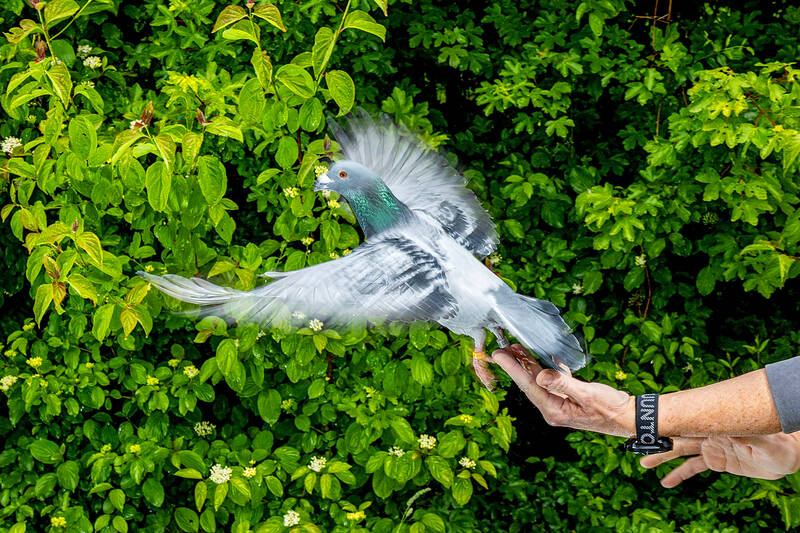
Pigeons may be navigating using liver: study
The ‘Gut Feeling’ Revolution: How Pigeon Navigation Could Redefine Future Tech
For decades, the secret to how homing pigeons find their way across hundreds of kilometers has been one of biology’s most enduring mysteries. While scientists long suspected a “magnetic compass,” the location of this sensor remained elusive—shifting from the eyes to the beak, and then to the inner ear.
Recent groundbreaking research published in Science has thrown a curveball into the theory: the liver. By identifying superparamagnetic macrophages—specialized immune cells that store iron—researchers at the Max Planck Institute of Animal Behavior have suggested that a bird’s “gut feeling” is actually a sophisticated magnetic sensor.
This discovery does more than just solve a bird-watching riddle; it opens the door to a new era of biomimicry, environmental science, and autonomous navigation.
From Biology to Biomimicry: The End of GPS Dependency?
Our modern world is dangerously dependent on Global Positioning Systems (GPS). From smartphone maps to autonomous drones, we rely on satellite signals that can be jammed, spoofed, or lost in “urban canyons” and deep-sea environments.
The discovery of iron-based magnetic sensing in the liver suggests a blueprint for bio-inspired navigation systems. Instead of relying on external satellites, future engineers may develop “bio-magnetic” sensors that mimic the superparamagnetic properties of macrophages.
The Rise of ‘Sensor Fusion’ in Robotics
The pigeon study reveals that birds don’t rely on a single source of truth. They use a “sensor fusion” approach—combining the sun’s position with magnetic cues from their liver. When it’s overcast, the magnetic system takes over.
This mirrors the future of AI and robotics. We are moving toward systems that don’t just rely on one data stream (like LiDAR) but integrate multiple, redundant biological-style sensors to ensure they never get lost, even in the most hostile environments on Earth or in space.
For more on how nature inspires engineering, explore our guide on the latest trends in biomimicry.
Electromagnetic Pollution: A New Environmental Frontier
If animals navigate using delicate magnetic sensors in their organs, it raises a critical question: How does our increasingly “noisy” electronic world affect them?
Urban areas are saturated with electromagnetic interference (EMI) from power lines, Wi-Fi routers, and cellular towers. If a pigeon’s liver cells are tuned to the Earth’s subtle magnetic field, man-made electronic noise could act as “magnetic smog,” confusing migratory patterns.
Future Trend: We can expect a surge in “Electromagnetic Conservation” efforts. Just as we protect wetlands and forests, scientists may soon advocate for “quiet zones” of low electromagnetic interference to protect the migratory corridors of birds, turtles, and fish.
Medical Breakthroughs: Iron Storage and Beyond
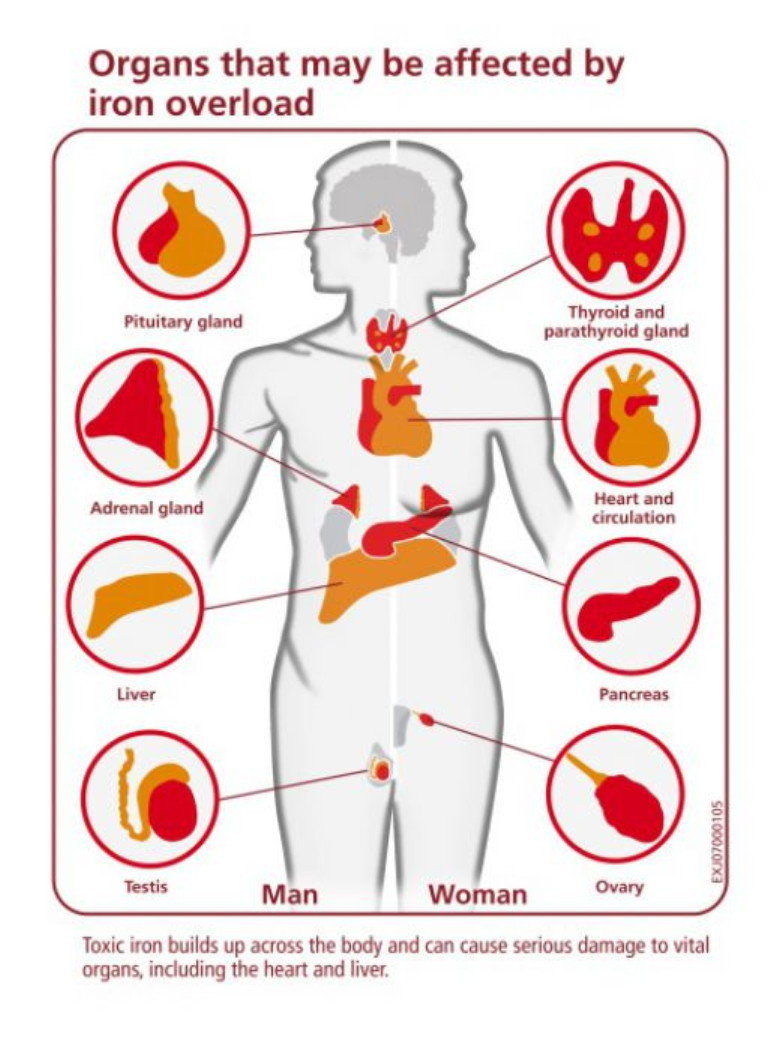
The focus on macrophages—immune cells that break down red blood cells and store iron—could have implications far beyond navigation. Understanding how these cells manage superparamagnetic iron without causing oxidative stress to the liver could lead to new medical treatments.
Potential Applications in Healthcare:
- Iron Overload Disorders: Insights into how pigeons efficiently store iron could help develop better therapies for humans with hemochromatosis.
- Targeted Drug Delivery: By mimicking the magnetic properties of these liver cells, pharmacists could develop magnetic nanoparticles that can be guided to specific organs using external magnets.
- Advanced Imaging: This research could refine how we use Magnetic Resonance Imaging (MRI) by providing a deeper understanding of naturally occurring magnetic clusters in the body.
For a deeper dive into the primary research, you can view the original study at Science Journal.
FAQ: Understanding Magnetic Navigation
Q: Do pigeons only use their liver to navigate?
A: No. Research suggests they use a multi-modal system, including the sun, landmarks, and potentially light-sensitive molecules in their eyes. The liver appears to be a primary magnetic sensor, especially when visual cues are unavailable.
Q: Can other animals navigate this way?
A: Scientists believe similar mechanisms may exist in other migratory birds and even mammals like mice, though further research is required to confirm if the liver is the specific site of sensing in those species.
Q: What are superparamagnetic macrophages?
A: They are specialized immune cells in the liver that store iron. Because of the way the iron is clustered, these cells can react to the Earth’s magnetic field, essentially acting as microscopic compass needles.
What do you think? Could bio-inspired magnetic sensors eventually replace the GPS in your phone? Or are we ignoring the environmental impact of our electronic footprint on wildlife? Share your thoughts in the comments below or subscribe to our newsletter for more insights into the future of science and tech!