
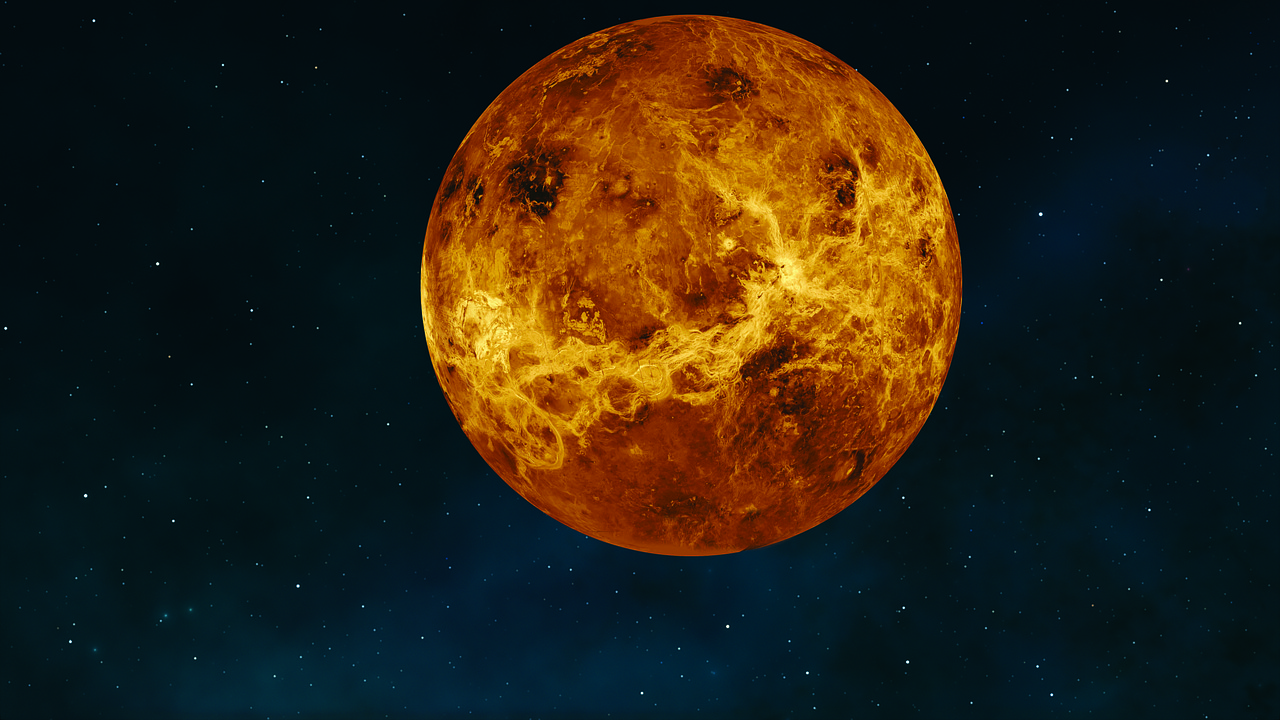
Planetary Alignment & Crescent Moon Visible June 16-17
What to Expect During the June 16–17 Planetary Alignment
On June 16 and 17, stargazers in the Northern Hemisphere will witness a rare celestial event: Mercury, Jupiter, and Venus will align with a thin crescent moon, creating a striking formation visible just after sunset. According to the Svábhegyi Csillagvizsgáló (Svábhegyi Observatory), the alignment occurs when the three planets appear in a straight line, with the crescent moon positioned nearby. The event is best viewed from locations with an unobstructed western horizon, as the planets will be low on the horizon during twilight.
Key Details for Observers
The planetary alignment reaches its peak on June 16 at 9:45 PM, when the 4% crescent moon will appear 6 degrees above the horizon. Mercury, the faintest of the three planets, will be positioned to the left of the moon, while Jupiter will be slightly higher. Venus, the brightest planet, will appear above Jupiter, serving as a guide for locating the other two. On June 17, the moon will grow to 10% illumination and move closer to Venus, reducing the distance between the two celestial bodies to just 1 degree.

Amateur astronomers are advised to use binoculars to spot Mercury, which is often difficult to see due to its proximity to the sun. The alignment’s visibility depends on atmospheric conditions, with clear skies offering the best viewing opportunities. The Svábhegyi Observatory notes that the event is a prime example of how planetary motions can create visually stunning patterns, even without advanced equipment.
Why This Alignment Matters
Planetary alignments are not uncommon, but the specific configuration of Mercury, Jupiter, and Venus with the crescent moon highlights the dynamic nature of our solar system. According to astrophysicist Dr. Elena Martinez, such events provide valuable data for studying orbital mechanics. “These alignments help scientists refine models of planetary motion and test gravitational interactions,” she explains. “They also offer a chance for public engagement with astronomy, as they are easily observable with the naked eye.”
The 2026 event follows a similar alignment in 2023, when Mercury, Venus, and Saturn formed a triangle with the moon. However, the current alignment is notable for its simplicity and the prominence of Venus, which outshines the other planets. This makes it an ideal opportunity for beginners to practice celestial navigation and appreciate the scale of the solar system.
Pro Tips for Viewing the Alignment
1. Choose the Right Location: Find a spot with a clear view of the western sky, away from city lights. Parks or rural areas with minimal obstructions are ideal.
2. Use Binoculars for Mercury: The 4% crescent moon will be easy to spot, but Mercury’s faint light requires a pair of binoculars to distinguish it from background stars.
3. Track the Moon’s Movement: The moon’s position relative to the planets will change slightly each night, offering a chance to observe its orbital path.
Did You Know?
The term “planetary alignment” refers to when multiple planets appear close together in the sky, but it does not imply they are physically close. In this case, Mercury, Jupiter, and Venus are millions of kilometers apart, yet their positions from Earth create the illusion of a straight line.
FAQ: Answers to Common Questions
What time should I look for the alignment?
The best time to view the event is immediately after sunset, between 8:30 PM and 10:00 PM. The exact timing may vary slightly depending on your location.
:max_bytes(150000):strip_icc():focal(749x0:751x2)/Venus-crescent-moon-031626-d7e5a727f9b54dcdabf4fd5129a1bf75.jpg "FAQ: Answers to Common Questions")
Do I need special equipment?
No. The alignment is visible to the naked eye, but binoculars will enhance your ability to spot Mercury. A telescope is not necessary.
Why is Venus the brightest planet in the lineup?
Venus is the brightest because it reflects a significant amount of sunlight and is relatively close to Earth. Its brightness makes it an excellent reference point for locating the other planets.
Explore More Celestial Events
For more insights into astronomy and space phenomena, check out these related articles:
- A DNS Titkai – Kvíz a Genetika Világából
- Mennyire Ismered a Csodálatos Emberi Testet? – Kvíz
- Kvíz: 10 Trükkös Tudományos Kérdés, Amire Nehéz Helyesen Válaszolni
Source: Svábhegyi Csillagvizsgáló