
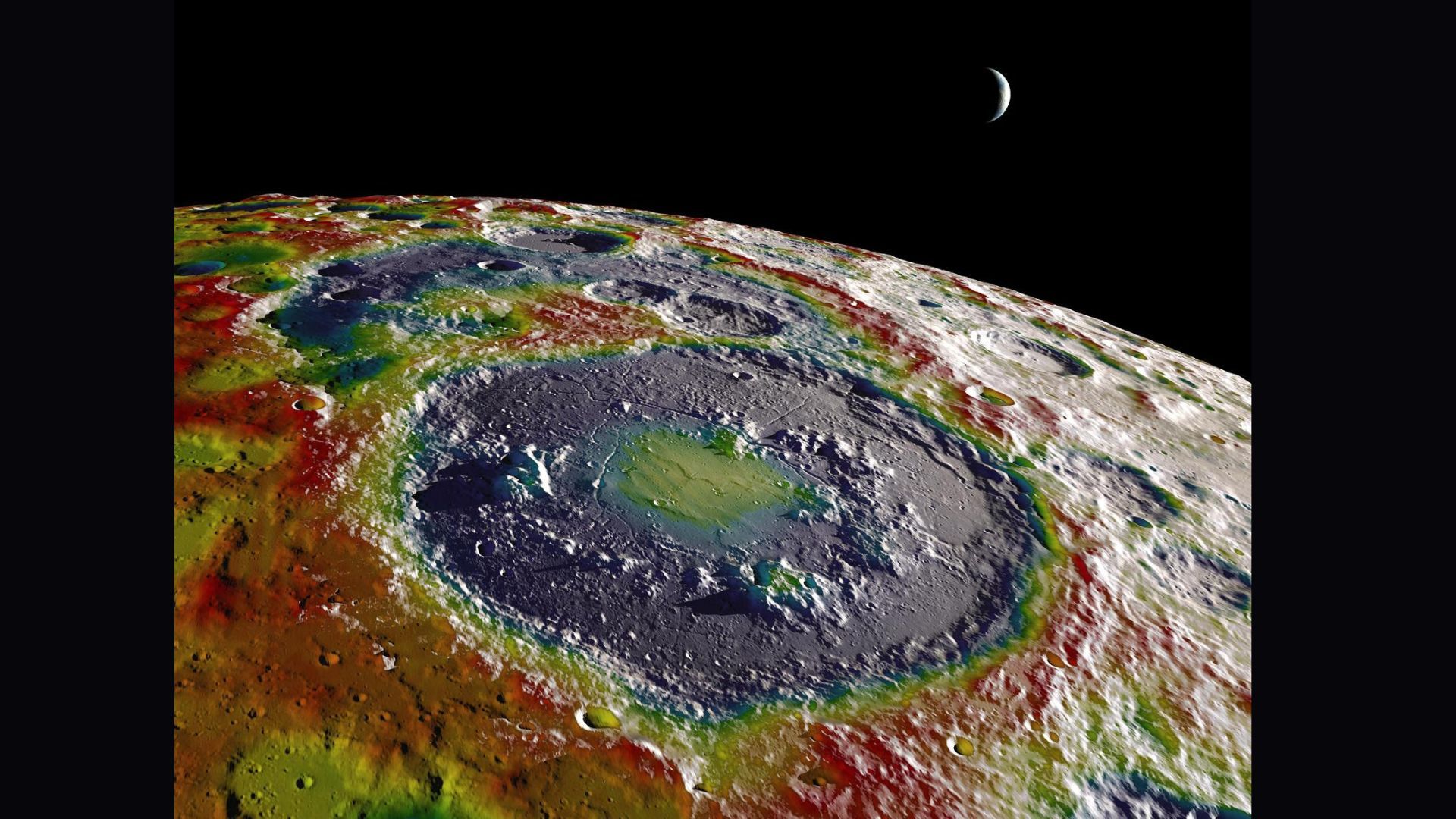
Rare Lunar Meteorite Reveals 3.5-Billion-Year-Old Moon Impact
A lunar meteorite found in northwest Africa, NWA 12593, reveals a massive impact event from 3.5 billion years ago. According to researchers in the journal Geology, this event occurred as life first emerged on Earth and aligns with similar impacts on Earth and the asteroid Vesta, suggesting a period of synchronized solar system volatility.
How does meteorite NWA 12593 rewrite lunar history?
The discovery of NWA 12593 provides a rare physical record of the moon’s early violent history. Planetary scientist Carolyn Crow of the University of Colorado Boulder and her team used radiometric dating to pin the first of three distinct impacts on the sample to roughly 3.5 billion years ago.
This timing is critical. It places the event about 1 billion years after the solar system first formed. The researchers found traces of recrystallized products of cubic zirconia within the rock. Because cubic zirconia only forms at extremely high temperatures, its presence proves the moon’s surface became molten during the crash, according to the study published in Geology.
Why does this impact align with the emergence of life on Earth?
The 3.5-billion-year timeline isn’t just a lunar milestone; it’s a biological one. Crow noted that the first fossil evidence of life on Earth appears around this same period. This overlap allows scientists to study the “cadence of catastrophic events” that occurred while life was taking hold on our own planet.
Understanding these impacts helps researchers determine if such events hindered or perhaps even spurred early biological evolution. By comparing the lunar record to Earth’s fossil record, scientists can better map the environmental stresses early organisms faced.
What is the “Three-Body” evidence and why is it rare?
The researchers identified a striking pattern: huge impacts occurred on the moon, Earth, and a large asteroid called Vesta all around the same time. Finding synchronized records across three different celestial bodies is uncommon because erosion and geological activity usually erase these signatures over billions of years.
According to the Geology report, the meteorite NWA 12593 actually records three separate events. The first was the massive 3.5-billion-year-old collision. The second was a breccia, or rock melt, formed after that initial crash. The third was the impact that finally blasted the rock off the moon and sent it toward Earth.
Comparing Impact Records Across the Inner Solar System
| Celestial Body | Evidence Type | Timeline |
|---|---|---|
| The Moon (NWA 12593) | Cubic zirconia / Radiometric dating | ~3.5 Billion Years Ago |
| Earth | Fossil records / Geological strata | ~3.5 Billion Years Ago |
| Vesta | Independent impact research | ~3.5 Billion Years Ago |
How will this change future planetary research?
This discovery shifts the focus from isolated events to systemic patterns. Researchers now expect that deeper comparisons between these three worlds will reveal how the solar system’s “neighborhood” changed as the number of asteroids diminished over time.
Future trends in the field will likely lean toward “cross-body synchronization.” Instead of studying the moon in a vacuum, scientists will look for matching chemical signatures in NASA lunar samples and Martian meteorites to create a master timeline of the early solar system’s volatility.
Frequently Asked Questions
What is a lunar meteorite?
It’s a piece of the moon that was blasted into space by an asteroid impact and eventually landed on Earth.
How do scientists date these rocks?
They use radiometric dating, which measures the decay rate of radioactive materials within the sample to estimate its age.
Why is Vesta important in this study?
Vesta is a massive asteroid. Finding a simultaneous impact there, on the moon, and on Earth suggests a widespread period of instability in the inner solar system.
Do you think these ancient impacts helped or hindered the start of life on Earth?
Join the conversation in the comments below or subscribe to our newsletter for more deep dives into the mysteries of the cosmos.