
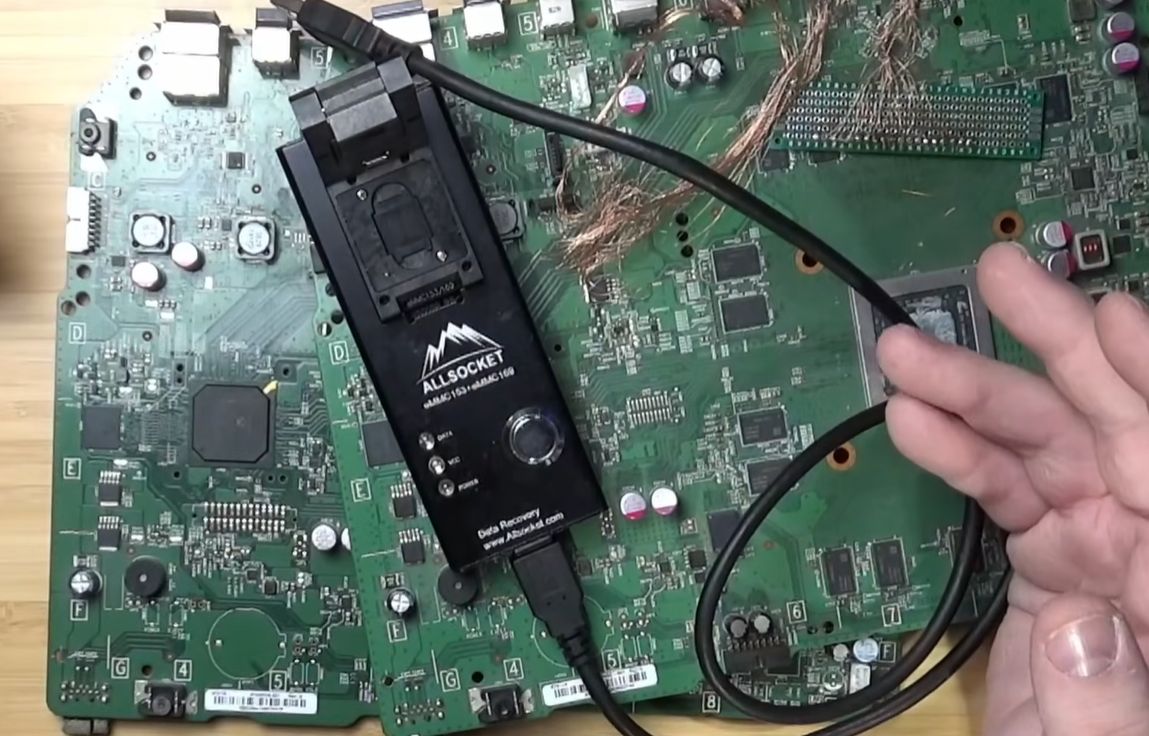
Recycling Two XBox One Consoles Into A 10 GB USB Flash Drive
The Art of the Hardware Harvest: Why Your Old Console is a Gold Mine
We’ve reached a tipping point in consumer electronics. For years, the industry pushed a “buy, use, discard” cycle that left us with mountains of e-waste. But a new wave of hardware hackers and sustainability advocates is flipping the script. They aren’t just recycling. they are “mining” dead devices for high-value components.

Take the recent project by Chase Fournier, who salvaged eMMC chips from two discarded Xbox One S motherboards. By utilizing a Norelsys NS1081 controller and some precise reballing, he transformed gaming waste into a functional 10GB USB flash drive. While 10GB might seem modest by today’s standards, the implication is massive: the silicon inside our “obsolete” tech is often still perfectly viable.
Urban Mining: The Shift Toward a Circular Electronics Economy
The term “urban mining” refers to the process of recovering raw materials and functional components from waste streams rather than traditional mining. As the cost of rare earth metals spikes and supply chains become volatile, the incentive to salvage components like DDR3 RAM or GDDR5 memory is shifting from a hobby to a necessity.
We are seeing a transition toward a Circular Economy. Instead of a linear path from factory to landfill, the goal is to keep components in use for as long as physically possible. This isn’t just about saving a few bucks on a USB drive; it’s about reducing the carbon footprint associated with smelting new silicon and mining cobalt.
Industry leaders and organizations like iFixit have long championed the “Right to Repair,” but the next frontier is “Right to Repurpose.” This means designing hardware that isn’t just repairable, but modular enough that a chip from a 2016 console can be easily integrated into a 2026 project.
The Technical Hurdle: Reballing and Controller Compatibility
The bridge between a “dead board” and a “new tool” is the controller. In the Xbox project, the Norelsys NS1081 acted as the translator, allowing the PC to communicate with the salvaged eMMC chips via USB 3.0. Without the right controller IC, the most powerful chip in the world is just a piece of expensive plastic.
Then there is the physical challenge: reballing. This involves removing the solder spheres from the bottom of a BGA (Ball Grid Array) chip and replacing them so the chip can be soldered onto a new PCB. We see a meticulous process that requires a steady hand, a heat gun, and a lot of patience.
Future Trends in Hardware Salvaging
- AI-Driven Component Identification: Imagine an app that scans a motherboard and instantly tells you which chips are salvageable and which controllers are compatible.
- Open-Source Carrier Boards: The rise of community-designed PCBs that allow users to “plug and play” salvaged RAM or storage from various brands.
- Institutional Salvage: Large corporations moving away from shredding old servers and instead creating internal “component libraries” for prototyping.
Beyond Storage: The Potential of Salvaged RAM
While storage is the low-hanging fruit, the real prize lies in memory. The Xbox One S contains 8GB of DDR3. While DDR5 is the current gold standard, DDR3 remains widely used in legacy industrial systems and budget builds. Converting these soldered ICs into usable SODIMM sticks is a steeper climb, but it represents the ultimate goal of hardware recycling.
As we move forward, the distinction between “trash” and “resource” will continue to blur. The ability to repurpose a GDDR5 chip from an old XBone X variant could one day be a standard skill for the sustainable engineer.
Frequently Asked Questions
Q: Is it safe to use salvaged memory chips?
A: Generally, yes. As long as the chip wasn’t physically damaged or subjected to extreme overheating during removal, it will function normally. However, always format the drive to clear old data.

Q: What tools do I need to start recycling eMMC chips?
A: You’ll need a hot air rework station, high-quality flux, solder wick, a stencil for reballing, and a compatible controller board like the NS1081.
Q: Why not just buy a new USB drive?
A: For most, a new drive is cheaper. But for the maker community, it’s about the challenge, the learning process, and the environmental impact of reducing e-waste.
Join the Hardware Revolution
Do you have a drawer full of “dead” tech that you can’t bring yourself to throw away? Or maybe you’ve successfully salvaged a component from an old device? We want to hear about it!
Share your projects in the comments below or subscribe to our newsletter for more deep dives into sustainable tech and hardware hacking.