

Rogue planet moons could harbor alien life for billions of years
Life Without a Sun: The New Frontier of Interstellar Habitability
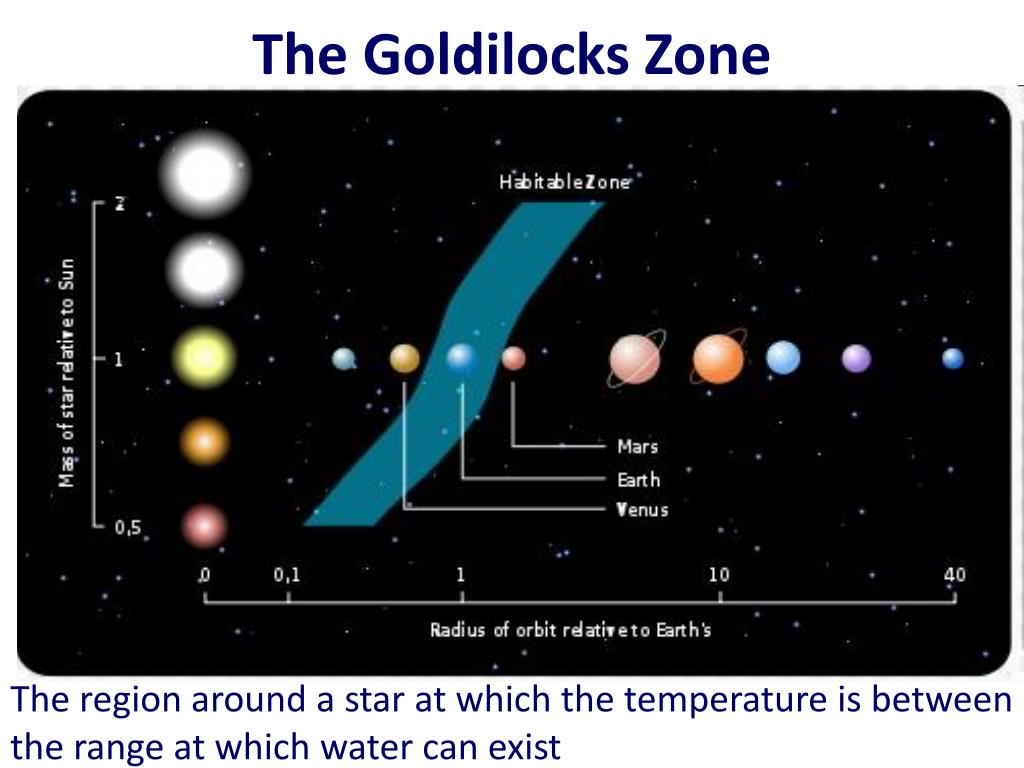
For decades, our search for extraterrestrial life has been tethered to the “Goldilocks Zone”—that narrow, comfortable strip around a star where liquid water can exist. We look for sunlight, photosynthesis, and temperate climates. But what if we’ve been looking in the wrong places?
New research from the Excellence Cluster ORIGINS at Ludwig Maximilian University of Munich (LMU) suggests that life may not need a star to thrive. In the freezing, pitch-black voids between solar systems, rogue planets and their orbiting moons might be harboring the very conditions necessary for life, and they could be doing it for billions of years.
The Rogue Planet Revolution
During the chaotic infancy of planetary systems, giant planets often collide or undergo gravitational tug-of-wars. In these violent encounters, entire worlds are frequently ejected from their parent systems. These free-floating planets (FFPs) wander the galaxy alone, stripped of their suns.

While these rogue worlds seem like desolate, frozen husks, the latest study suggests they may be “lifeboats” for their moons. Even without a star, these moons can sustain internal heat through tidal heating—a process where the intense gravity of the host planet stretches and compresses the moon, generating friction-based warmth deep within its core.
Hydrogen: The Ultimate Insulator
The biggest challenge for a moon in deep space is keeping that heat from escaping. On Earth, carbon dioxide acts as a blanket, but in the extreme cold of interstellar space, CO2 freezes and fails. The solution, according to researchers, is a thick hydrogen-rich atmosphere.
Under high pressure, hydrogen molecules collide in a way that creates “collision-induced absorption,” effectively trapping thermal radiation. Think of it as a high-tech, planetary-scale parka that keeps the surface warm enough to maintain liquid water oceans for up to 4.3 billion years—plenty of time for life to emerge and evolve.
Implications for the Origins of Life on Earth
This discovery changes how we view our own origins. If life can flourish on a dark moon warmed by tidal friction and hydrogen, it suggests that the “cradle of life” isn’t strictly dependent on solar radiation. This mirrors theories about early Earth, where asteroid impacts and volcanic activity may have provided the necessary hydrogen and chemical energy to jumpstart biological processes.

The Future of Deep Space Exploration
As our detection technology improves, the search for “nomadic” life is likely to become a major pillar of astrobiology. We are moving away from star-centric models toward a broader understanding of planetary physics. The future of the field involves:
- Gravitational Microlensing: Using the gravity of distant objects to detect rogue planets that emit no light of their own.
- Atmospheric Spectroscopy: Searching for the unique chemical fingerprints of hydrogen blankets on distant, wandering moons.
- Tidal modelling: Simulating the long-term orbital stability of moons around rogue planets to identify the most promising candidates for life.
Frequently Asked Questions (FAQ)
- Can life exist without sunlight?
- Yes, deep-sea hydrothermal vents on Earth prove that life can thrive using chemosynthesis rather than photosynthesis. The new research suggests this could happen on a planetary scale on rogue moons.
- What is a rogue planet?
- A rogue planet is a world that does not orbit a star. It travels through the galaxy independently, often having been ejected from its original solar system during its formation.
- How long could these moons stay warm?
- Researchers estimate that with the right atmospheric conditions, these moons could maintain liquid water for up to 4.3 billion years.
What do you think? Is the universe teeming with “dark” life, or is the lack of a sun a dealbreaker for complex organisms? Share your thoughts in the comments below or sign up for our newsletter to get the latest updates on space exploration delivered to your inbox.