
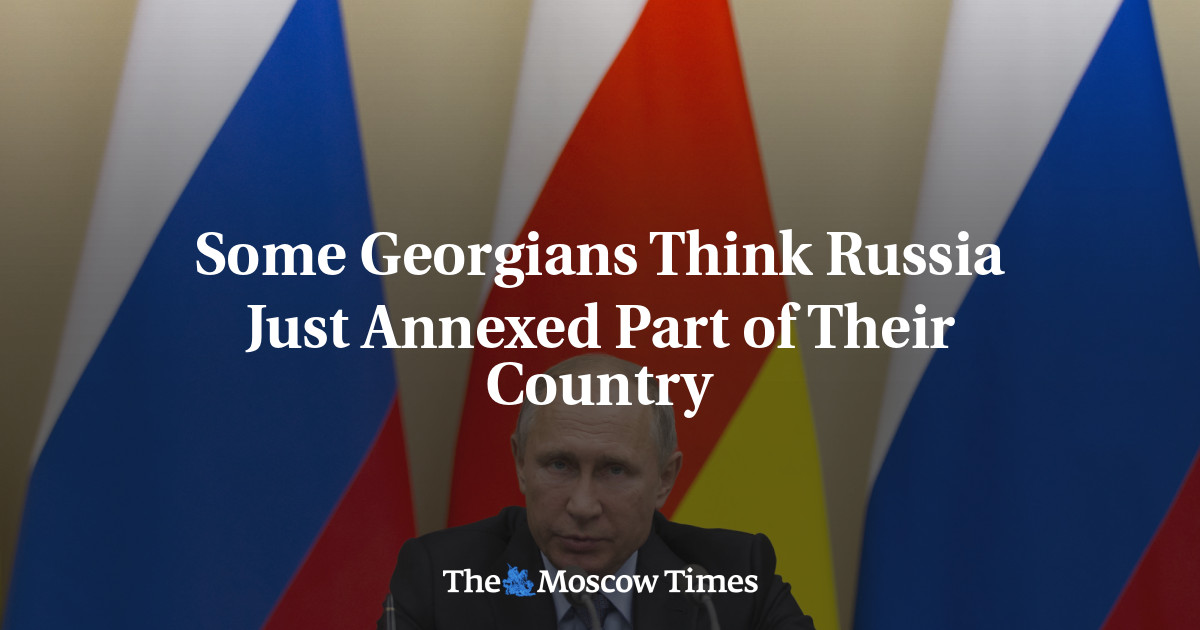
Russia’s Quiet Annexation of South Ossetia and Abkhazia
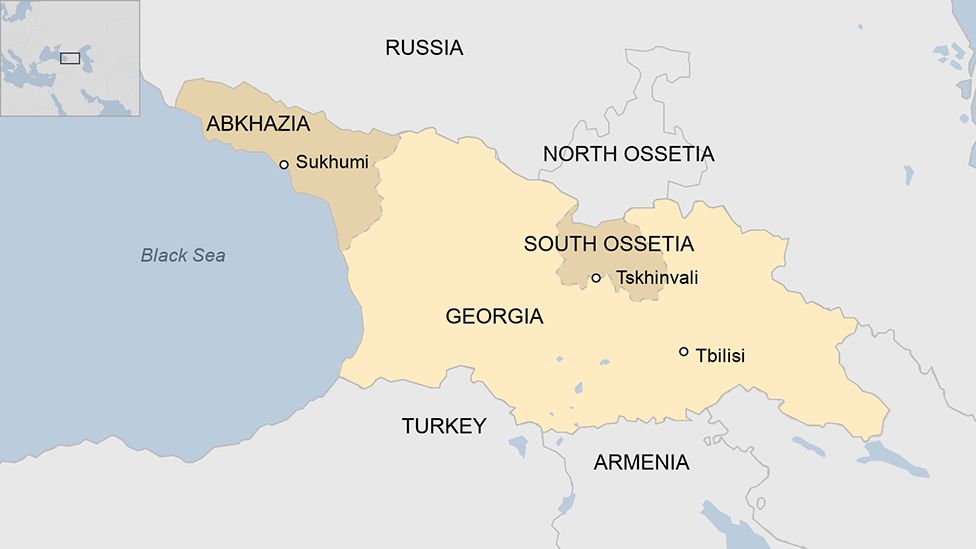
Russia is incrementally annexing Georgia’s breakaway regions of South Ossetia and Abkhazia through administrative integration and infrastructure control. According to reports from The Moscow Times, a May 9 treaty now allows Russian citizens to hold office in South Ossetia, while Moscow utilizes elite cooptation and economic pressure to secure influence in Abkhazia.
Why is Russia installing its own officials in South Ossetia?
The Kremlin is shifting from supporting “independent” puppet states to direct administrative rule. On May 9, Russian President Vladimir Putin and South Ossetian President Alan Gagloev signed an agreement on “Deepening Allied Interaction.” This treaty removes legal barriers preventing Russian citizens from serving as officials in the separatist administration.
The impact was immediate. Following the resignation of Prime Minister Dzambolat Tadtoyev on June 8, Gagloev announced the nomination of Marat Kambolov. Kambolov is a career Kremlin bureaucrat who previously served as Russia’s deputy education and science minister from 2010 to 2014.
Critics describe this as a calculated move to erase political distance. Giorgi Gakharia, former Georgian Prime Minister and head of the Gakharia party, called the agreement a “new phase of annexation” that establishes “Moscow’s direct rule over the occupied territory.” Tamta Mikeladze, head of Georgia’s Social Justice Center, echoed this, labeling the law a “practical annexation.”
How does Abkhazia’s resistance differ from South Ossetia?
Unlike South Ossetia, where elites have long pushed for formal annexation, Abkhazia has consistently fought to maintain its autonomy. This resistance is driven by a larger population—roughly 250,000 people—and the region’s strategic location on the Black Sea.
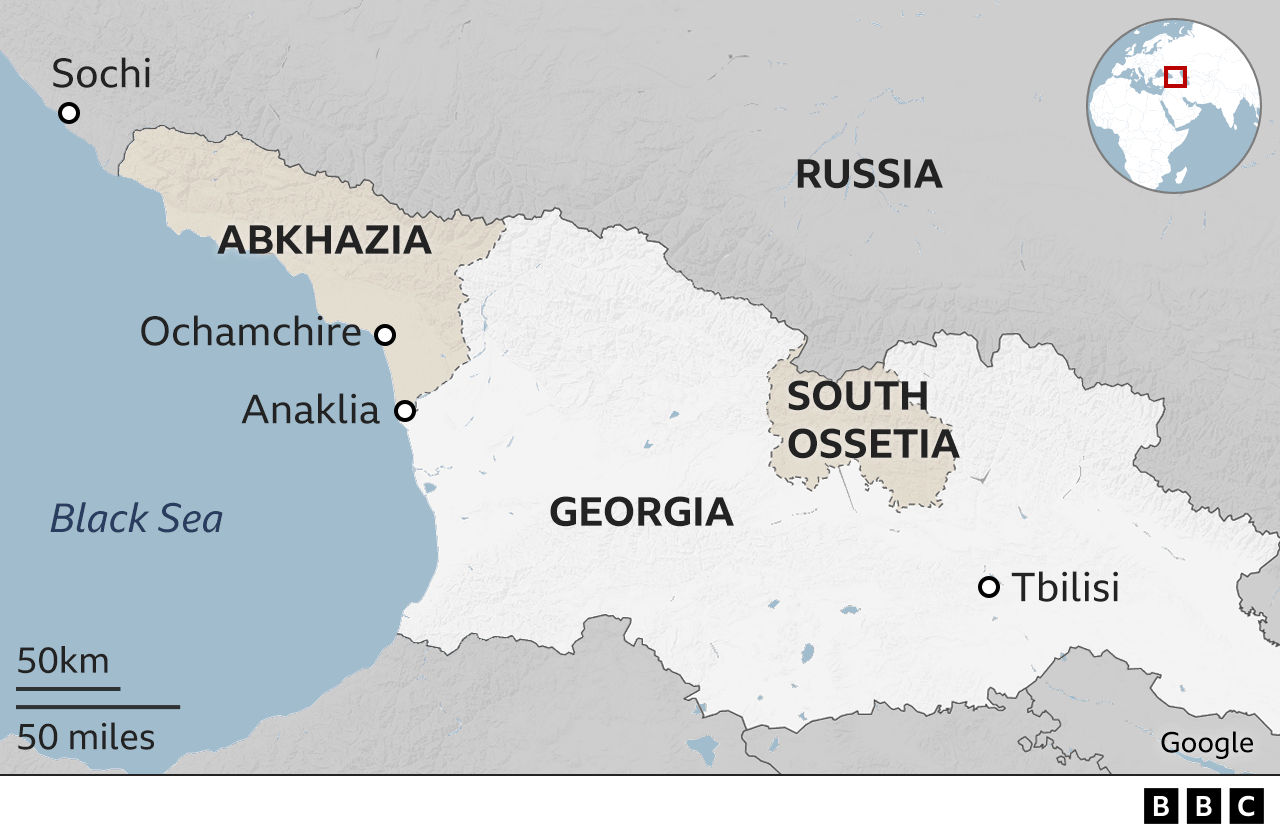
The tension peaked in November 2024. Abkhaz local elites attempted to pass legislation giving preferential status to Russian property developers. This triggered mass protests in the capital, Sukhumi, where demonstrators stormed the parliament building. The unrest forced President Aslan Bzhania to flee the city and resign.
Moscow responded not with direct administrative takeover, but with elite cooptation. Sergey Kiriyenko, a top Kremlin official, intervened by backing Badra Gunba. Gunba won the presidential election in February 2025 after Russia signaled that economic pressure would ease if he took power.
Will infrastructure projects lead to total Russian control in Abkhazia?
Russia is using “hard” infrastructure to create a logistical dependency that makes formal annexation a mere formality. Following Badra Gunba’s election, Russia launched a new Sochi-Sukhumi passenger rail line and opened a Russian-financed commercial airport, the first in the region since the Soviet collapse.
In a June 2026 address, President Gunba highlighted the economic importance of the Ochamchire port and renewed transit links. These projects, financed by Moscow, are designed to transform the Black Sea coast into a Russian logistics hub.
However, Abkhazia maintains “red lines” that South Ossetia has already crossed. In May, Abkhazia established five-year residency requirements for local office seekers and explicitly barred foreign nationals from participating in politics. This stands in direct contrast to the South Ossetian model of allowing Russian bureaucrats like Marat Kambolov into the premiership.
Moscow is applying different blueprints for these regions. In South Ossetia, it uses Administrative Absorption (direct appointments). In Abkhazia, it uses Economic Enmeshment (ports, rails, airports) to make independence physically and financially impossible.
How is the Georgian government reacting to these developments?
The response from Tbilisi has been characterized by opposition members as “complicit silence.” While Georgia’s Foreign Minister Maka Botchorishvili stated at a European ministerial summit in Moldova that Russia is “taking further steps toward the annexation of Georgia’s regions,” the comment came six days after the South Ossetia treaty was signed.
Tamta Mikeladze argued on Facebook that the current “Georgian Dream” government has “given everything away to Russia” and deprived the country of its chance to join the European Union. Giorgi Gakharia added that the government is “aiding the occupying state” through its lack of proactive defense.
Comparison: South Ossetia vs. Abkhazia Integration
| Feature | South Ossetia | Abkhazia |
|---|---|---|
| Administrative Control | Russian citizens allowed in office | Foreign nationals barred from politics |
| Primary Russian Tool | Legal treaties & appointments | Infrastructure & elite cooptation |
| Local Sentiment | Pro-annexation elites | Strong desire for autonomy |
Frequently Asked Questions
What is the current status of South Ossetia and Abkhazia?
Both are internationally recognized as part of Georgia but function as de facto independent states supported by Russia. Moscow officially recognized them as separate countries following the 2008 Russia-Georgia war.
Who is Marat Kambolov?
Marat Kambolov is a former Russian deputy minister for education and science (2010-2014) and a career Kremlin bureaucrat nominated to serve as the Prime Minister of South Ossetia.
Why is the Ochamchire port significant?
The port provides Russia with critical logistical and military access to the Black Sea, reducing reliance on other ports and strengthening its grip on the South Caucasus coastline.
What do you think about Russia’s “creeping annexation” strategy? Does economic integration inevitably lead to political loss of sovereignty? Let us know in the comments or subscribe to our newsletter for more deep dives into Caucasian geopolitics.