
Samsung Spatial Display Powers Immersive Revlon Activation at the 2026 JUNO Awards – Samsung Newsroom Canada
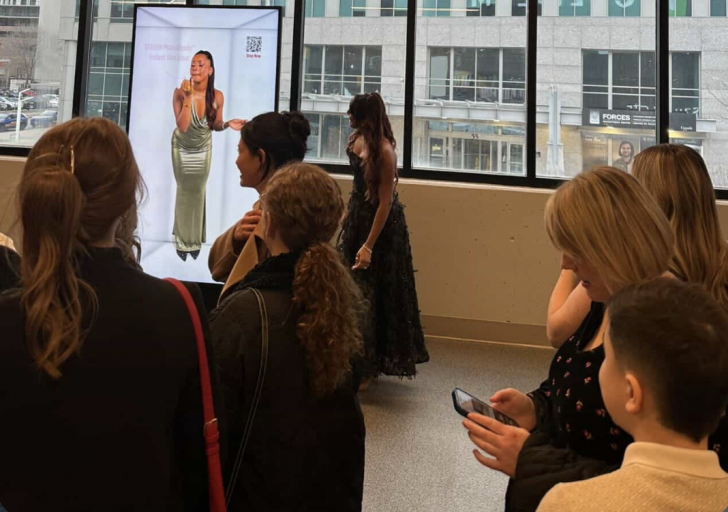
Revlon utilized Samsung’s 85-inch Spatial Display during the JUNO Awards to create a glasses-free 3D activation, marking a shift toward immersive, hardware-driven experiential marketing. According to Chandra Colbear, Sr. Director of Marketing at Revlon, the technology successfully increased attendee engagement by providing a visual focal point that encouraged physical interaction with the brand’s space.
How Spatial Display Technology Changes Event Marketing
Spatial displays, or glasses-free 3D signage, function by using lenticular lenses or light-field technology to project different images to each eye. According to James Arndt, Head of Display Solutions at Samsung Electronics Canada, this creates depth and realism without requiring external eyewear. At the JUNO Awards, this hardware allowed Revlon to move beyond static, two-dimensional signage, which PJ Lee, Vice-President of Business Solutions at ICON Media, noted often fails to capture attention in high-stimulation environments.

Unlike traditional 3D, which requires active or passive glasses to trick the brain, spatial displays use high-resolution screens and specialized optical layers to create the same effect for anyone standing in front of the device.
Why Brands Are Shifting Toward Immersive Hardware
The transition from static graphics to immersive displays reflects a broader trend in experiential marketing where brands compete for limited attendee attention. ICON Media identified the Samsung Spatial Display after monitoring global trade shows for display innovation. According to PJ Lee, the decision to deploy this at the JUNO Awards was driven by the need to create “depth and movement” that naturally draws crowds. This contrasts with traditional digital signage, which often relies on high-contrast colors or loud audio to achieve similar results.
Comparison: Static Signage vs. Spatial Displays
| Feature | Static Signage | Spatial Display |
|---|---|---|
| Visual Depth | None (Flat) | High (3D effect) |
| Viewer Engagement | Passive | Active (Curiosity-driven) |
| Eyewear Required | No | No |
What Happens Next for Physical Activations?
The integration of spatial technology suggests that future event activations will likely prioritize “visual moments” that perform well on social media. By combining physical hardware with influencer engagement, Revlon extended the reach of its JUNO activation beyond the event floor. According to Chandra Colbear, the strategy succeeded because the display served as an invitation for guests to stop and explore the products, effectively bridging the gap between digital content and physical brand interaction.
When planning a high-impact activation, integrate display technology early in the design phase rather than as an afterthought. As ICON Media noted, seeing the technology in person was the catalyst for the team’s creative strategy.
Frequently Asked Questions
- Do viewers need special glasses to see the 3D effect? No. Samsung’s Spatial Display technology is designed for glasses-free viewing, allowing for immediate engagement in public spaces.
- Why was this technology chosen for the JUNO Awards? The high-energy environment of the ceremony required a solution that could immediately stop attendees, according to Revlon’s marketing team.
- Is this technology effective for small spaces? While the JUNO activation used an 85-inch display, the primary benefit of spatial technology is its ability to create depth, which can be scaled depending on the physical footprint of the activation.
Are you looking to elevate your next brand activation with cutting-edge display technology? Subscribe to our newsletter for more insights on experiential marketing trends, or explore our archives for deep dives into retail and event strategy.