
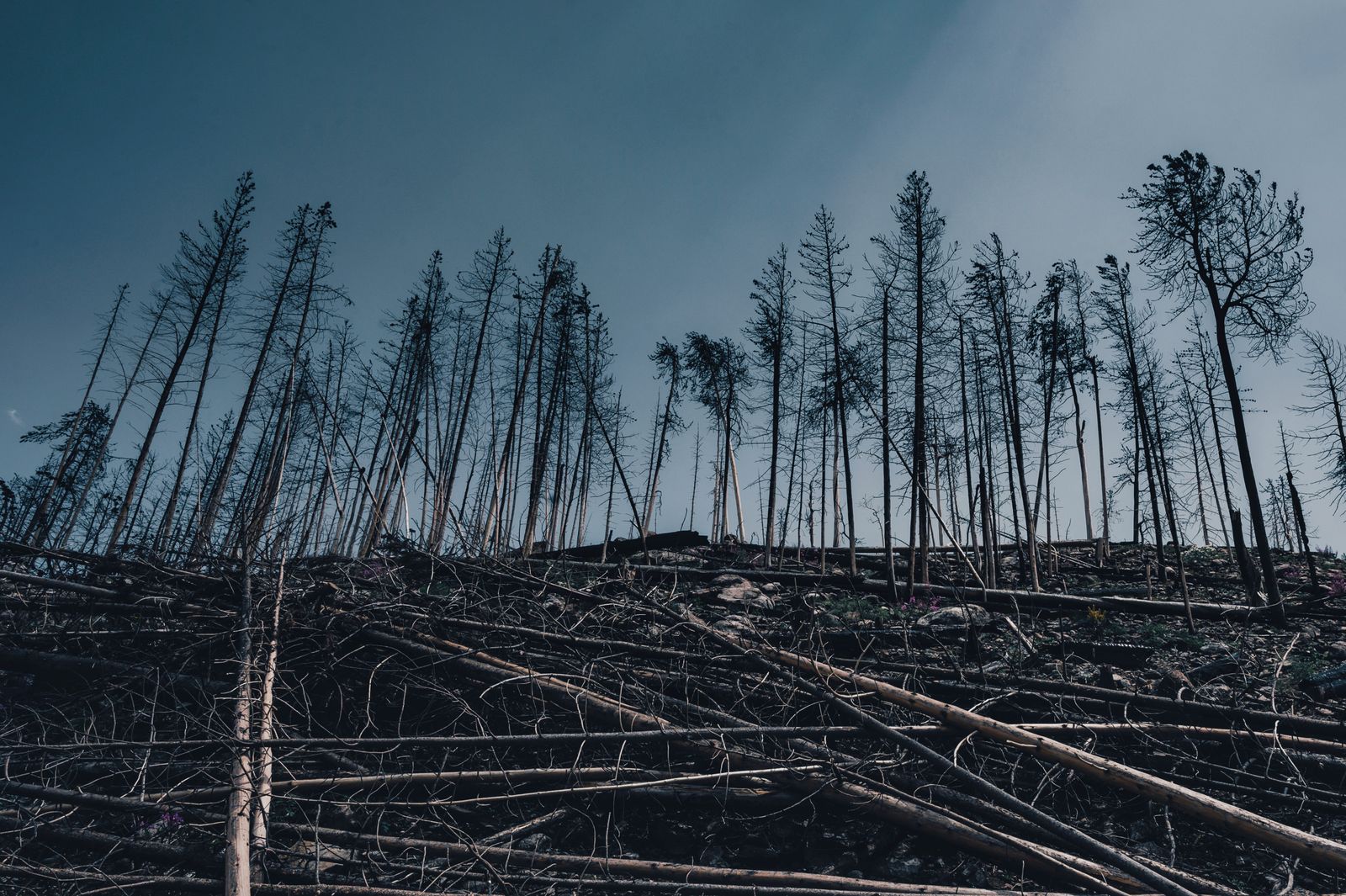
In 1908, something exploded above the remote Siberian forest of Tunguska with enough force to flatten roughly 2,000 square kilometres of trees – and more than a century later, no impact crater has ever been found, because the object, probably a small asteroid, appears to have blown itself apart in the atmosphere.
The 1908 Tunguska event remains the largest atmospheric impact in recorded history, leveling 2,000 square kilometres of Siberian forest without leaving a crater. According to research published in Nature by Christopher Chyba and colleagues, the devastation resulted from a 50-to-60-metre stony asteroid that vaporized mid-air. This airburst model explains why no impact site was ever discovered, setting a critical precedent for current planetary defense strategies aimed at identifying similar near-Earth objects before they reach populated areas.
Why do airbursts leave no craters?
Airbursts occur when a celestial object enters Earth’s atmosphere at such high velocity that it cannot withstand the resulting structural stress. NASA’s Center for Near-Earth Object Studies (CNEOS) explains that as an object travels at tens of kilometres per second, atmospheric pressure builds into a literal wall of force. When this pressure exceeds the object’s internal strength, it fragments and releases its kinetic energy as a shockwave. This process, as described by Chyba, turns the asteroid into an explosion rather than a projectile, which is why expeditions led by Leonid Kulik in 1927 found flattened trees instead of a traditional impact pit.
The energy released during the Tunguska event is estimated at 10 to 15 megatons. This is roughly 1,000 times more powerful than the atomic bomb detonated over Hiroshima in 1945.
How does the Tunguska event compare to modern impacts?
The 2013 Chelyabinsk meteor serves as the primary modern reference point for the destructive potential of airbursts. While the Tunguska object was estimated at 50–60 metres wide, the Chelyabinsk bolide was significantly smaller—approximately 20 metres across. According to reports from the CNEOS, the Chelyabinsk airburst shattered windows across a wide region and caused roughly 1,500 injuries. Comparing these two events highlights a terrifying reality: even relatively small objects can cause widespread human injury if they detonate over a city rather than the remote Siberian wilderness.
What is the current strategy for planetary defense?
Modern planetary defense relies on active sky surveys to catalog near-Earth objects (NEOs) long before they approach our atmosphere. International efforts, such as Asteroid Day, focus on increasing public awareness of these risks. Scientists track these objects using ground-based telescopes and space-based sensors to calculate potential trajectories. The goal is to identify objects in the “Tunguska-class” range—those that are too small to be seen until they are dangerously close—and develop mitigation strategies to prevent future catastrophes.

If you are interested in tracking real-time data on asteroid approaches, the NASA CNEOS website provides updated lists of upcoming close approaches by known near-Earth objects.
Frequently Asked Questions
- Could the Tunguska object have been a comet? While a comet was a favored theory for decades due to the lack of recovered fragments, the mainstream scientific view, supported by the 1993 Nature study, now identifies it as a stony asteroid that vaporized.
- Is Lake Cheko a crater from the event? No. While an Italian team proposed this in 2007, subsequent sediment core research indicated the lake existed well before 1908, leading most researchers to dismiss the theory.
- Are we currently at risk from a similar event? Astronomers are actively cataloging thousands of NEOs. While the risk of a major impact is low, the Chelyabinsk event proved that smaller, uncatalogued objects still pose a genuine threat to populated areas.
Have you ever wondered how we could deflect an asteroid? Share your thoughts in the comments below or subscribe to our newsletter for the latest updates on space science and planetary defense.