
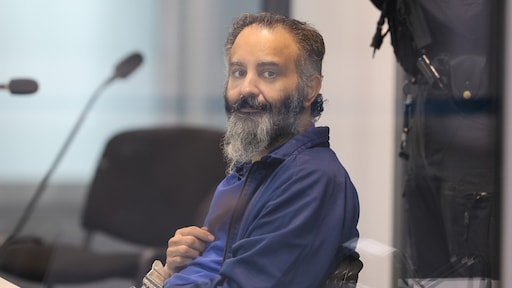
Saudi Doctor on Trial for Deadly Magdeburg Christmas Market Attack
Beyond the Manifesto: The Rise of the Narcissistic Lone Actor
For decades, security agencies have focused on “ideological radicalization.” The playbook was simple: identify the extremist cell, track the manifesto, and stop the person driven by a specific political or religious agenda. But a disturbing new trend is emerging—the “hybrid” attacker.
These individuals often cloak their actions in the language of politics or religion, but the true driver isn’t a belief system. Instead, it is a profound psychological void. As we see in increasingly erratic attacks across Europe and North America, the motive is shifting from ideological conviction to a desperate need for global notoriety.
The Psychology of Notoriety: When Attention Becomes the Motive
When a perpetrator claims to be a critic of a specific faith or a fighter against a political regime, investigators naturally look for links to extremist groups. However, the reality is often more complex. In many recent cases, the “ideology” is merely a costume.
Narcissistic Personality Disorder (NPD) can play a critical role here. For someone with a pathological need for admiration and attention, a violent act is the ultimate stage. The goal isn’t to change the world, but to ensure the world knows their name.
The “Main Character” Syndrome in Modern Violence
In the digital age, the desire for visibility has been amplified. We are seeing a trend where attackers view their crimes as “performances.” This is evident when suspects:
- Use court appearances to stage political protests.
- Send erratic, contradictory letters to victims to maintain a connection.
- Reference future dates or elections to create a sense of “destiny” or ongoing relevance.
This shift makes prevention incredibly difficult. While a religious extremist might follow a predictable pattern of radicalization, a narcissistic actor is driven by internal instability, making their triggers unpredictable.
The Challenge for Modern Intelligence
Traditional threat assessment tools are designed to catch “the believer.” But how do you catch “the attention-seeker”?
Security services, such as Europol and the FBI, are increasingly integrating behavioral psychology into their surveillance. The focus is shifting from what the person is saying online to why they are saying it.
For example, a person posting anti-government rhetoric might be a political activist. But a person posting the same rhetoric while simultaneously hinting at “deeds that will attract worldwide attention” is exhibiting a red flag for a narcissistically driven attack.
Future Trends: The Gamification of Terror
Looking ahead, the intersection of mental health and violence is likely to be further complicated by the “gamification” of attacks. We are seeing a trend where lone actors treat their crimes like a high-score competition, seeking to outdo previous attackers in terms of media coverage or “infamy.”
The Role of Digital Echo Chambers
Social media algorithms often push vulnerable individuals toward extreme content. For someone with a personality disorder, these echo chambers provide a ready-made vocabulary of hate that they can adopt to justify their internal rage. They don’t necessarily believe the dogma; they simply find it to be the most effective tool for achieving visibility.
As we move toward an era of deeper AI integration, the risk of “synthetic radicalization”—where AI-generated content fuels the delusions of unstable individuals—becomes a genuine concern for global security.
FAQ: Understanding Lone Actor Violence
What is a ‘Lone Wolf’ attacker?
A lone wolf is an individual who commits a violent act independently, without direct command or control from a larger organization, though they may be inspired by one.
Can mental illness be the sole cause of these attacks?
Rarely. Most experts agree that violence is the result of a “perfect storm”: a combination of psychological vulnerability, personal grievances, and an available ideological framework to justify the act.
How can we better predict these events?
By focusing on “leakage”—the tendency of attackers to hint at their plans to others or online—and by treating these hints as psychological cries for attention rather than just political noise.
For more analysis on the evolution of global security and the psychology of crime, explore our latest series on Behavioral Analysis Trends.
Join the Conversation
Do you believe security agencies are doing enough to track the psychological drivers of violence, or are they too focused on ideology? Share your thoughts in the comments below or subscribe to our newsletter for deep-dive investigative reports.