

Women underestimate their sleep quality, men overstate theirs
Women report lower sleep quality than men despite objectively better sleep metrics, according to a study by Torbjörn Åkerstedt of the Karolinska Institute. The research found women have more deep sleep and higher efficiency, while men often overestimate their sleep quality by failing to remember brief nighttime awakenings.
Why do women perceive their sleep as worse than men’s?
Women are more likely to report disturbed sleep and make up the majority of patients in sleep clinics, but this subjective experience often contradicts biological data. Torbjörn Åkerstedt and his colleagues found that women are simply more aware of their awakenings.
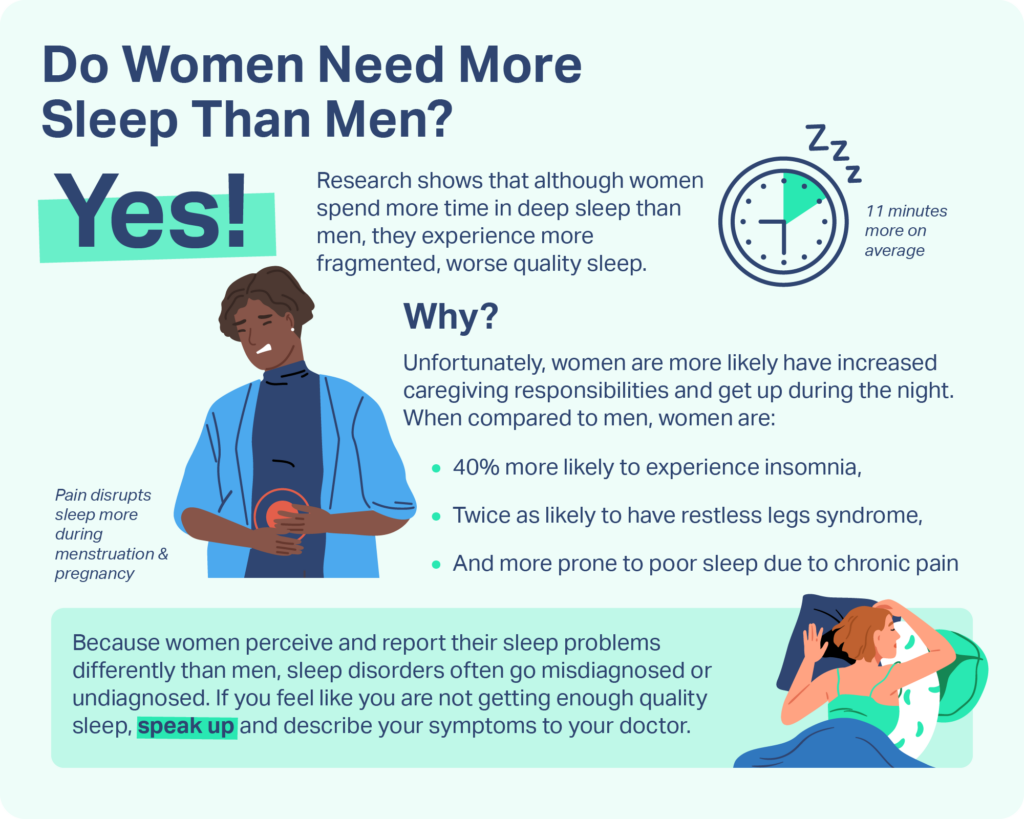
The study reveals a memory gap based on the duration of wakefulness. According to Åkerstedt, it takes about five minutes of being awake for a person to remember the event the next morning. Women spent an average of nine minutes awake during nighttime awakenings, compared to just under seven minutes for men.
This difference in duration means women remember their disruptions, while men frequently forget them. Men in the study underestimated their number of awakenings by 72%, whereas women underestimated theirs by 37%.
How does objective sleep quality differ between men and women?
Using electroencephalography (EEG), electromyography (EMG), and electrooculography (EOG), researchers tracked 238 women and 238 age- and BMI-matched men in their own homes. The objective data showed women consistently outperformed men in sleep quality.

Women recorded higher sleep efficiency, meaning they spent more of their time in bed actually sleeping. They also experienced more stage three (deep) sleep and had fewer total nighttime awakenings than their male counterparts.
In terms of total duration, women slept an average of 400 minutes per night, while men averaged 382 minutes. Despite these advantages, women were significantly more likely to rate their overall sleep quality as poor.
What happens to sleep quality as men and women age?
Objective sleep quality declines more rapidly in men than in women as they grow older, according to the Karolinska Institute data. This trend is most evident in stage three deep sleep.
Among participants aged 30 to 50, deep sleep levels were similar for both genders, hovering around 70 minutes. However, for those over 65, a sharp divide emerged: women averaged 80 minutes of stage three sleep, while men dropped to 53 minutes.
Why is the “sleep paradox” a health risk for men?
The tendency for men to overestimate sleep quality can lead to dangerous medical oversights. Because men may not perceive their sleep as disturbed, they are less likely to seek help for underlying sleep disorders.
This is critical because poor sleep is not just about fatigue. Åkerstedt notes that insomnia and disturbed sleep are linked to early mortality and chronic conditions, including cardiovascular disease and diabetes.
When men ignore objective sleep deterioration—especially the loss of deep sleep in older age—they may miss the window to treat conditions that impact long-term wellbeing.
Frequently Asked Questions
No. According to the Karolinska Institute study, women objectively sleep better, with more deep sleep and higher efficiency, despite reporting that they sleep worse.
Men typically spend less time awake during a disruption (averaging under seven minutes). Since it takes about five minutes for a wake event to be encoded in memory, many men’s awakenings are too short to be remembered.
Men’s deep sleep (stage three) deteriorates faster with age. Women over 65 averaged 80 minutes of deep sleep, while men in the same age group averaged only 53 minutes.
Want to learn more about optimizing your health? Explore our latest guides on sleep hygiene and metabolic health, or subscribe to our newsletter for evidence-based wellness updates.
Do you track your sleep with a wearable? Do the results match how you feel in the morning? Let us know in the comments.