
SETI Search Finds No Alien Signals on Interstellar Object 3I/ATLAS
The SETI Institute found no evidence of artificial radio signals coming from 3I/ATLAS, the third known interstellar object to enter our Solar System. According to lead author Dr. Sofia Sheikh, the search using the Allen Telescope Array confirms 3I/ATLAS is likely a natural comet-like object, ruling out transmissions stronger than 10-110 watts.
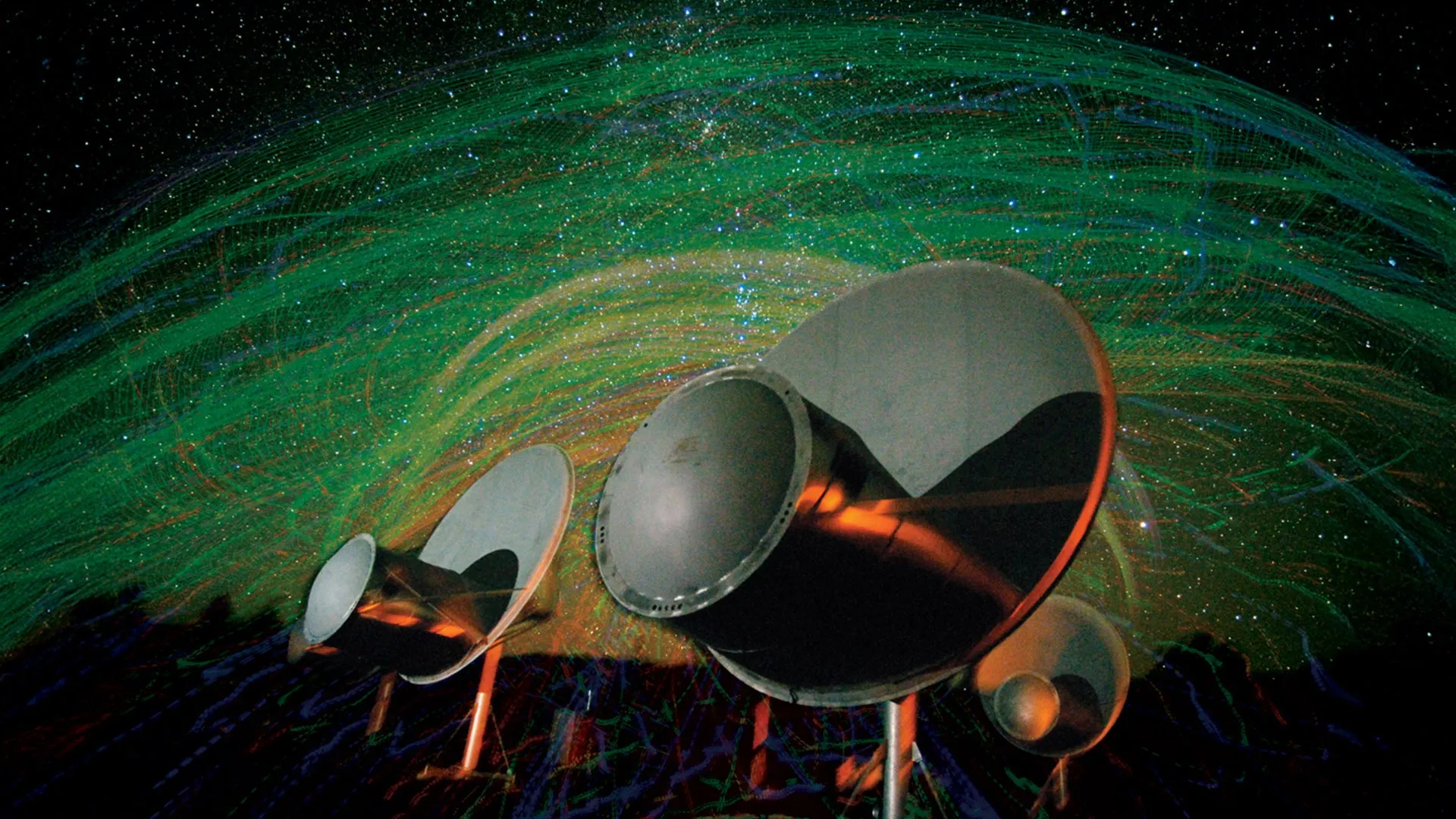
Researchers at Northern California’s Hat Creek Radio Observatory monitored 3I/ATLAS across frequencies from 1 to 9 gigahertz. The team spent over seven hours scanning for narrowband radio transmissions, which aren’t known to occur naturally. While the search yielded no technosignatures, the study demonstrates a rapid-response capability, with observations beginning less than 24 hours after the object’s discovery.
How does 3I/ATLAS compare to previous interstellar visitors?
3I/ATLAS is only the third confirmed object from another stellar system observed by astronomers. It follows 1I/’Oumuamua and 2I/Borisov. While all three originated outside our planetary neighborhood, 3I/ATLAS provides a fresh opportunity to study material from a different star system.

Unlike the initial mystery surrounding ‘Oumuamua’s trajectory, 3I/ATLAS was identified in July 2025 and quickly categorized as comet-like. This pattern of discovery suggests that interstellar objects are more common than previously thought, moving the scientific focus from “if” we find them to “how” we analyze them in real-time.
Why do scientists search for signals on natural-looking objects?
Researchers target interstellar visitors because they represent the most likely “delivery vehicles” for extraterrestrial technology. Even if an object looks like a comet, it could potentially hide a technosignature. According to co-author Valeria Garcia Lopez, searching these objects is essential because it proves the feasibility of detecting signals with current technology.

The search for 3I/ATLAS established a specific power ceiling. The study ruled out any radio transmitters on or near the object with a power output between 10 and 110 watts. For context, this is roughly the power consumption of a standard household appliance. This data helps scientists narrow the parameters for what a “detectable” artificial object would look like.
What happens next for the search for technosignatures?
The trend is moving toward “rapid response” astronomy. The SETI Institute’s ability to deploy the ATA within a day of the 3I/ATLAS announcement sets a precedent for future discoveries. As more interstellar objects are identified, the window for observation shrinks, making speed critical.
Dr. Sofia Sheikh notes that the goal isn’t just finding aliens, but understanding the “natural distribution” of these objects. She points out that our own Voyager spacecraft will eventually become extraterrestrial artifacts in other systems. By defining what a “natural” interstellar object looks like, scientists can more easily spot an anomaly that indicates artificial origin.
Comparison of Interstellar Object Detection
| Object | Origin | Primary Finding |
|---|---|---|
| 1I/’Oumuamua | Interstellar | Unusual acceleration; natural origin likely |
| 2I/Borisov | Interstellar | Clear cometary characteristics |
| 3I/ATLAS | Interstellar | No technosignatures; natural comet-like |
Frequently Asked Questions
Was 3I/ATLAS an alien spacecraft?
No. According to the SETI Institute, the search found no artificial signals, and the object’s characteristics point to a natural, comet-like origin.

What is a technosignature?
A technosignature is any measurable property or signal that provides scientific evidence of past or present technology, such as narrowband radio transmissions.
How did scientists rule out artificial signals?
Researchers used the Allen Telescope Array to filter 74 million signals. After removing human-made interference and matching signals to the object’s motion, no non-terrestrial candidates remained.
Do you think we’ll find an artificial interstellar object in our lifetime? Let us know in the comments, or subscribe to our newsletter for the latest updates on the search for extraterrestrial intelligence.