

Should India Incentivise Larger Families Amid Falling Fertility Rates?
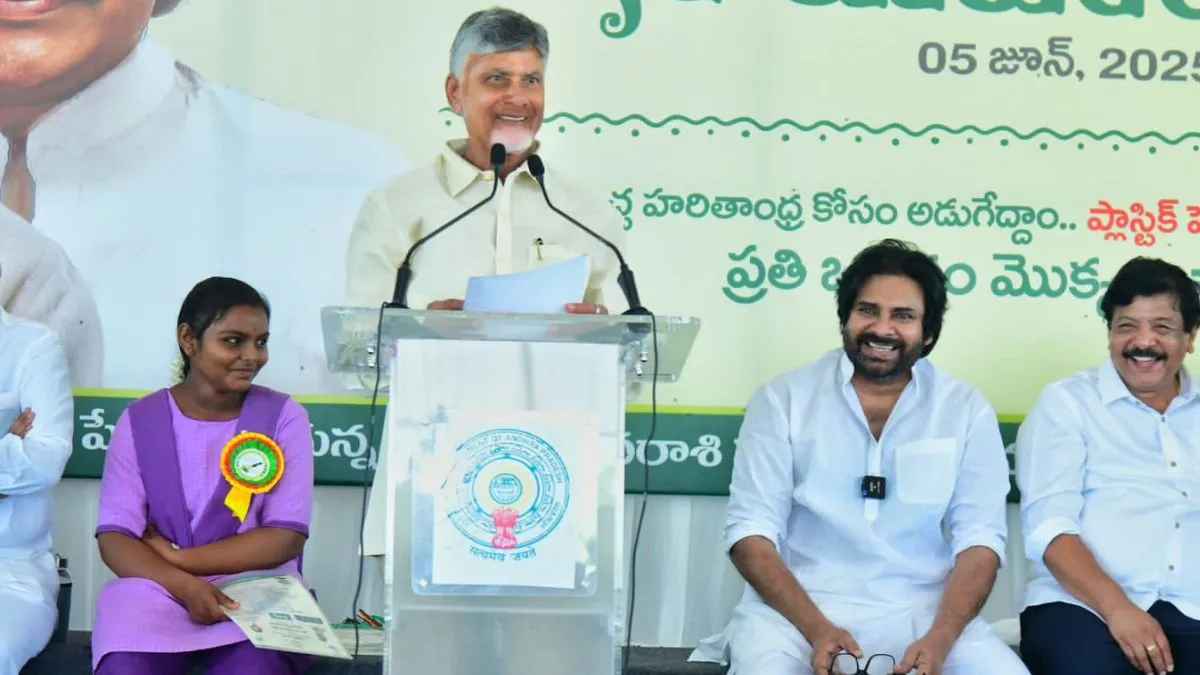
India’s national Total Fertility Rate (TFR) has fallen to 1.9, dropping below the replacement level of 2.1. In response to declining populations in southern states, Andhra Pradesh Chief Minister Chandrababu Naidu announced cash incentives of ₹30,000 and ₹40,000 for third and fourth children, respectively, according to a discussion featuring experts Aparajita Chattopadhyay and Neelanjan Sircar.
Why is Andhra Pradesh paying for more children?
Andhra Pradesh is attempting to reverse a steep decline in birth rates through direct cash transfers. While India’s national TFR is 1.9, some southern states have seen rates plummet to 1.3, according to Aparajita Chattopadhyay, a professor at the International Institute for Population Sciences.
The move is partly driven by political anxiety. Neelanjan Sircar, a political scientist at Ahmedabad University, notes that the threat of future parliamentary delimitation—the process of redrawing constituency boundaries based on population—is a primary trigger. States with slower population growth risk losing political representation in the national parliament.
Do cash incentives actually increase birth rates?
International evidence suggests that cash payouts offer only temporary or narrow results. Chattopadhyay points to Poland, where incentives created a short-term birth rate boost specifically among lower-income demographics. Similar efforts in Sweden, France, Singapore, Japan, and South Korea struggled to sustain a reversal of fertility trends.

Chattopadhyay argues that fertility is a deeply individual and socio-cultural choice. She asserts that women will not increase birth rates unless they have guaranteed security. In European countries where fertility trends are more stable, the “motherhood penalty” is negligible due to high workforce participation and robust parental leave.
Comparing the Incentive Models
The current approach in Andhra Pradesh differs sharply from the structural supports seen in developed nations. Chattopadhyay notes that for a reversal to work, women’s workforce participation would need to reach levels near 80%, supported by social security rather than one-time cash payments.
What are the risks of using economic incentives for population growth?
Sircar describes the use of cash incentives as a “ham-handed approach.” He argues that these payments do not attract wealthy families, for whom the amount is insufficient to cover the cost of a child. Instead, the incentives primarily attract poor families.
This shift does more than just increase the number of people; it changes the social composition of the future working-age population. Sircar warns that this approach ignores the complex link between economic development and naturally declining fertility rates.
How will an aging population change India by 2050?
India is moving toward a significant demographic shift regardless of current incentive policies. According to the Longitudinal Ageing Study in India, 20% or more of the population will be aged 60 and above by 2050, Chattopadhyay reports.
This trend necessitates a pivot in government spending. Chattopadhyay suggests that instead of cash for births, funds should be directed toward:
- Investment in geriatric care and primary healthcare.
- Improved pension and savings schemes.
- Development of specialized communities for elderly living.
- Upskilling the existing working-age population to sustain a “silver ageing economy.”
Can migration solve labor shortages in southern states?
Some policymakers fear a shrinking workforce, but Sircar argues that birth incentives won’t fix labor gaps. He points out that many current vacancies in southern states are for manual labor—jobs that children born into these states today are unlikely to perform as they grow up in a more developed economy.
Migration remains the primary driver for filling these roles. Sircar notes that migration is an economic phenomenon independent of fertility rates. He describes the attempt to reverse a standard social trend of development as “bizarre,” suggesting the money would be better spent addressing underemployment and the needs of the elderly.
Frequently Asked Questions
What is the current Total Fertility Rate (TFR) in India?
India’s overall TFR has dropped to 1.9, which is below the replacement rate of 2.1. Some southern states have reported rates as low as 1.3.
How much is Andhra Pradesh paying for additional children?
Chief Minister Chandrababu Naidu announced cash incentives of ₹30,000 for a third child and ₹40,000 for a fourth child.
Why is delimitation a concern for southern states?
Delimitation redistributes parliamentary seats based on population. States with declining fertility rates fear they will lose political influence and representation in the Indian Parliament.
Will cash incentives work in India?
Experts like Aparajita Chattopadhyay argue they are unlikely to work long-term, citing similar failures in East Asia and Europe where socio-cultural factors and economic security outweighed small financial incentives.
What do you think about using cash incentives to boost population growth? Should the government focus on geriatric care instead? Let us know in the comments below or subscribe to our newsletter for more demographic analysis.