
South Korea Local Election Results Delayed by Ballot Shortage and Fraud Claims
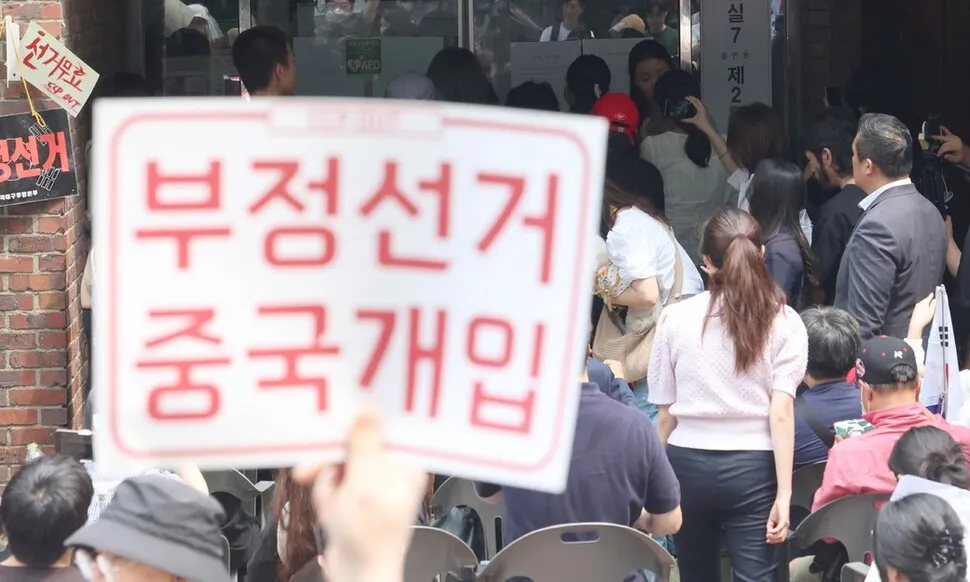
A standoff at a polling station in Seoul has halted the finalization of local election results after protesters blocked the removal of ballot boxes. The incident centers on the Jamsil 7-dong Second Polling Station in Songpa-gu, where voting was extended until 10 p.m. On the day of the 6·3 local elections due to a shortage of ballot papers.
For two days, hundreds of citizens, including former history teacher Jeon Han-gil, have surrounded the site to prevent the transport of two ballot boxes. Protesters, some carrying signs alleging Chinese intervention and election fraud, claim the boxes must be protected at all costs.
The blockade has trapped approximately 2,000 votes, preventing the complete tally of ballots. The official victory of candidates, including the candidate for Seoul Mayor, has not yet been confirmed.
Administrative Failures and Policy Shifts
The crisis was triggered by a decision by the Election Commission to lower the minimum threshold for printing ballot papers. While the limit was set at 70% of the voter population during the 2018 local elections, it was reduced to 50% for this cycle.
This reduction was intended to reflect declining local election turnout and an increase in early voting. The Commission sought to reduce the administrative burden of storing and disposing of leftover ballots, which have historically been a source of fraud allegations.
Beyond the printing quota, a lack of emergency response systems exacerbated the situation. In Songpa-gu, only 12 out of 146 polling stations experienced shortages, while 134 stations had sufficient or excess ballots.
Despite the surplus in most areas, there was no functional system to redistribute ballots from surplus sites to those in need. Emergency reserve ballots were also not delivered to the affected sites in a timely manner.
Implications for Democratic Trust
The incident has drawn sharp criticism from academic observers. Shin Yul, a professor of Political Science and International Relations at Myongji University, questioned the basis for the 50% printing benchmark, noting that daily turnout is difficult for even experts to predict.
Professor Shin argued that the decision was complacent and has effectively invited extreme distrust in the election system, which serves as the foundation of democracy.
Potential Future Scenarios
The ongoing blockade may lead to increased pressure on the Election Commission to revise its ballot procurement and distribution protocols. There is a possibility that future elections could see a return to higher printing minimums to avoid similar shortages.
the delay in certifying election winners could potentially prolong political instability or lead to further organised protests if the trapped ballots are not processed and verified transparently.
Frequently Asked Questions
Why were the ballot boxes at the Jamsil polling station blocked?
Protesters, led by figures such as Jeon Han-gil and supported by members of the Korea-US Joint Election Fraud Investigation Team, blocked the boxes to prevent their removal, alleging election fraud.
What caused the shortage of ballot papers on election day?
The shortage resulted from the Election Commission lowering the printing floor to 50% of the voter population and a failure in the administrative system to redistribute surplus ballots from other polling stations.
How has this incident affected the overall election results?
Because 2,000 votes remain trapped in the blocked ballot boxes, the final count is incomplete, meaning the victory of several candidates, including the Seoul mayoral candidate, has not been officially confirmed.
How should election commissions balance the need for administrative efficiency with the necessity of ensuring absolute public trust?