

SpaceX Dragon shuttle captures ‘ethereal’ view of Southern Lights
NASA astronaut Jessica Meir recently captured time-lapse footage of the Aurora Australis from the SpaceX Dragon spacecraft, providing a rare perspective on solar-driven atmospheric phenomena. According to Meir, the lights appeared as vivid green ribbons rippling directly beneath the craft. Astronomer Josh Aoraki of Stardome Observatory explains that these displays occur when solar particles interact with Earth’s magnetic field, channeling energy toward the poles.
Why do astronauts see auroras differently than ground observers?
Astronauts aboard the International Space Station (ISS) and private spacecraft gain a unique vantage point because they view the aurora from above the atmosphere. According to Aoraki, solar storms increase the intensity of these lights, pushing them to lower latitudes and making them more visible. While ground-based observers are limited by their local horizon and cloud cover, orbiting crews often see the “orbit” of the aurora as it wraps around the polar regions. This perspective allows for a wider view of the light’s structure, which Aoraki describes as much brighter and more distinct when viewed from space.
Auroras are not rare, but they are highly dependent on solar activity. While they occur constantly over the poles, the intensity of the solar wind determines how far from the poles the lights can be seen.
What is the future of solar activity and space observation?
Solar activity follows an approximately 11-year cycle, which dictates the frequency of intense auroral displays. According to Aoraki, we are currently in a period of relatively high solar activity, which has increased the frequency of visible light shows for both ground observers and those in orbit. However, he notes that this activity is beginning a gradual decline. Future space missions will likely rely on these solar cycles to plan high-value photography and scientific observation windows, as the intensity of the aurora directly correlates with the amount of charged particles hitting the Earth’s magnetosphere.
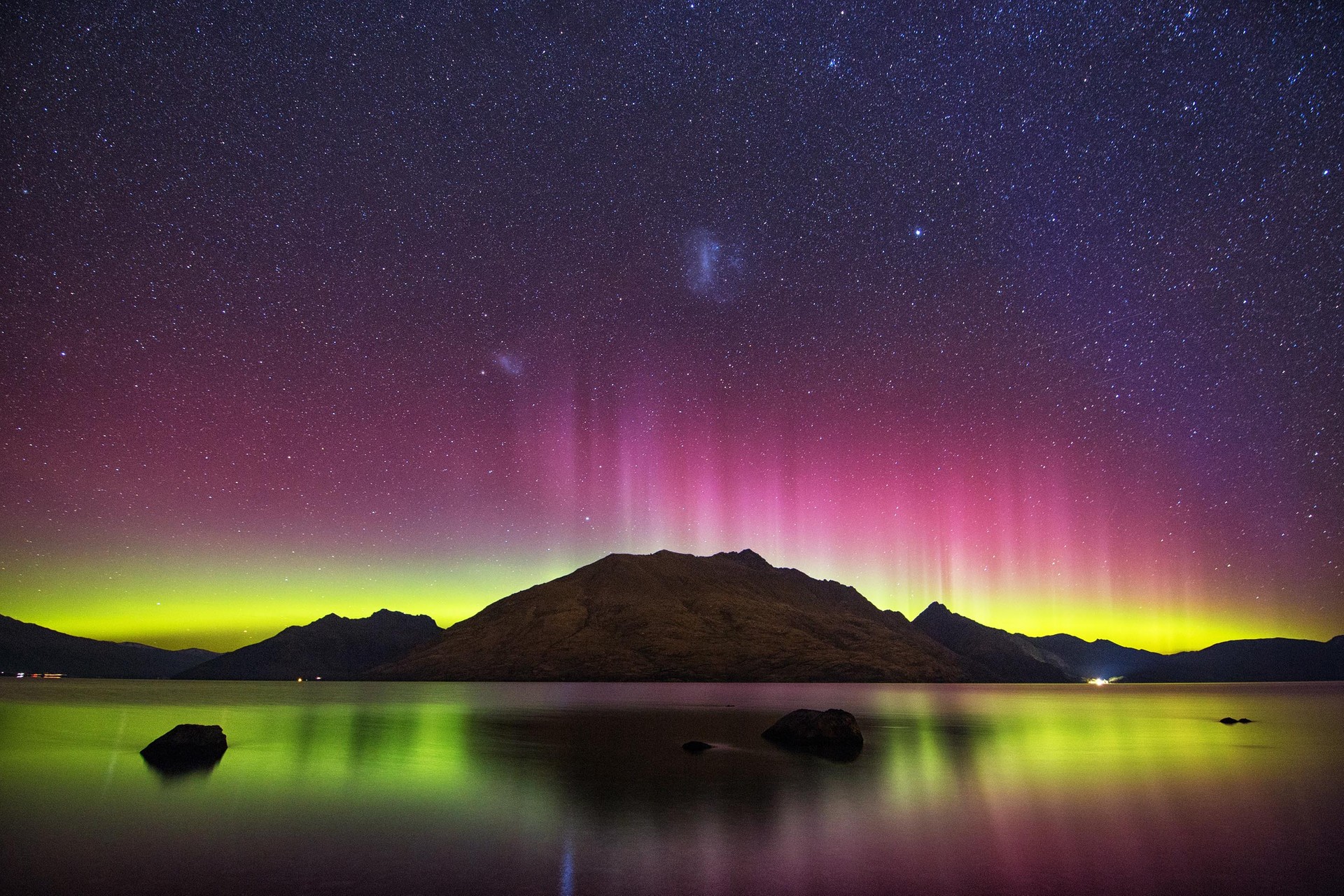
Comparison: Ground vs. Orbital Perspectives
| Feature | Ground Observation | Orbital Observation |
|---|---|---|
| Viewpoint | Upward looking | Downward/Side looking |
| Visibility | Weather dependent | Atmospheric height |
| Scale | Local sky | Continental/Orbital path |
Frequently Asked Questions
Are the Southern Lights different from the Northern Lights?
No, the physics are identical. According to Aoraki, both the Aurora Australis (Southern) and Aurora Borealis (Northern) are caused by the same solar particle interaction with Earth’s magnetic field at their respective poles.
Can anyone see the aurora from space?
Only those currently in orbit, such as astronauts on the ISS or private missions, have the vantage point to see the aurora from above. Ground observers remain the primary audience for these events.
Will solar activity increase in the coming years?
According to Aoraki, while we are in a high-activity period, the intensity is currently trending downward as part of the natural solar cycle.
If you want to track potential aurora sightings from the ground, monitor local space weather forecasts that track the Kp-index, which measures geomagnetic activity.
Have you ever seen an aurora in person or in a time-lapse? Share your thoughts in the comments below or subscribe to our newsletter for more updates on space exploration and solar phenomena.