

Swedish Court Approves Seizure of Sanctioned Ship Carrying Grain from Occupied Ukraine
The recent decision by a Swedish court to seize a sanctioned cargo ship suspected of hauling grain from Russian-occupied Ukrainian territories is more than just a legal victory for Kyiv. This proves a signal flare for the global shipping industry. We are entering an era where the high seas are no longer a “grey zone” for those attempting to bypass international sanctions.
For years, the maritime world has relied on a complex web of “flags of convenience” and shell companies to obscure the origin of goods. However, the Swedish seizure highlights a tightening net. As enforcement agencies get smarter, the risks for ship owners, insurers and traders are reaching a breaking point.
The Rise of the ‘Shadow Fleet’: A High-Stakes Game of Hide and Seek
To understand where we are heading, we have to look at the “Shadow Fleet.” These are aging vessels, often stripped of their original identities and operating without traditional Western insurance, designed specifically to transport sanctioned oil and grain.
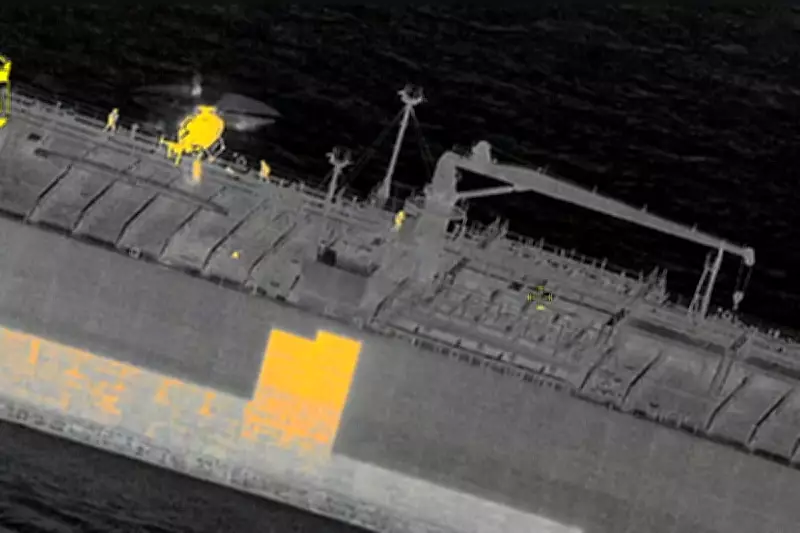
These ships often engage in “dark activity,” turning off their Automatic Identification Systems (AIS) to vanish from radar. But the tide is turning. With the integration of high-resolution satellite imagery and AI-driven tracking, “going dark” is becoming less effective.
We are likely to see a trend of aggressive jurisdictional expansion. Countries like Sweden are setting a precedent: if a vessel enters their waters, the burden of proof regarding the legality of the cargo may shift. This means ship captains can no longer hide behind vague paperwork when docked in EU ports.
Food Security vs. Sanctions: The Global Tug-of-War
The seizure of grain ships brings a volatile element into the mix: global hunger. Grain is not just a commodity; it is a geopolitical weapon. When sanctioned grain is seized, it creates a tension between the need to punish aggressors and the need to keep bread prices stable in the Global South.

Future trends suggest a shift toward “Certified Green Corridors.” We will likely see the emergence of strictly audited shipping lanes where cargo is verified by third-party international bodies before the ship even leaves the port. This reduces the risk of seizure and ensures that legitimate trade isn’t caught in the crossfire of economic warfare.
Industry data shows that the volatility of grain prices is increasingly linked to “maritime risk premiums.” As more ships are seized or sanctioned, insurance costs for legitimate operators rise, potentially driving up food costs globally. The International Maritime Organization (IMO) continues to struggle with balancing these security concerns with the necessity of open trade.
The Legal Evolution: From ‘Suspected’ to ‘Seized’
Historically, seizing a ship required an airtight case and months of litigation. The Swedish court’s prompt approval suggests a move toward precautionary seizure. In the future, the mere “suspicion” of transporting sanctioned goods—backed by satellite telemetry—could be enough to freeze a vessel’s assets.
The Tech War: AI and the End of Maritime Anonymity
The next frontier in maritime enforcement is not legal, but technological. We are seeing a surge in the use of Synthetic Aperture Radar (SAR), which can see through clouds and darkness to spot ships that have turned off their transponders.
blockchain technology is being explored to create “Digital Bills of Lading.” If every handover of grain is recorded on an immutable ledger, the ability to “wash” the origin of the cargo becomes nearly impossible. For those operating in the shadow fleet, the window of anonymity is closing fast.
For more insights on how geopolitical shifts affect global trade, check out our analysis on Global Trade Risks and Mitigation Strategies.
Frequently Asked Questions
What happens to a ship once it is seized?
Depending on the jurisdiction, the ship may be held in port until a court determines ownership and the legality of the cargo. In some cases, the assets can be liquidated to provide reparations to the affected nation.
Can a “stateless” vessel be legally seized?
Yes. Under international maritime law, a vessel without a nationality (stateless) does not enjoy the protection of any state and can be boarded and inspected by any nation’s navy or coast guard.
How does this impact global grain prices?
Short-term seizures can cause localized price spikes due to supply uncertainty. However, long-term enforcement aims to stop the “theft” of resources, which theoretically stabilizes the legal market by removing illicit competition.
What do you think?
Is the aggressive seizure of ships the best way to enforce international law, or does it risk destabilizing global food security?
Join the conversation in the comments below or subscribe to our Maritime Intelligence newsletter for weekly deep-dives.