
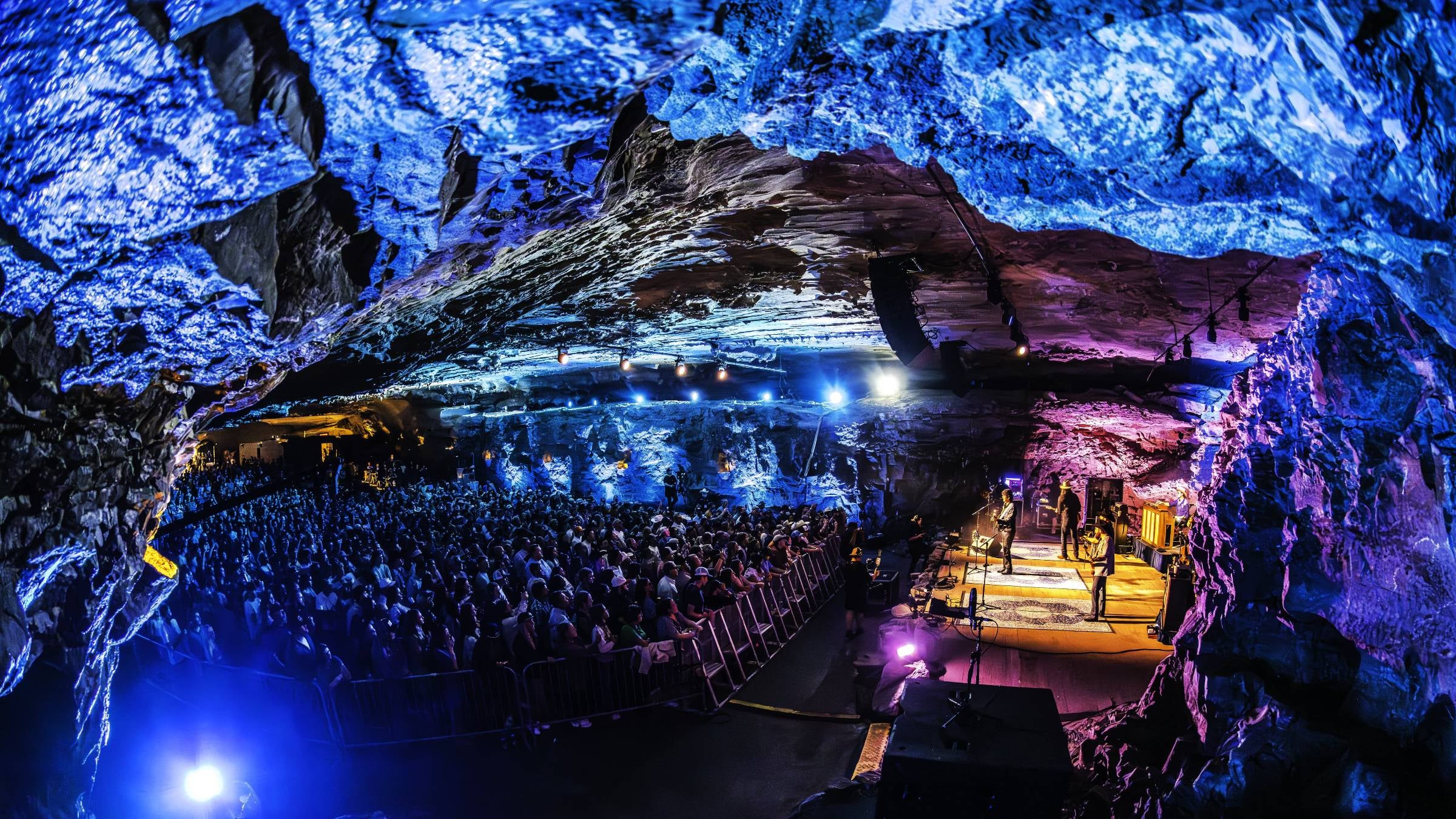
Tennessee’s Underground Cave Concert Spot
The Caverns, a subterranean concert venue in Pelham, Tennessee, hosted country rock band 49 Winchester in May 2026, marking its continued role as a unique entertainment destination. Located inside Big Mouth Cave, the venue accommodates 1,200 standing patrons and features a sound system tailored to the limestone acoustics, according to Jeff Meltesen, the venue’s marketing director. The space, which opened in 2018 after two years of ecological and structural planning, has generated $88 million in visitor spending since its debut, according to a local economic impact report.
Did You Know? The Caverns is one of 10,000 caves in Tennessee, but securing a suitable site for a concert hall required finding a space large enough to fit a stage and audience while preserving natural features. Todd Mayo, the venue’s owner, initially explored cave concerts through a 2008 radio program that later became a PBS series.
What Makes The Caverns Unique?
The Caverns’ underground setting distinguishes it from traditional venues. Its 1,200-person capacity and concrete flooring allow for a traditional concert experience, including a merch area, multiple bars, and a locally brewed beer. Sound and lighting systems are specifically calibrated to the cave’s natural reverberation, with lighting designed to highlight geological formations. Artists such as The Flaming Lips and Brandi Carlile have performed there, with some noting the shared subterranean experience between performers and audiences.

Why It Matters
The Caverns’ success underscores the intersection of natural geography and cultural programming. By leveraging Tennessee’s cave systems, the venue offers an immersive experience that blends music with environmental storytelling. Its economic impact—$88 million in visitor spending and 146 jobs since 2018—demonstrates how niche attractions can drive regional growth. The venue also adapted during the pandemic by building an outdoor amphitheater, expanding its reach to larger audiences.
What May Happen Next
The Caverns’ operator, Todd Mayo, may explore further expansion of its outdoor offerings, given the success of the 6,000-person-capacity amphitheater during the pandemic. The venue’s annual CaveFest festival, which includes activities like cave yoga and craft vendors, could grow in scale or diversify its programming. However, maintaining ecological balance remains a priority, as construction involved geologists, archeologists, and biologists to preserve the cave’s natural features.
Expert Insight: The Caverns represents a trend of repurposing natural spaces for cultural use, balancing commercial viability with conservation. Its success could inspire similar projects in other regions with unique geological features, though such ventures would require careful environmental planning and community engagement.
What to See Nearby
Visitors to The Caverns can explore nearby attractions like Fiery Gizzard State Park, known for its 12.5-mile trail and climbing spots, or the University of the South’s 13,000-acre Domain, which offers 65 miles of trails. Cumberland Caverns, the state’s longest show cave, provides guided tours of its 27 miles of passageways, including adventure options for those seeking more immersive experiences.
What impact could The Caverns’ model have on other rural communities seeking economic revitalization through unique attractions?
Frequently Asked Questions
[What is the capacity of The Caverns?]
The Caverns can accommodate 1,200 people standing or 850 seated, according to venue officials.
[How much economic impact has The Caverns generated?]
Since its 2018 opening, The Caverns has generated $88 million in visitor spending and created 146 jobs, according to a local economic impact report.
[What was the first performance at The Caverns?]
Bluegrass musician Billy Strings was the first artist to perform at The Caverns when it officially opened in 2018.
What challenges might arise if similar subterranean venues are developed in other regions?