
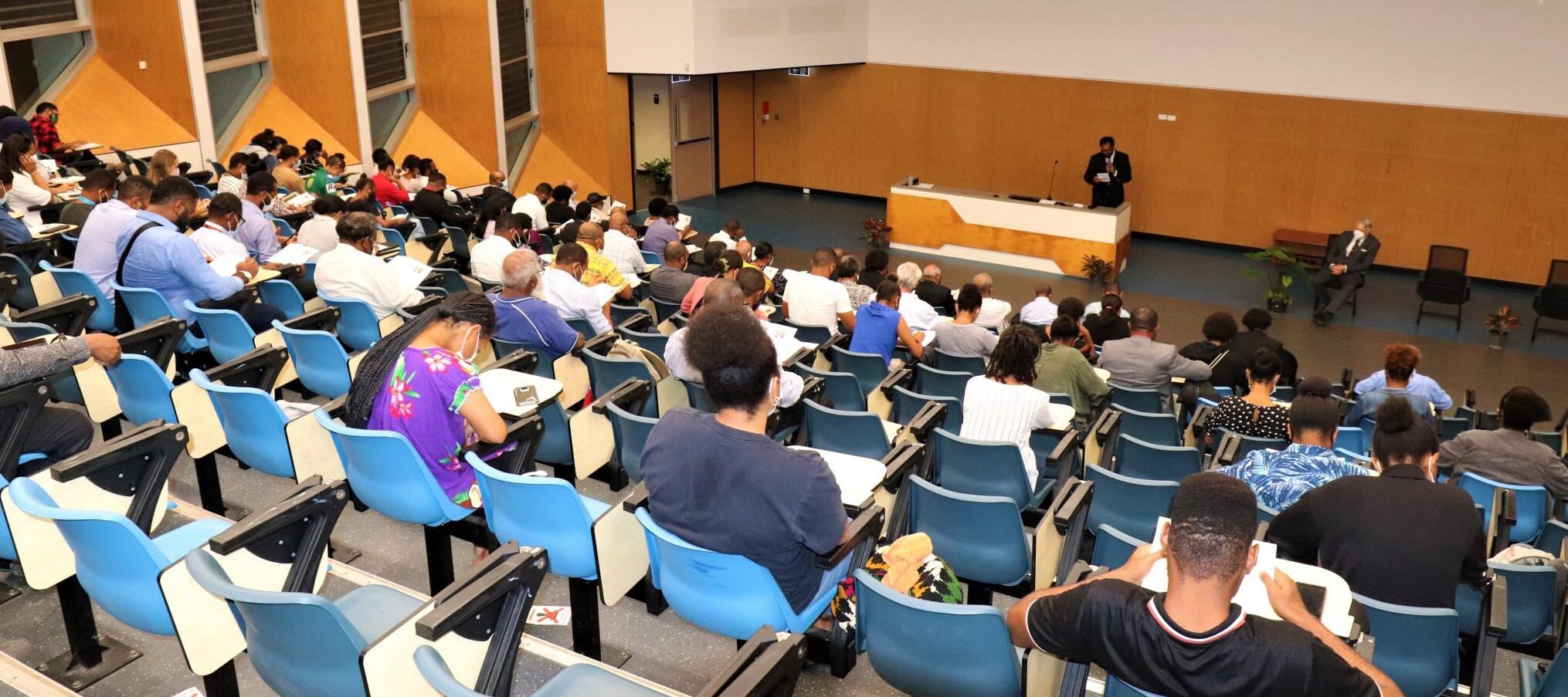
Tertiary education in PNG: a critical review
Beyond the Degree: The Future of Higher Education in Papua New Guinea
For decades, the narrative of education in Papua New Guinea has been one of expansion and struggle. From the founding of the University of Papua New Guinea in 1965 to the recent emergence of the Innovative University of Enga, the country has built a foundation. But as we look toward the horizon, simply adding more classrooms is not enough.
The real challenge isn’t just about the number of seats available—it’s about the value of the seat. With a Gross Enrolment Ratio (GER) that has historically hovered between 2% and 2.8%, PNG is fighting a demographic battle. The “youth bulge” is real and the demand for knowledge is outstripping the supply of infrastructure.
The Digital Leapfrog: Hybrid Learning as the Great Equalizer
The traditional model of “brick-and-mortar” universities is ill-suited for a geography as challenging as PNG’s. The rural-urban divide has long dictated who gets to lead and who gets left behind. However, the future lies in digital leapfrogging.

We are moving toward a hybrid ecosystem. By leveraging platforms like the PNG National Open University, the country can bypass the need for costly physical campuses in every province. Imagine a student in a remote village in the Highlands accessing a world-class lecture via a solar-powered tablet, attending physical workshops only once a month at a regional hub.
This shift toward asynchronous learning will be the only way to realistically increase the GER. When education is decoupled from location, the barrier to entry drops, and the pool of talent expands.
The Role of EdTech and Satellite Connectivity
The integration of low-earth orbit (LEO) satellites, such as Starlink, is already beginning to change the game for remote connectivity. For tertiary education, this means real-time collaboration between urban universities and rural learners, effectively erasing the “geographical tax” paid by rural students.
From ‘Paper Qualifications’ to Skill-Based Competency
There is a growing tension in PNG between public and private institutions. Public universities offer affordability and reach, but private institutions often boast better graduate employability because their curricula are tied to market needs. The future trend will be a convergence of these two models.
The era of the “generalist degree” is fading. We are seeing a shift toward micro-credentialing—short, intensive certifications in high-demand fields like sustainable agriculture, renewable energy, and digital finance. Instead of a four-year wait for employment, students will gain “stackable” skills that make them employable from year one.
The Rise of TVET and the ‘Blue-Collar’ Renaissance
For too long, tertiary education has been equated solely with university degrees. However, the backbone of national development—Vision 2050—cannot be built on degrees alone. It requires technicians, engineers, and skilled artisans.
The future will see a massive reinvestment in Technical and Vocational Education and Training (TVET). By elevating the status of vocational colleges to be on par with universities, PNG can address graduate unemployment. When a certified electrician or a specialized agricultural technician is valued as much as a business graduate, the economy becomes more resilient.
Industry-led partnerships will be the catalyst here. We should expect more “co-op” models where students spend 50% of their time in the classroom and 50% on a paid apprenticeship with a private company.
Governance 2.0: Meritocracy and Performance Audits
Infrastructure is useless without institutional integrity. The trend moving forward must be a shift from administrative governance to performance-based governance. This means moving away from political appointments toward merit-based leadership within universities.

Implementing regular policy and performance audits will ensure that funding follows results. If a program consistently produces unemployed graduates, the curriculum must be audited and pivoted. This “lean” approach to education ensures that taxpayer money is an investment, not just an expense.
For more insights on regional development, check out our guide on Sustainable Infrastructure in the Pacific or visit the World Bank’s Education Overview for global benchmarking data.
Frequently Asked Questions
Why is the Gross Enrolment Ratio (GER) so low in PNG?
The GER is low because the youth population is growing faster than the capacity of tertiary institutions to create new seats and infrastructure.
What is the main difference between public and private universities in PNG?
Public institutions generally offer better affordability and rural access, while private institutions tend to have more market-relevant curricula and higher graduate employability rates.
How can digital learning help rural students?
Digital learning removes the need for students to relocate to urban centres, reducing costs and allowing those in remote areas to access the same quality of education as those in cities.
What are ‘stackable credentials’?
These are short-term certifications that can be combined over time to create a full qualification, allowing students to enter the workforce sooner while continuing their education.
Join the Conversation
Do you think digital learning can truly replace the campus experience in PNG, or is physical infrastructure still the priority? We want to hear from students, educators, and policymakers.
Leave a comment below or subscribe to our newsletter for more deep dives into the future of Pacific education!