
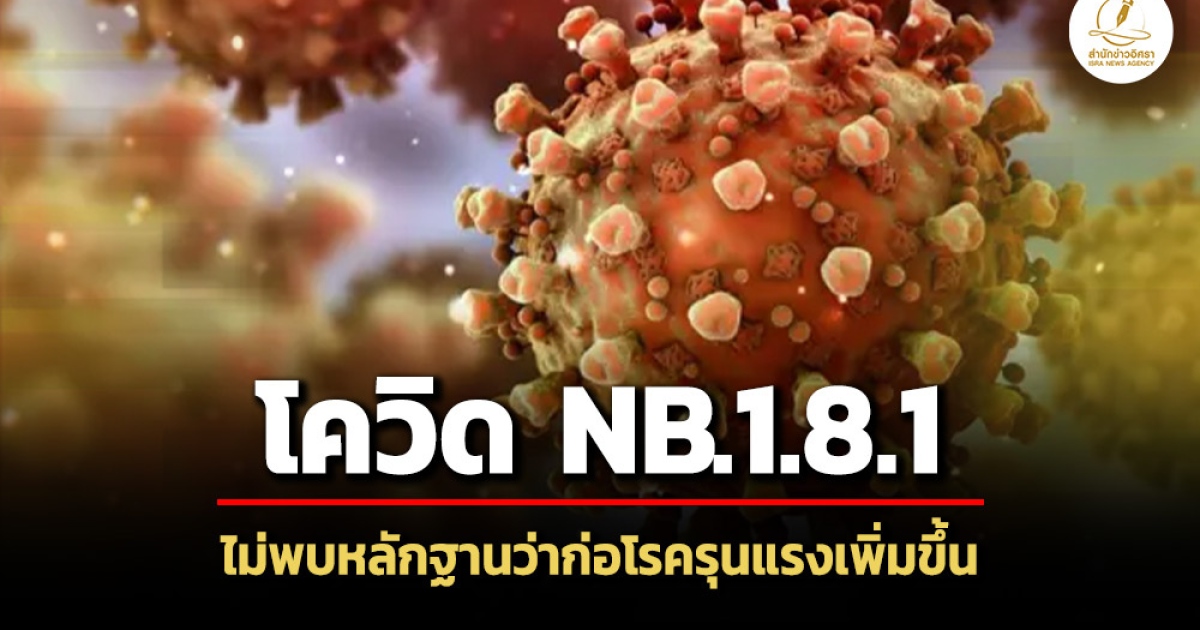
Thailand Confirms NB.1.8.1 as Dominant COVID-19 Variant with No Increase in Severity
As of June 2026, health authorities continue to monitor the evolution of COVID-19 as the NB.1.8.1 variant maintains its position as the dominant strain circulating in Thailand. Since mid-2025, this variant has been the primary focus of laboratory surveillance, with current data indicating it accounts for over 50% of detected cases.
While the variant exhibits specific mutations that enhance its ability to spread and evade immune responses, clinical evidence suggests it does not cause more severe disease compared to previous strains. Most patients continue to report standard respiratory symptoms, including fever, cough, sore throat, and runny nose.
Current Surveillance and Trends
Data from the Digital Disease Surveillance (DDS) system as of June 2, 2026, recorded 4,156 cases and one death. The demographic most affected includes individuals aged 30–39, followed by those 60 and older, and the 20–29 age group. Despite a seasonal uptick in reports over the last month, the total volume of cases remains below the five-year median.
The Department of Disease Control utilizes a network of 26 sentinel hospitals across the country to track respiratory pathogens. This system ensures that samples are analysed systematically, allowing for the rapid identification of variants like NB.1.8.1, which has been under observation since the middle of last year.
Implications and Future Outlook
The persistence of COVID-19 as a year-round respiratory concern, particularly during the rainy season when indoor gatherings are more frequent, remains a key public health consideration. Because the virus continues to circulate, health officials emphasize that the situation requires ongoing vigilance rather than immediate alarm.
Looking ahead, the trajectory of the virus may depend on seasonal behavior and the effectiveness of public health interventions. If current trends hold, the healthcare system is expected to manage the caseload through existing surveillance networks. However, should new, more significant mutations emerge, the established laboratory infrastructure is prepared to conduct deep-risk assessments to adjust public health responses accordingly.
Frequently Asked Questions
Is the NB.1.8.1 variant more dangerous than previous strains?
No. Current epidemiological and clinical data show no evidence that the NB.1.8.1 variant causes more severe illness or poses a higher risk of death than previous strains.
What are the recommended precautions for the public?
Officials recommend practicing consistent personal hygiene, such as frequent hand washing and wearing masks in crowded areas. Individuals with respiratory symptoms should conduct initial screenings and avoid close contact with high-risk groups, such as the elderly or those with underlying conditions.
How does Thailand track these virus mutations?
The country utilizes a network of 26 sentinel hospitals to monitor respiratory diseases. Samples are sent to the Department of Medical Sciences for analysis to identify variants and assess potential public health risks in real time.
How have your personal health habits changed during the rainy season to manage the ongoing risk of respiratory infections?