
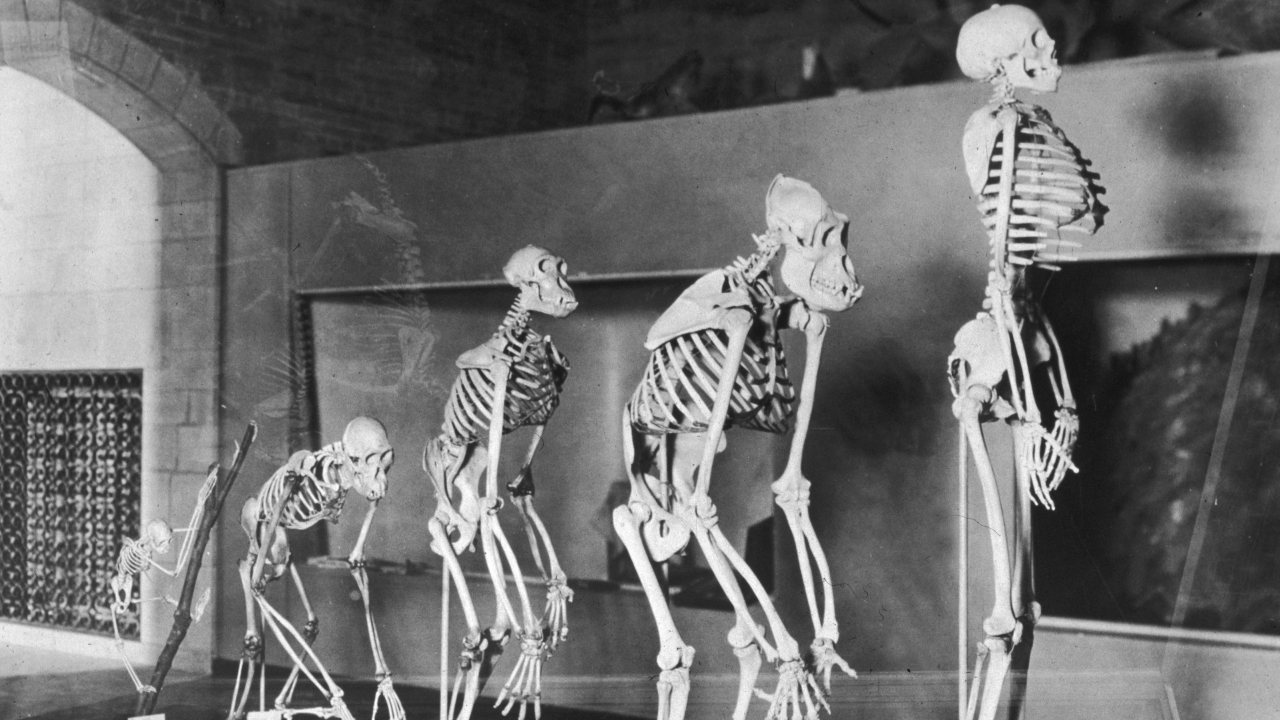
The Myth of the Human Revolution: Why Evolution Was Gradual
Human evolution proceeded through a gradual, uneven process rather than a sudden “cognitive revolution,” according to archaeologist Huw S. Groucutt in Quaternary Science Reviews. This shift in understanding suggests that modern human traits emerged and vanished across various populations over millennia, rather than appearing in a single transformative event.
Why is the “Cognitive Revolution” theory being challenged?
For decades, many scientists pointed to a marker roughly 50,000 years ago as the moment humans experienced a cognitive leap. This theory suggested a sudden shift toward symbolic thought, advanced tool-making, and complex social networks. Some theories, including those by ethnobotanist Terence McKenna, even attributed this shift to the consumption of psychotropics.
Huw S. Groucutt argues these simple explanations are now unsustainable. Evidence from archaeological sites across Africa shows that “modern” behaviors appeared much earlier. According to Archaeology Magazine, shell beads, bone tools, and organized hearths existed tens of thousands of years before the proposed revolution date.
These traits didn’t emerge all at once. They appeared in one region, vanished in another, and resurfaced elsewhere. This pattern points to a long series of scattered changes rather than a single point of inflection.
How will interdisciplinary research change our view of history?
A primary conflict in anthropology is the “dissonance” between different fields of study. Groucutt identifies a gap where geneticists, fossil hunters, and archaeologists often tell three different stories about the same period.
Future research trends are moving toward a “unified data” model. Instead of relying on a single category of evidence, researchers are integrating genetic mapping with site-specific tool analysis. Current genetic studies already support this gradualist view, showing a history of multiple populations separating, mixing, and exchanging genes over vast timeframes.
By combining these fields, scientists can move away from seeking the “first” instance of a behavior—such as the first time humans fished—and instead map the frequency and distribution of that behavior across continents.
What happens next for the study of human origins?
The shift from “revolution” to “gradualism” suggests three major trends in future anthropological study:
1. Mapping “Mosaic” Evolution
Researchers will likely stop looking for a “smoking gun” event. The focus is shifting toward mosaic evolution, where different traits (like language, art, or tool use) evolve at different rates in different places. This removes the pressure to find a single date for the “birth” of modern humanity.
2. High-Resolution Genomic Sequencing
As ancient DNA (aDNA) recovery improves, scientists can track how specific traits moved through populations. This will likely prove that “modern” traits were often lost and rediscovered, rather than being a linear climb toward complexity.
3. Redefining Cognitive Development
The focus is moving away from the “cognitive leap” and toward environmental adaptation. Instead of a sudden biological mutation, the emergence of complex thought is being viewed as a slow response to shifting climates and social pressures.
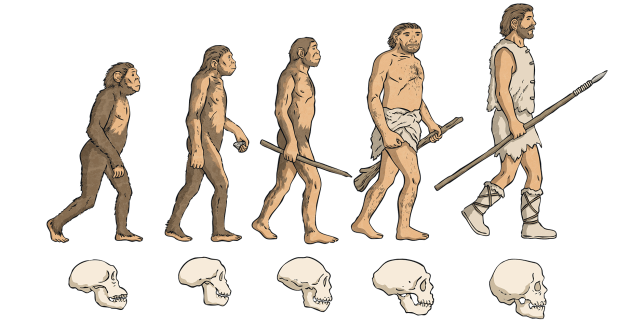
Comparison: Sudden Revolution vs. Gradual Evolution
| Feature | Revolution Theory | Gradualist Theory (Groucutt) |
|---|---|---|
| Timeline | Sudden shift (~50k years ago) | Millennia of slow change |
| Trait Appearance | Simultaneous and global | Uneven, regional, and fluctuating |
| Primary Driver | Cognitive mutation/event | Genetic mixing and adaptation |
Frequently Asked Questions
Was there ever a “cognitive revolution”?
According to Huw S. Groucutt, the idea of a single, transformative event is an illusion. Evidence suggests human traits developed gradually and unevenly.
What evidence proves evolution was gradual?
Archaeological finds in Africa, such as shell beads and bone tools, appear tens of thousands of years before the supposed 50,000-year mark, as noted in Archaeology Magazine.
Why do different scientists have different theories?
Dissonance occurs because experts in genetics, fossils, and archaeology often work in silos. Groucutt argues that only an interdisciplinary approach provides a complete picture.
Does this mean humans didn’t evolve intelligence?
No. It means intelligence didn’t “switch on” overnight. It was a slow process of accumulation and exchange between different human populations.
Want to dive deeper into how our ancestors shaped the modern world? Check out our guide on ancient human migration patterns or subscribe to our newsletter for the latest updates in paleoanthropology.