

The Powell Memo: The Blueprint for Project 2025 and Modern Conservative Power
A confidential document drafted more than 50 years ago is seeing a resurgence in public interest as the United States grapples with the implications of Project 2025. Known as the “Powell Memo,” this strategy for reshaping American power is being revisited by those analyzing current debates over corporate influence, education and democracy.
The Origins of the Powell Memo
The 34-page document, formally titled “Attack on American Free Enterprise System,” was written by corporate lawyer Lewis F. Powell Jr. He sent the memorandum to Eugene B. Sydnor Jr., who served as the chair of the Education Committee at the U.S. Chamber of Commerce.
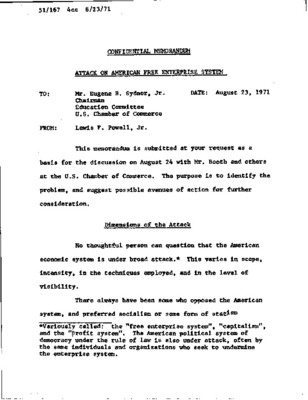
Powell’s primary objective was to urge business leaders to take a more active role in shaping public opinion, politics, and American institutions. He argued that such actions were necessary for the “survival” of the free enterprise system.
Identifying the “Sources of Attack”
In the memo, Powell described “disquieting voices” within society that he believed threatened economic stability and corporate legitimacy. He specifically identified communists, New leftists, and other revolutionaries as forces seeking to destroy the political and economic system.
Powell further expanded his critique to include politicians, the media, academic campuses, and the arts and sciences. He claimed these extremists of the left were better financed and more welcomed by society than at any other point in history.
Links to Modern Governance
Historians and political analysts have increasingly linked Powell’s ideological groundwork to today’s conservative movements. Many observers point to the Trump administration as a real-time application of these shifts, particularly regarding the reshaping of federal institutions.
Current policies, such as aggressive ICE operations and the rollback of diversity, equity, and inclusion (DEI) programmes, are viewed by some as extensions of this long-term playbook. Other examples include proposed restructuring of public education and cuts to healthcare access.
Differing Perspectives on Power
Supporters of these administrative changes frame them as necessary efforts to restore balance to the government. However, Black communities view these actions as a continuation of a decades-long effort to concentrate power.
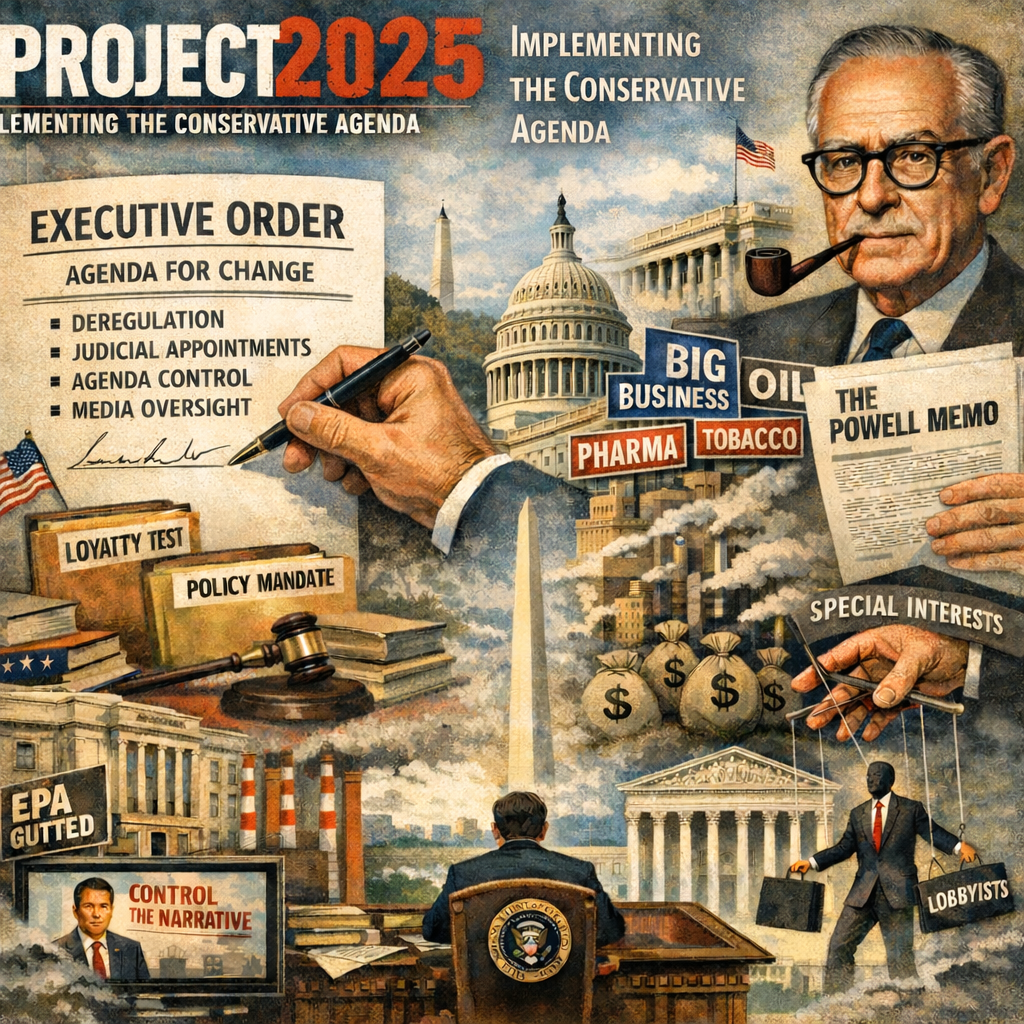
Critics argue that this concentration of power may deepen inequality and weaken public protections. They suggest these moves could potentially roll back hard-won civil rights gains for working people and Black folks.
Potential Future Trajectories
As the influence of Project 2025 remains under scrutiny, the Powell Memo may serve as a historical lens for predicting future policy shifts. Analysts suggest that current administrative decisions could be part of a larger, ongoing playbook rather than isolated events.
Future efforts may likely continue to challenge the authority of the media and academia. Depending on the trajectory of this strategy, federal institutions could see further restructuring to align with the goals outlined in Powell’s original memorandum.
Frequently Asked Questions
What was the primary goal of the Powell Memo?
The goal was to encourage business leaders to become more influential in shaping politics, public opinion, and American institutions to ensure the survival of the free enterprise system.
Who did Lewis F. Powell Jr. Identify as threats to the system?
Powell identified communists, New leftists, revolutionaries, the media, academic campuses, politicians, and those in the arts and sciences as sources of the attack.
How is the Powell Memo connected to current political events?
Critics and historians link the memo’s ideological groundwork to Project 2025 and the policies of the Trump administration, including the rollback of DEI programmes and the reshaping of federal institutions.
Do you believe historical documents like the Powell Memo provide a necessary roadmap for understanding today’s political climate?