

The Secret Bunkers of Berlin: From Cold War Relics to Modern Landmarks
Berlin’s landscape is defined by massive, indestructible concrete bunkers—relics of the Second World War and the Cold War that the city has been forced to either integrate into modern life or seal away. Because these structures are too dense to demolish without risking damage to surrounding infrastructure, urban planners and private owners have turned toward adaptation, transforming former bomb shelters into art galleries, residential basements, and historical memorials.
Did You Know? The Fichtebunker in Kreuzberg, originally a 19th-century gasometer, provided shelter for up to 30,000 people during Allied air raids by the end of World War II, despite being originally designed to accommodate only 6,000.
Adaptive Reuse and Modern Transformation
The city has shifted from attempting to destroy these monolithic structures to repurposing them for civilian use. According to historical accounts, the Hochbunker on Reinhardtstraße serves as a primary example of this shift. Originally built in 1943 to protect 3,000 people, the structure has transitioned from a Nazi-era air raid shelter to a Soviet prison, a tropical fruit warehouse during the 1950s, and eventually a techno club. In 2003, art collector Christian Boros purchased the tower, converting the interior into a private gallery and adding a glass penthouse to the roof.
Similarly, the Fichtebunker was sold to a private investor who integrated the structure into a new housing development. The bunker now serves as a foundation and basement area for modern townhouses, effectively making the historical fortification a permanent, if invisible, part of the neighborhood’s topography.
The Challenge of Historical Memory
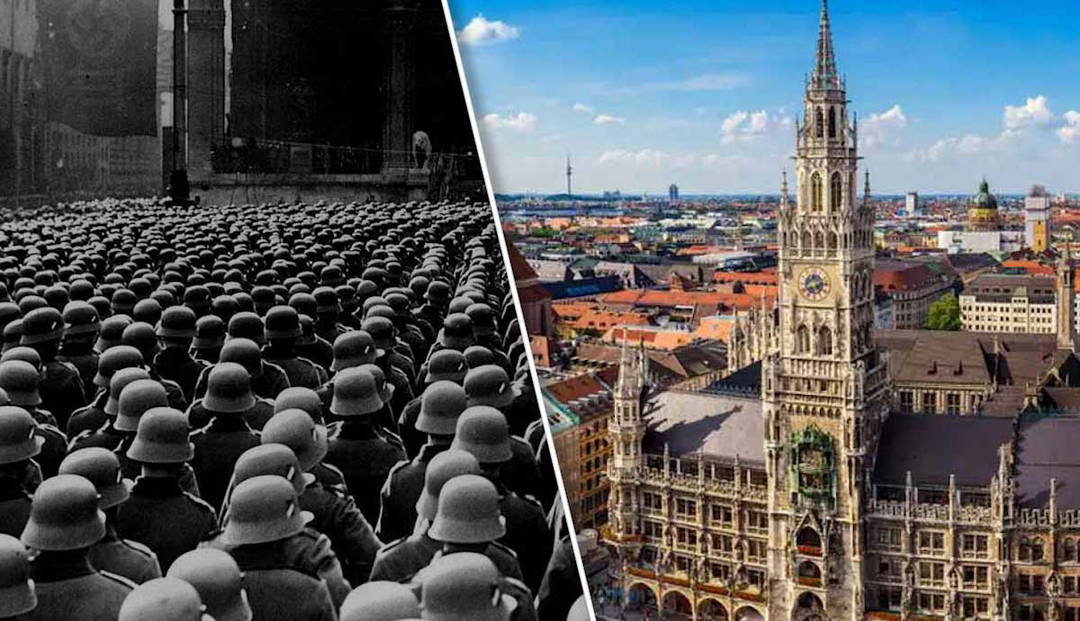
Not all bunkers have been repurposed; some remain sealed to prevent the sites from becoming gathering points for extremist ideologies. The Führerbunker, located near the site of the former New Reich Chancellery, remains buried after multiple failed attempts at demolition by Soviet forces and the East German government. According to historical reports, the site was left intentionally anonymous for decades to avoid creating a neo-Nazi shrine. In 2006, authorities installed an informational sign to provide historical context while maintaining the area as an unremarkable, public space.
Economic and Logistical Hurdles
Preservation is often discarded in favor of sealing when costs become prohibitive. The military command bunker 17/5001, completed in 1983 near the village of Prende, was designed to withstand a direct nuclear strike and house 400 people for two weeks. Following the fall of the Berlin Wall, the facility was decommissioned and eventually sealed in 1993. Estimates suggest that bringing the structure up to modern safety standards for public tours would cost more than 1 million euros, leading officials to keep it hermetically sealed as a time capsule for future generations.
Expert Insight: The persistent presence of these bunkers forces a unique tension between urban development and historical preservation. By choosing to seal or transform rather than destroy, Berlin effectively “slows down” the erasure of its past. These structures act as fixed points in the city’s timeline, and as the surrounding architecture evolves, these concrete monoliths remain as the only tangible witnesses to the city’s 20th-century conflicts.
What May Happen Next
As the cost of maintaining or retrofitting these massive concrete shells remains high, it is likely that future urban projects will continue to treat them as topographical constraints rather than buildings. Analysts expect that more bunkers will be incorporated into the foundations of new residential or commercial construction projects, similar to the Sportpalast-Bunker, where a modern housing block was built directly over the structure. This strategy allows the city to grow around the concrete relics, effectively hiding them in plain sight while avoiding the massive logistical risks associated with explosive demolition.
Frequently Asked Questions
Why can’t Berlin simply demolish all of its wartime bunkers?
Demolition is often considered impossible because the bunkers are too massive and structurally sound. Destroying them would require vast amounts of explosives, which would threaten the structural integrity of neighboring residential buildings and modern infrastructure.
What is the current status of the Führerbunker?
The site is buried and remains largely anonymous. After failed attempts to destroy it, the area was left unmarked for years to prevent it from becoming a site of pilgrimage. A single information plaque was added in 2006 to provide facts for the public.
How are bunkers like the Sportpalast-Bunker used today?
The Sportpalast-Bunker has been integrated into a modern residential complex known as the Palaseum. It serves as a memorial site and is used by a local school for history education and art exhibitions.
How do these concrete structures change your perception of the city’s history as you walk through Berlin?