
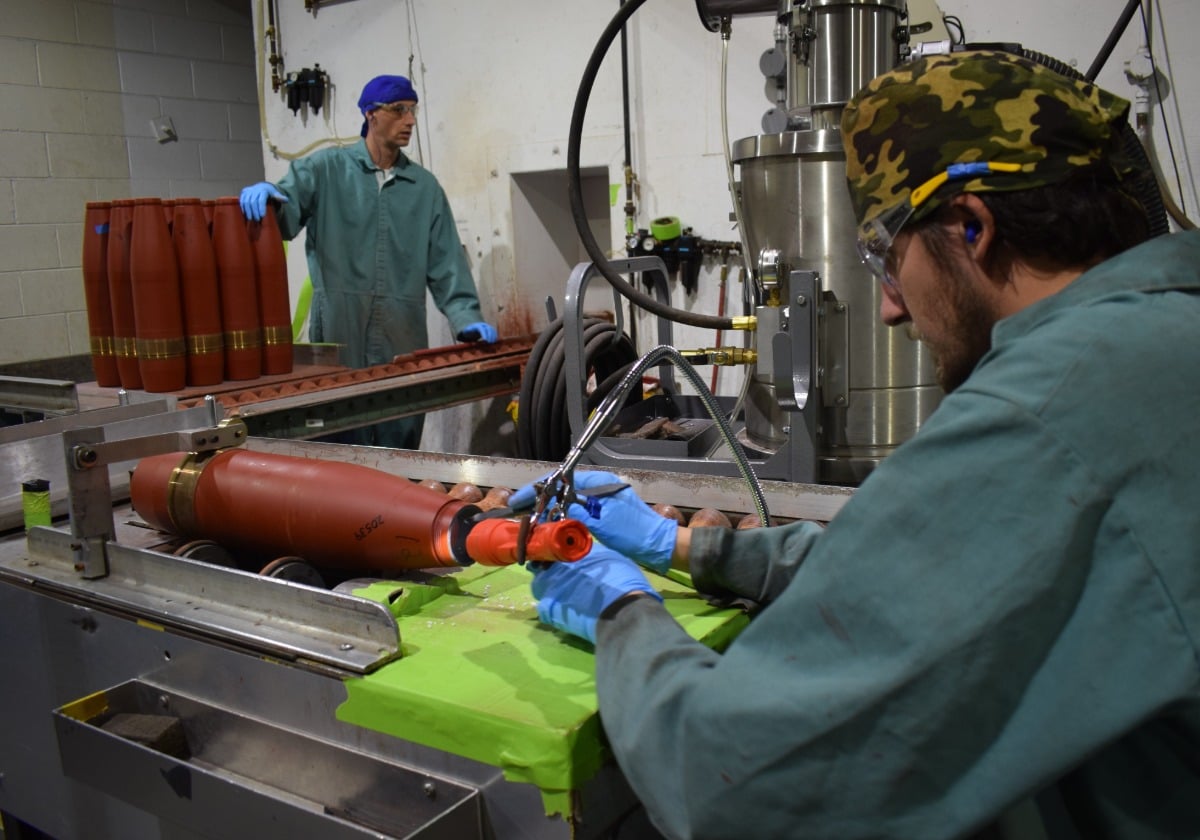
The Shift in Defence Capability: From Platform Performance to Production Rate
Why is Production Rate Becoming a Core Defense Capability?
Willem Mulock Houwer, founder of Red Cobra Defence, argues that modern warfare is redefining military advantage, shifting focus from platform performance to industrial scalability. Ukraine’s conflict has exposed the limitations of traditional defense models, where production capacity was treated as a secondary concern. According to Houwer, “the ability to sustain, expand, and adapt production has moved from the margins to the center of strategic planning.”
Historically, defense capability was measured by the technical superiority of platforms—aircraft, tanks, missiles—while production rates were seen as a logistical afterthought. However, active conflicts like Ukraine’s war with Russia have shown that even advanced systems are constrained if they cannot be produced at the pace required by fast-evolving battlefields. “The assumption that superior technology alone guarantees advantage is now structurally challenged,” Houwer states.
Ukraine’s Lessons: How Combat Exposes Industrial Gaps
Ukraine’s war has served as a real-world test for defense industrial models. Battlefield requirements have evolved faster than pre-war planning cycles, with threats adapting in real time. For example, Ukraine’s need for Javelin missiles and HIMARS systems outpaced initial stockpile projections, forcing rapid production adjustments. According to a 2023 NATO report, Ukraine’s consumption rates for certain munitions exceeded pre-war assumptions by 300% in some categories.

“The industrial model built around stable long-term contracts couldn’t keep up,” says a NATO procurement official. “Adversaries like Russia are not just fighting with weapons—they’re fighting with production capacity.” This has forced Western nations to rethink how they resource defense industries, with some countries now prioritizing modular, scalable manufacturing over single-platform procurement.
How Industrial Scalability Differs from Technological Superiority
While technology remains critical, Houwer emphasizes that production rate is now a distinct defense capability. A highly advanced system, like the F-35 fighter jet, may take years to design and replace, but its strategic value diminishes if it cannot be produced quickly. “In a high-intensity conflict, the ability to scale production at pace is as vital as the technology itself,” he explains.
Germany’s recent decision to boost defense spending by €100 billion by 2026 includes investments in domestic munitions production, reflecting this shift. Similarly, the U.S. has accelerated funding for companies like Raytheon and Lockheed Martin to expand missile manufacturing. These moves contrast with the post-Cold War era, where defense budgets prioritized platform development over industrial resilience.
What Happens Next in Defense Planning?
European governments are now reevaluating long-standing assumptions about defense industrial bases. The European Defence Agency (EDA) reported in 2023 that 70% of member states are revisiting production capacity strategies, a significant increase from 2020. “This isn’t just about buying more equipment—it’s about building systems that can adapt to changing threats,” says a French defense ministry official.
Key challenges include balancing cost-effectiveness with scalability and ensuring that production capacity is maintained as a standing capability, not just activated on demand. Countries like Finland and Sweden are investing in “dual-use” manufacturing facilities that can pivot between civilian and military production, a model gaining traction across NATO.
FAQ: Understanding the Shift in Defense Priorities
Why is production rate more important than ever?
Modern conflicts demand rapid adaptation. Ukraine’s war showed that even advanced systems can be outpaced by the need for speed in production and replenishment. According to Red Cobra Defence, “industrial scalability is now a strategic differentiator.”
How has Ukraine influenced this shift?
Ukraine’s experience with sustained high-intensity combat exposed gaps in Western defense models. Its reliance on externally sourced weapons highlighted the need for domestic production capabilities and flexible procurement frameworks.
:max_bytes(150000):strip_icc()/production-rate-Final-73359fc1af764f1780b4942286ce276e.png "How has Ukraine influenced this shift?")
What role do NATO countries play?
NATO members are increasingly prioritizing industrial resilience. Germany’s 2023 defense budget, for instance, includes €25 billion for expanding munitions production, reflecting a broader trend across the alliance.
Did You Know?
The U.S. military’s annual procurement budget for missiles has doubled since 2020, driven by the need to match Russia’s production rates in Ukraine. This shift underscores the growing recognition of production capacity as a strategic asset.
Pro Tips for Policymakers
- Invest in modular manufacturing to enable rapid scaling of critical systems.
- Foster public-private partnerships to maintain industrial readiness during peacetime.
- Integrate production capacity into national security strategies, not just procurement plans.
Explore More
For insights into NATO’s evolving defense strategies, read our analysis. To understand the economic impact of defense spending, explore our recent report.