
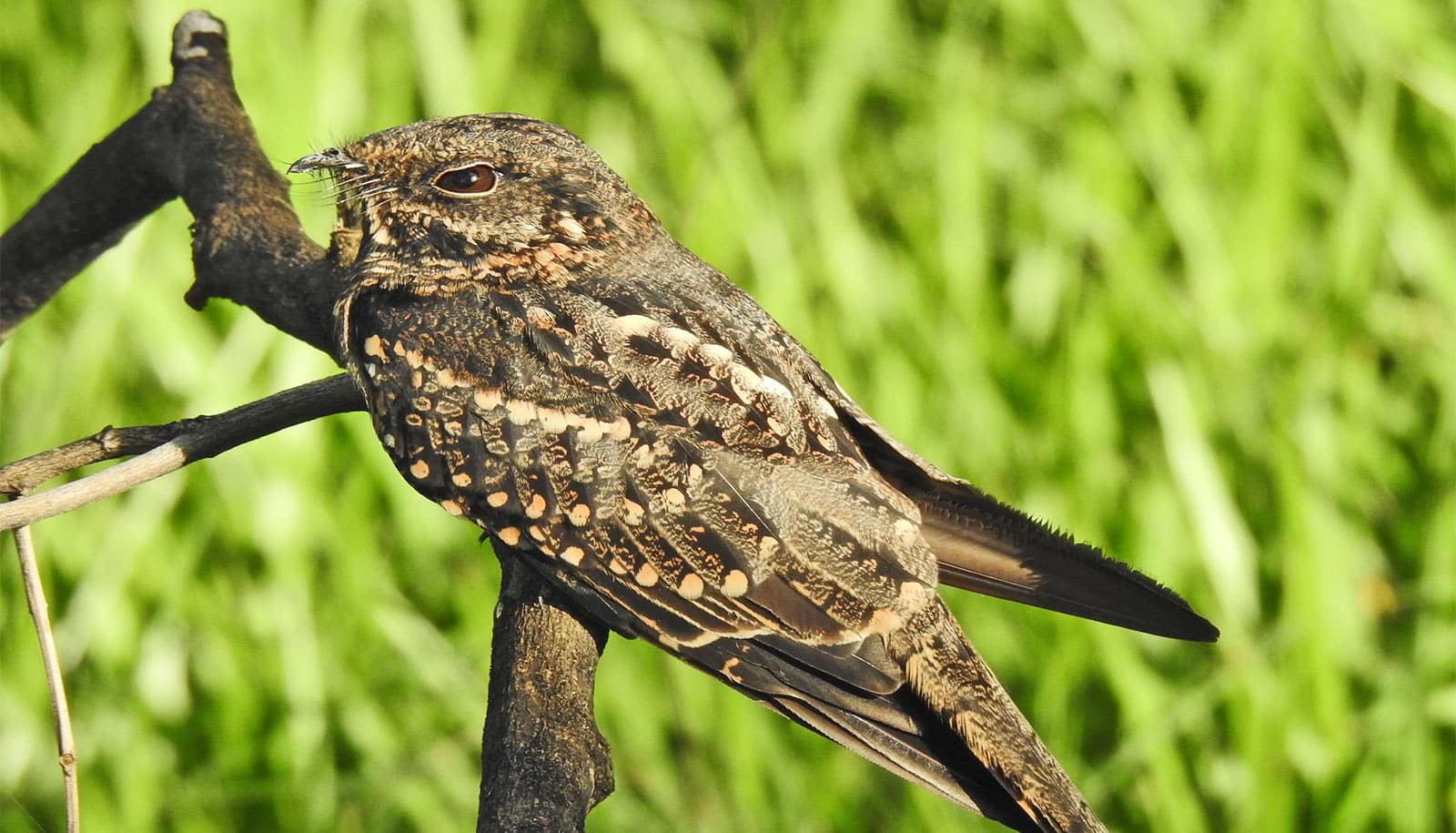
These birds clap at night to flirt
For decades, our understanding of animal communication has been dominated by the “song.” From the melodic trills of a nightingale to the haunting calls of humpback whales, we’ve focused on vocal cords and syrinxes. But the recent discovery of the scissor-tailed nightjar—a bird that “claps” its wrist bones to attract a mate—signals a paradigm shift in bioacoustics.
We are entering an era where scientists are looking beyond the voice. The realization that animals use their entire bodies as percussion instruments is opening a door to a “hidden language” of mechanical sounds. This shift isn’t just a curiosity for ornithologists; it’s a catalyst for new trends in technology, conservation, and our fundamental understanding of intelligence in the wild.
The Rise of Non-Vocal Bioacoustics
The discovery in northern Argentina highlights a broader trend: the study of non-vocal communication. While we’ve known about the “drumming” of woodpeckers or the clicking of dolphins, the precision of the nightjar’s wrist-snap suggests a level of mechanical sophistication we’ve largely ignored.

Future research is likely to pivot toward “sonic signatures” created by friction, collision, and vibration. We are beginning to ask: how many other species are communicating through “body percussion”? From insects rubbing legs together (stridulation) to mammals using rhythmic thumping, the focus is shifting from what they are saying to how the physics of their bodies creates the message.
AI and the Decoding of Nature’s Secret Languages
The biggest hurdle in studying mechanical sounds has always been detection. These noises are often short, sharp, and easily masked by wind or rain. However, the integration of Machine Learning (ML) and Artificial Intelligence is changing the game.
We are seeing a trend toward “passive acoustic monitoring” (PAM). By deploying thousands of AI-powered sensors in remote rainforests or deserts, researchers can now filter through terabytes of audio data to find a single “snap” or “click” that identifies a rare species. This allows us to map biodiversity without ever seeing the animal.
Imagine an AI trained to recognize the specific frequency of a nightjar’s wrist-snap. This technology could allow conservationists to track population movements in real-time, providing data that was previously impossible to gather in the dead of night.
The Role of High-Speed Imaging
As seen in the nightjar study, infrared high-speed cameras are becoming essential. The trend is moving toward multimodal data collection—combining audio recordings with millisecond-by-millisecond visual data. This allows scientists to correlate a specific physical movement (like a bone collision) with a specific sound, effectively creating a “dictionary” of animal gestures.
Biomimicry: From Bird Snaps to Robotics
The physics of the scissor-tailed nightjar’s clap—creating a loud sound without specialized anatomical modifications—is a goldmine for engineers. This is where bioacoustics meets biomimicry.
Engineers are currently studying how nature produces high-impact sounds with minimal energy expenditure. This could lead to breakthroughs in:
- Acoustic Signaling in Robotics: Developing robots that can communicate in underwater or noisy environments using mechanical clicks rather than electronic signals.
- Material Science: Creating new materials that can produce specific frequencies of sound upon impact, useful in everything from automotive safety to musical instrument design.
- Efficient Energy Transfer: Understanding how the radius bone of a bird absorbs the shock of a “clap” without causing injury.
Acoustic Conservation in a Noisy World
As human noise pollution increases—from shipping lanes in the ocean to urban sprawl on land—animals are being forced to adapt their “languages.” The trend in conservation is now moving toward “Soundscape Ecology.”
If a species relies on a mechanical “snap” for mating, a sudden increase in ambient noise (like construction or traffic) could render them “invisible” to their partners. Researchers are now advocating for “quiet zones” not just for the sake of human peace, but to protect the reproductive cycles of species that communicate through subtle mechanical sounds.
For more on how noise affects wildlife, explore the latest reports from the Nature Portfolio on environmental acoustics.
Frequently Asked Questions
Q: Do all birds make non-vocal sounds?
A: No, but many do. While most are known for singing, species like the scissor-tailed nightjar and certain manakins use mechanical means (wings, bones, feathers) to communicate.

Q: How does AI help in studying animal sounds?
A: AI can analyze thousands of hours of audio to find patterns and specific sounds that are too short or quiet for human ears to consistently detect.
Q: Can mechanical sounds carry the same meaning as songs?
A: Scientists believe so. While we are still learning, these sounds are often used for high-stakes communication, such as courtship and territory defense, suggesting they carry significant meaning.
Join the Conversation
Do you think we are overlooking other “hidden languages” in the animal kingdom? Have you ever heard a sound in nature that you couldn’t explain?
Share your thoughts in the comments below or subscribe to our newsletter for more deep dives into the wonders of biodiversity!