
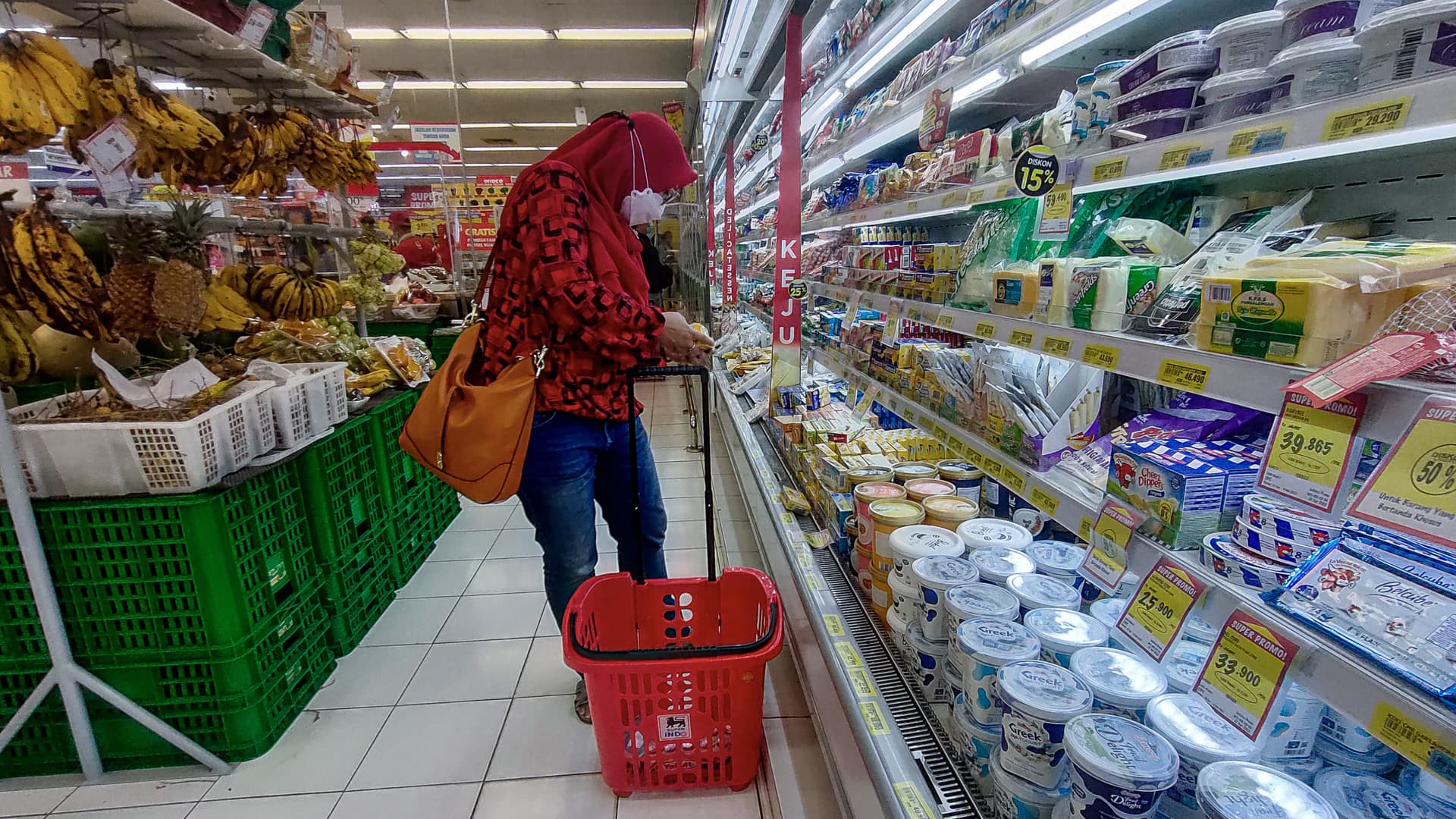
Three reasons why a food-supply shock may be coming to Southeast Asia: Goldman Sachs
Southeast Asia faces a looming food-supply shock driven by rising oil and fertilizer costs stemming from Middle East conflict and the threat of a strong El Niño event in late 2026. According to a report by Goldman Sachs, these combined pressures are expected to increase food inflation in the region by 1 percentage point after six months, peaking at 2.1 percentage points within a year.
Did You Know? In countries like Indonesia, the Philippines, and Vietnam, food consumption accounts for a significant portion of total household spending, according to economist Mohamed Faiz Nagutha.
Regional Vulnerability to Food Inflation
The impact of global price shocks varies across Southeast Asian nations based on their import reliance. Goldman Sachs identifies Singapore and the Philippines as being directly exposed to global food price volatility because they are net food importers. Other nations remain vulnerable despite different economic profiles; for instance, Thailand imports more than 90% of its fertilizers, leaving it exposed to price hikes in agricultural inputs.
While Malaysia and Indonesia may appear insulated due to their palm oil industries, the report notes that both countries become net food importers if their palm oil sectors are excluded from the calculation. Energy costs remain a central factor in this volatility. A paper from the London School of Economics and Political Science states that because energy is a primary production and transportation input, oil price fluctuations transmit rapidly along the supply chain. Furthermore, fuel shortages linked to the Iran war are expected to manifest directly in food pricing.
Expert Insight
Expert Insight: The projected food-supply shock presents a difficult policy dilemma for regional governments. As the cost of agricultural inputs like fertilizer rises alongside fuel prices, authorities may be forced to choose between subsidizing energy to keep transportation costs low or prioritizing food affordability to protect household purchasing power.
Future Projections and Supply Chain Risks
The timeline for these inflationary pressures extends through 2027. The OECD reports that continued oil supply disruptions could impact the availability and cost of fertilizers from the Middle East. This could disrupt planting and harvesting seasons across 2026 and 2027, potentially reducing crop yields and sustaining higher food prices.
Goldman Sachs estimates that after the initial 12-month spike of 2.1 percentage points, regional food inflation could moderate to 2 percentage points after 18 months. These figures represent additional pressure on top of existing inflation trends rather than a forecast of total food inflation.
Frequently Asked Questions
Which countries are most exposed to global food price shocks?
Singapore and the Philippines are considered most directly exposed due to their status as net food importers, according to Goldman Sachs.
How does the conflict in the Middle East affect food prices?
The conflict has driven up oil and fertilizer prices. Because energy is a key input for food production and transport, and fertilizers are essential for farming, these costs are transmitted through the supply chain, increasing the final price of food.
What is the expected impact of a potential El Niño event?
A strong El Niño event in late 2026 could create a second food-supply shock just as oil and fertilizer pressures begin to pass through the food chain, according to the report.
How might your local community be affected if global food supply chains face prolonged disruption?