

TikTok Removes 4 Million Videos, Disrupts LIVE Sessions in N
TikTok removed 4.02 million videos and interrupted 86,000 LIVE sessions in Nigeria during the fourth quarter of 2025 to curb guideline violations, according to the company’s Q4 2025 Community Guidelines Enforcement Report. This surge in enforcement highlights a global shift toward proactive, automated moderation to secure digital spaces before users encounter harmful content.
Why is automated moderation becoming the primary defense?
Automated detection tools now handle the bulk of content policing. According to TikTok’s report, 152.5 million of the 175.3 million videos removed globally in Q4 2025 were identified by AI systems. This means automation drives the vast majority of enforcement actions.
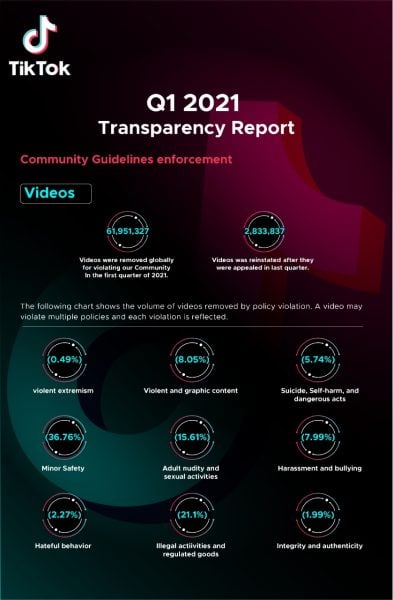
In Nigeria, the efficiency of these systems is even more pronounced. TikTok reported that 99.9% of offending videos in the country were detected and removed proactively. This happened before a single user reported them. Furthermore, 98.4% of these videos were taken down within 24 hours of being posted.
The trend points toward “zero-latency” moderation. Platforms are moving away from reactive systems—where a user flags a video—toward predictive systems that block content in real-time. This reduces the window of exposure for harmful material but increases the reliance on algorithm accuracy.
How will AI-generated content be tracked in the future?
Labeling is the first line of defense against synthetic media. TikTok has already labeled more than 1.3 billion AI-generated videos globally, as stated in its latest enforcement report. The company now requires creators to label realistic AI-generated images, audio, and video.
The next phase involves “Content Credentials” technology. This industry-standard approach embeds metadata directly into the file. It acts as a digital nutrition label, showing exactly how a piece of media was created and edited.
This shift matters because manual labeling by creators is often ignored or skipped. By deploying automated detection systems to identify AI markers, platforms can apply labels even when the creator refuses to do so. This creates a more transparent environment for users who can’t distinguish between a real video and a deepfake.
What does government collaboration mean for digital safety?
TikTok is increasingly aligning its safety protocols with national security interests. In Nigeria, the company confirmed it collaborates with the Office of the National Security Adviser and various civil society organizations to combat harmful online content.
This represents a broader trend of “localized moderation.” Rather than applying a single global standard, platforms are working with regional authorities to identify specific threats—such as local disinformation campaigns or region-specific hate speech—that a global algorithm might miss.
The consequence of this partnership is a faster response time for national security threats. By sharing intelligence with government agencies, platforms can identify coordinated inauthentic behavior (CIB) more quickly than they could through automated tools alone.
Comparison of Enforcement Actions (Q4 2025)
| Metric | Nigeria | Global |
|---|---|---|
| Videos Removed | 4.02 Million | 175.3 Million |
| LIVE Sessions Interrupted | 86,000+ | 17.7 Million (Actions taken) |
Frequently Asked Questions
What happens if a video is removed by mistake?
TikTok reported that about 8.4 million videos globally were reinstated following further reviews after being initially removed by automated tools.

How does TikTok handle LIVE stream violations?
The platform uses a mix of warnings, demonetization, and session interruptions. In Q4 2025, 9.2 million creators were penalized for violating LIVE monetization policies.
Why are AI labels necessary?
Labels prevent the spread of misleading information by alerting users that the content is synthetic, which is critical for maintaining trust in digital media.
Do you think automated moderation is too aggressive, or is it necessary for safety? Share your thoughts in the comments below or subscribe to our newsletter for more updates on digital safety trends.