
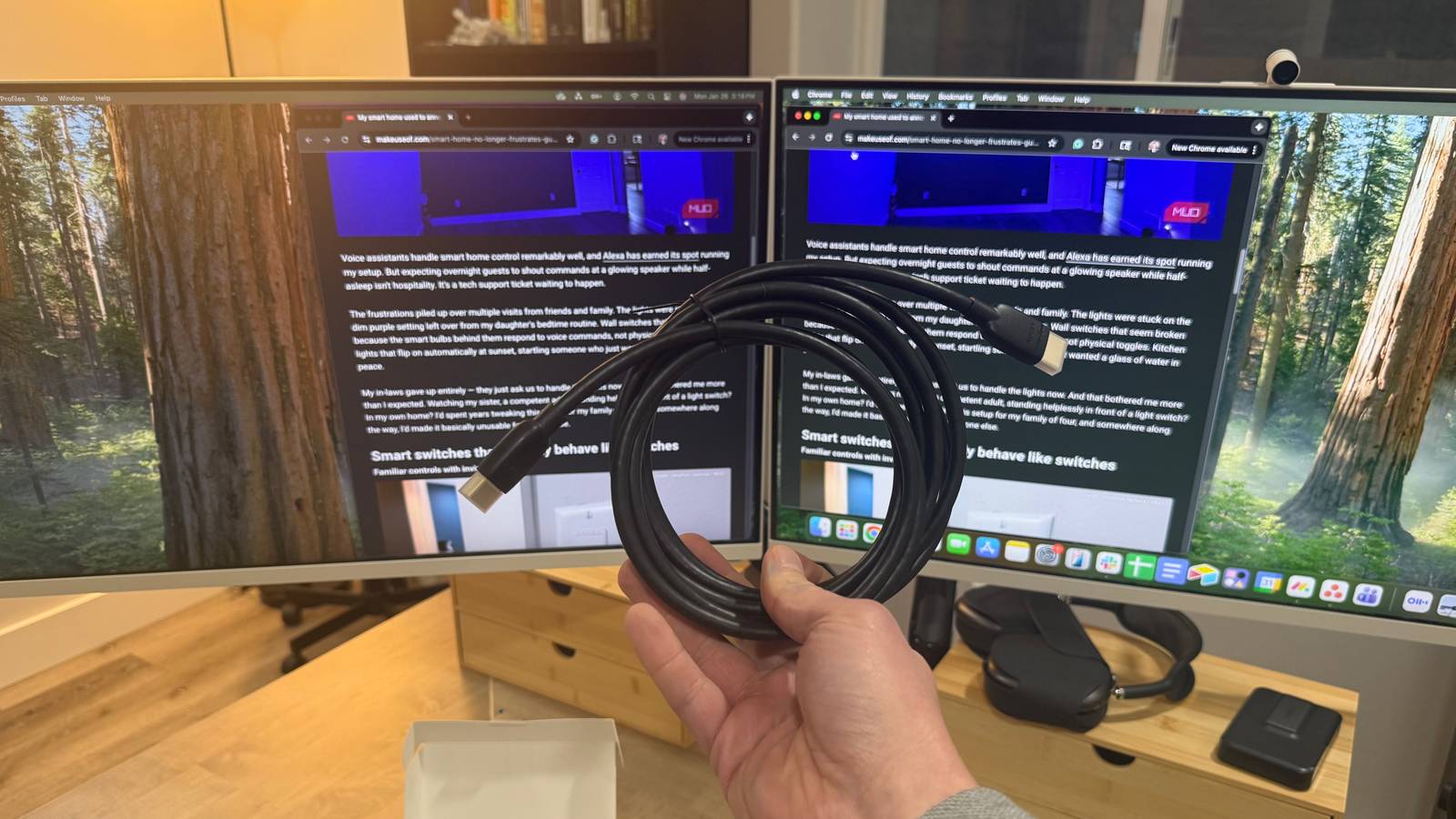
I finally learned what the Ultra96 label means, and most people are about to overpay for HDMI
HDMI 2.2 doubles maximum bandwidth to 96 Gbps using Fixed Rate Link 2 (FRL-2) signaling, according to the HDMI Forum. While the “Ultra96” label identifies cables passing these compliance tests, the branding also covers devices and cables limited to 64 Gbps and 80 Gbps, creating potential consumer confusion regarding actual performance.
What is the HDMI 2.2 Ultra96 standard?
HDMI 2.2 is the latest iteration of the HDMI standard, designed to support extreme resolutions and refresh rates. It utilizes a signaling mode called Fixed Rate Link 2 (FRL-2) to increase maximum bandwidth from 48 Gbps in HDMI 2.1 to 96 Gbps.
This increased headroom allows for data transmission levels previously unavailable in consumer electronics. According to technical specifications, the standard supports 4K resolution at 240 Hz with full color depth, 8K at 60 Hz without compression, and provides a pathway for 12K and 16K displays.
Why is Ultra96 branding misleading for buyers?
The “Ultra96” label functions as both a specific cable certification and a broad feature name for the HDMI 2.2 ecosystem. This dual use creates a discrepancy between the label on the box and the actual bandwidth of the product.
Manufacturers can apply the Ultra96 brand to TVs, receivers, and GPUs to signal HDMI 2.2 support, even if the device does not reach 96 Gbps. According to reporting from MakeUseOf, a device labeled Ultra96 may only support 64 Gbps or 80 Gbps. The specific bandwidth tier is often hidden in the fine print of the spec sheet rather than the primary branding.
This pattern mirrors the HDMI 2.1 rollout. During that transition, many manufacturers claimed HDMI 2.1 compliance on packaging while only implementing a fraction of the required feature set. Ultra96 continues this trend by using a numerical label that suggests a specific speed but acts as a general family badge.
Does current hardware require 96 Gbps cables?
Most current consumer hardware cannot utilize the full 96 Gbps bandwidth. Current high-end televisions typically top out at 4K resolution at 120 Hz, a specification that certified “Ultra High Speed” HDMI 2.1 cables (48 Gbps) handle without issue.
While Ultra96 cables are now available—such as the Zeskit Maya HDMI 2.2 cable—they solve a problem that does not yet exist for the average user. Buying a 96 Gbps cable for a PS5 or a current-generation gaming PC often results in paying for “future-proofing” that provides no immediate performance gain.
| Standard | Max Bandwidth | Common Use Case |
|---|---|---|
| HDMI 2.1 | 48 Gbps | 4K @ 120Hz / HDR |
| HDMI 2.2 (Ultra96) | 96 Gbps | 8K @ 60Hz / 16K Future Support |
How to verify genuine HDMI 2.2 certification
To combat labeling confusion, the HDMI Forum has implemented a mandatory certification program. Each certified cable length is tested at an authorized center to ensure it meets the required bandwidth specs.
Consumers can verify a cable’s authenticity using a QR code located on the packaging. Scanning this code links to the official certification database. Additionally, manufacturers are encouraged to print the specific cable type directly on the cable jacket, allowing users to distinguish between 64, 80, and 96 Gbps cables after the packaging is discarded.
For those seeking the highest performance, the recommendation is to ignore the “Ultra96” logo on the front of the box and instead verify the specific bandwidth tier in the technical specifications. The HDMI Forum provides the standards that these certifications follow.
Frequently Asked Questions
Will an Ultra96 cable work with my HDMI 2.1 TV?
Yes. HDMI cables are backward compatible. An Ultra96 cable will work with any HDMI 2.1 or 2.0 device, though it will only operate at the maximum speed supported by the hardware.
What is the difference between Ultra High Speed and Ultra96?
Ultra High Speed is the label for HDMI 2.1 cables supporting up to 48 Gbps. Ultra96 is the label for HDMI 2.2 cables supporting up to 96 Gbps.
Can I get 8K resolution with a standard HDMI cable?
While some older cables might work at lower refresh rates, 8K at 60 Hz without compression requires the bandwidth provided by HDMI 2.1 or HDMI 2.2 certified cables.
Do you think the industry is overcomplicating cable labels, or is this necessary for future-proofing? Let us know in the comments below or subscribe to our newsletter for more hardware deep-dives.