

Trump Signs Iran Peace Deal Amid Growing Rift With Netanyahu
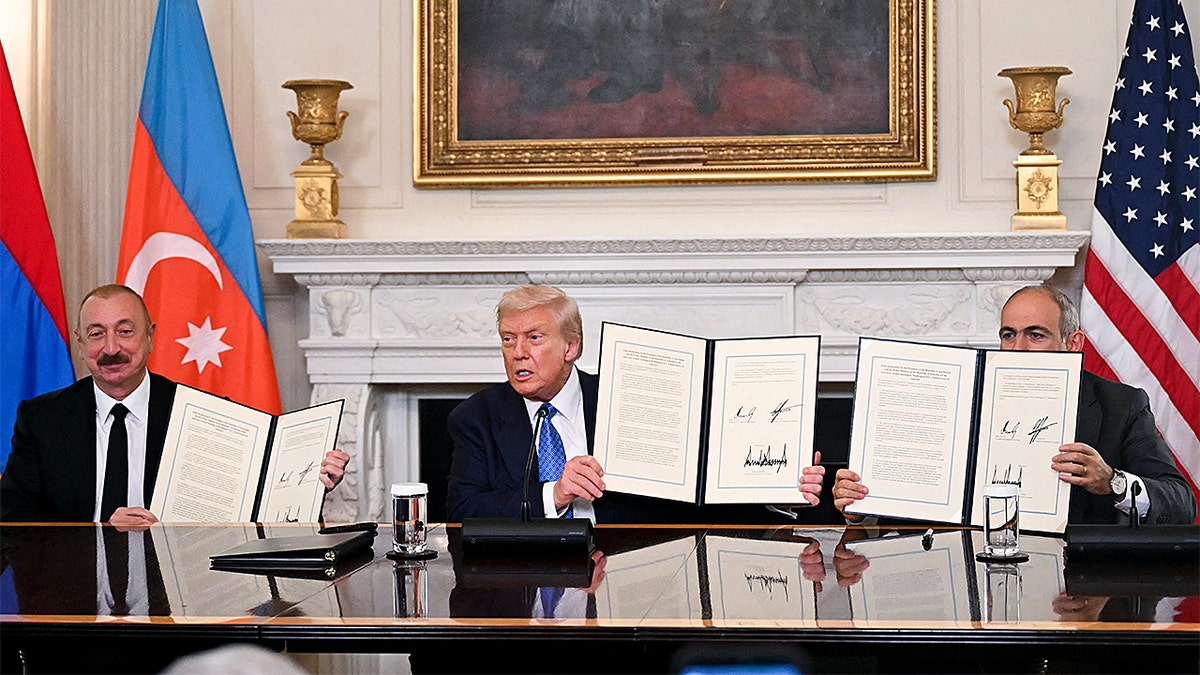
U.S. President Donald Trump signed a 14-point memorandum of understanding with Iran during a G-7 meeting in France on Wednesday to end sanctions and initiate a recovery plan. The deal, which took effect immediately, aims to prevent a global economic downturn and includes a $300 billion recovery fund, according to White House officials.
Why did the U.S. sign the deal with Iran?
Trump sought to avoid a global economic collapse that he believed would destroy his reputation. He cited record-high stock market levels and falling oil prices as evidence of his approach, dismissing critics as “dummies,” “jealous,” or “stupid,” according to the source.
The agreement was signed by Trump and Iranian President Masoud Pezeshkian. Pezeshkian described the document as a message from a “strong Iran” based on mutual respect, as reported by the state news agency IRNA.
What are the financial and economic terms?
The memorandum requires the U.S. to create a recovery and economic development plan for Iran with minimum funding of $300 billion. Washington must also allow the Islamic Republic to sell its oil and remove restrictions on frozen assets.
While the exact value of these assets is not public, analysts estimate the amount ranges between $124 billion and $167 billion. These financial concessions coincide with the immediate termination of all U.S. sanctions.
How does the deal affect military and nuclear operations?
The U.S. committed to ending its naval blockade and withdrawing troops from Iranian borders within 30 days. In exchange, Iran must take immediate steps to ensure traffic flows through the Strait of Hormuz.
Regarding nuclear capabilities, Iran confirmed it will not produce nuclear weapons, though this remains a subject of negotiations for the next 60 days. Pentagon chief Pete Hegseth stated the U.S. may resume military actions and the naval blockade if Iran fails to meet its commitments.
Why are U.S.-Israel relations strained?
Relations between Trump and Prime Minister Benjamin Netanyahu deteriorated over Washington’s effort to end the war with Iran. During a tense phone call, Trump asked Netanyahu, “Why do you keep blowing up buildings? Stop doing it,” according to the Wall Street Journal.
White House officials reported that Trump described Netanyahu as “unmanageable” because of his desire to bomb targets. Opposition leader Ya’ir Lapid criticized the deal, claiming it provides money to the Revolutionary Guard and leaves Israel waiting “like a stunned child.”
What happens next?
The final peace agreement may require approval from the full UN Security Council, including permanent members with veto power: the U.S., UK, France, China, and Russia. Negotiations regarding Iran’s nuclear program are likely to continue over the next 60 days.
Depending on Iran’s compliance, the U.S. could either finalize the peace process or, as suggested by the Pentagon, reinstate the naval blockade and military pressure.
Frequently Asked Questions
What is the total U.S. financial commitment to Iran?
The U.S. must provide at least $300 billion for a recovery and development plan and unfreeze assets estimated by analysts to be between $124 billion and $167 billion.
When will U.S. troops leave the Iranian border?
The U.S. has committed to withdrawing troops and ending the naval blockade within 30 days.
Has the nuclear issue been fully resolved?
No. While Iran confirmed it will not make nuclear weapons, this remains a subject of negotiations for the next 60 days.
How do you think the unfreezing of Iranian assets will affect global energy markets?