
Ukrainian Flamingo Missiles Destroy Russian Defense Plant Protected by Anti-Drone Cage
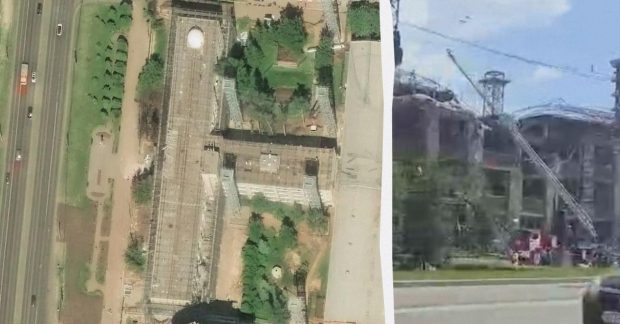
Ukrainian forces struck the VNIIR “Progress” defense plant in Cheboksary, Russia, using long-range cruise missiles, despite the facility being reinforced with anti-drone metal “cages.” According to Business Insider and satellite data provided by the spatial analysis firm Vantor, the facility—located over 900 kilometers from the front line—sustained significant damage. The plant is a primary manufacturer of navigation components for Russian high-precision weapons, including “Shahed” drones and “Kalibr” and “Iskander” missiles.
Impact on Russian Defense Infrastructure
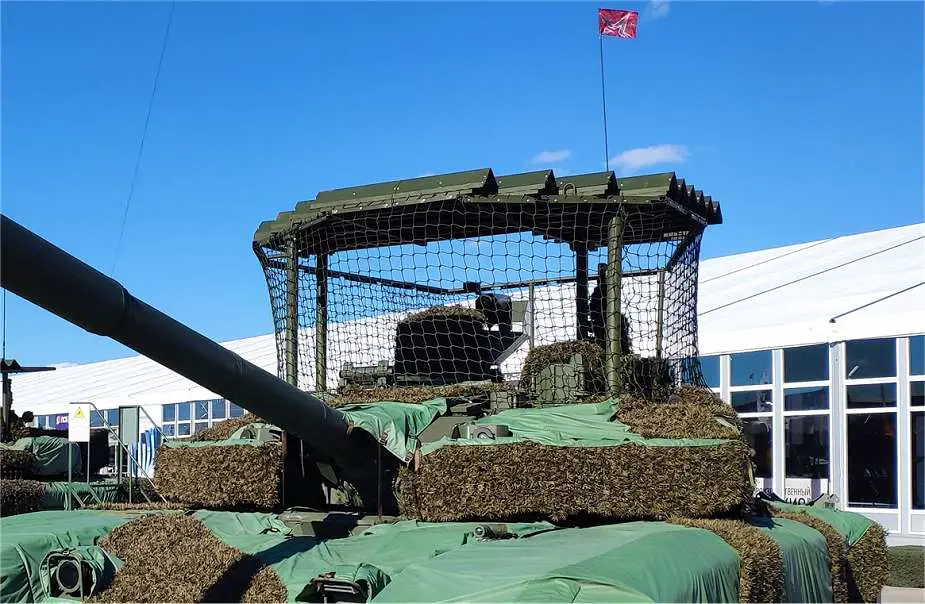
The strike on the Cheboksary facility highlights a persistent effort by Ukraine to disrupt Russian weapon supply chains. Analysts from the Institute for the Study of War note that the repeated targeting of this specific site demonstrates Ukraine’s growing capability to conduct sustained strikes deep within Russian territory. While Russia has increasingly utilized metal grating to shield military and energy assets from drone attacks, this incident suggests those defenses remain vulnerable to high-payload cruise missiles.
Strategic Implications and Future Scenarios
The successful breach of the facility’s defenses may lead to a reassessment of how Russia protects its deep-interior military plants. If Ukraine continues to deploy the FP-5 “Flamingo” or similar long-range capabilities, analysts expect that Russia could be forced to further harden critical infrastructure or relocate production lines deeper into the interior. Future strikes are likely to remain focused on these high-value navigation and electronic component nodes to complicate the production of Russia’s advanced missile arsenal.
Frequently Asked Questions
What was the purpose of the metal “cages” at the plant?
According to data from Vantor, the metal structures were installed as a protective measure specifically designed to shield the building from drone attacks.
What is the significance of the VNIIR “Progress” plant?
The facility is a key manufacturer of navigation equipment for Russian high-precision weaponry, including “Shahed” drones, “Kalibr” cruise missiles, and “Iskander” ballistic missiles.
How far from the front line is the affected facility?
The plant is located in the Chuvashia region, more than 900 kilometers away from the current front line.
Do you believe that physical hardening of industrial sites can effectively counter the evolution of long-range missile technology?