
UN Condemns Systematic Israeli Attacks on Gaza Police Personnel
The Office of the High Commissioner for Human Rights (OHCHR) has reported a pattern of “repeated attacks” and “routine targeting” of law enforcement personnel in Gaza. These actions, described as “systematic targeting” of public workers, have reportedly contributed to a collapse of civic and public order since the war began on October 7, 2023.
Casualties and Targeted Incidents
Since January 2026, the OHCHR has documented at least 12 attacks specifically targeting police. These strikes have resulted in the deaths of more than 53 civilians, including 35 police personnel, five boys, and one woman.
The intensity of these attacks increased in May, with four recorded incidents resulting in the deaths of 12 police workers. Reports indicate that personnel were killed while performing essential duties such as patrolling crowded markets and directing traffic.
- May 23: A strike on a police checkpoint in Al Tawam, Gaza City, killed at least five police officers and two others, including a boy.
- April 24, 2026: A drone strike on a police vehicle in Al Mawasi camp, west of Khan Younis, killed four police workers and four civilians, including a nine-year-old boy.
- January 31, 2026: An airstrike on the Ash Sheikh Radwan Police Station in Gaza City killed 11 people, including five police officers and a boy.
Legal Implications and Civic Collapse
Mayy El Sheikh, OHCHR spokesperson in the Occupied Palestinian Territory, stated that Israel, as the occupying power, has an obligation under international law to ensure civic and public order for Palestinians. She insisted that targeting these workers, unless they are directly participating in hostilities, would amount to war crimes.
The UN office expressed concern that Israeli forces appear to apply “no distinction” between police personnel and fighters belonging to armed groups. This lack of differentiation has left the region in a state of turmoil.
“Gaza remains suspended in a nightmare that is difficult to reconcile with the existence of a ceasefire,” maintained Ms. El Sheikh.
The Humanitarian Landscape
Despite the announcement of a ceasefire nearly eight months ago, Ajith Sunghay, Head of OHCHR in the Occupied Palestinian Territory, stated there is no end in sight for the misery and killings. Displacement orders continue to be issued, and the built environment continues to be destroyed.
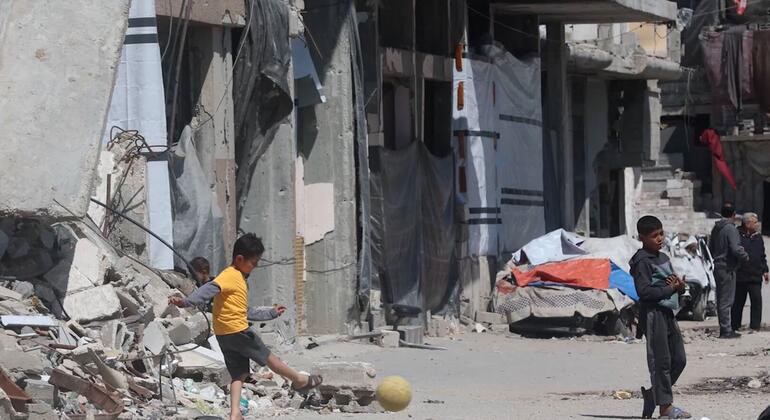
Civilians are currently living on a small fraction of the land, encircled by Israeli ground forces. This ongoing military presence continues to contract the available space for the remaining population.
Potential Future Developments
If the pattern of targeting public institutions continues, it is likely that the collapse of civic order will deepen, potentially leaving civilians without any form of local security or traffic management. The continued issuance of displacement orders could further compress the population into smaller, more vulnerable areas.
the reported lack of distinction between police and combatants may lead to increased civilian casualties if patrolling personnel continue to be viewed as legitimate targets.
Frequently Asked Questions
What has the OHCHR recorded regarding police attacks since January 2026?
The OHCHR has recorded at least 12 attacks against police, resulting in the deaths of over 53 civilians, which includes 35 police personnel, five boys, and one woman.
What is the current status of displacement in Gaza according to OCHA?
More than 1.9 million of the 2.4 million Palestinians in the enclave have been uprooted, and at least 1.2 million have lost their homes.
Why does the OHCHR claim these attacks may be war crimes?
Because under international law, the occupying power is obligated to ensure civic and public order; targeting personnel not directly participating in hostilities would amount to war crimes.
How should the international community balance the need for security with the obligation to maintain civic order in conflict zones?