
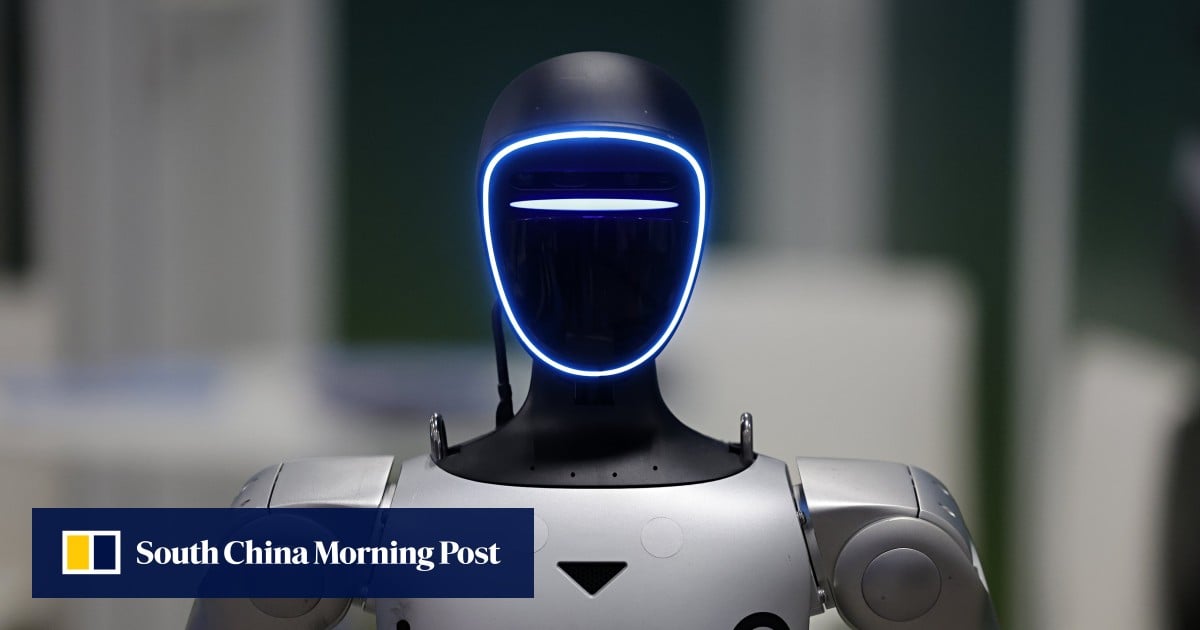
Unitree Robotics reports plunge in first-quarter profits days before crucial IPO hearing
The Great Robotics Reality Check: Are Humanoids Ready for Prime Time?
For years, the promise of humanoid robots has been the “holy grail” of the tech world. We’ve been sold a vision of metallic helpers folding laundry, caring for the elderly, and staffing factory floors. But as Unitree Robotics—a poster child for China’s humanoid boom—prepares for its high-stakes IPO, the numbers are telling a more sobering story: the transition from prototype to profit is proving to be a brutal, expensive climb.
Unitree’s recent disclosure of a 52% plunge in first-quarter profits serves as a wake-up call for the entire robotics sector. Despite a 68% surge in revenue, the company is grappling with the harsh reality of soaring R&D costs and a hyper-competitive market. This isn’t just a Unitree problem; it’s an industry-wide friction point.
Pro Tip: Look Beyond the Hype
When evaluating robotics companies, don’t just look at their “cool factor” or YouTube demos. Focus on unit economics. Can they scale manufacturing while driving down component costs? The winner won’t necessarily be the one with the most advanced AI, but the one that can build a reliable robot for the price of a mid-sized sedan.
The Scaling Paradox: Why R&D is Eating Profits
The humanoid robot market is currently in a “capital-intensive phase.” Companies are pouring millions into embodied AI—the software that allows robots to navigate physical spaces—and hardware refinement. However, the market for these machines remains largely experimental.
As competition intensifies, firms are being forced to slash prices to capture market share, squeezing margins just as they try to scale. This creates a “scaling paradox”: to become profitable, you need to sell thousands of units, but to get there, you must spend heavily on R&D, which keeps you in the red.
Future Trends: Where the Industry is Headed
Despite the current profit squeeze, the long-term outlook for robotics remains bullish. Here is where we expect the industry to pivot over the next decade:
- From General-Purpose to Specialized Tasks: We will see a shift away from “do-it-all” humanoids toward task-specific bots—units designed strictly for logistics, hazardous waste handling, or elderly care.
- The Rise of “Robot Leasing”: To lower the barrier to entry, companies are moving toward Robotics-as-a-Service (RaaS) models. Instead of buying a robot for $50,000, businesses will lease them for a monthly fee, turning capital expenses into operational ones.
- Supply Chain Localization: As seen with firms like Unitree, the push for indigenous manufacturing is critical. Controlling the supply chain for actuators, sensors, and chips will be the ultimate competitive advantage.
Did you know? The most expensive components in a humanoid robot are often the harmonic drives and force-torque sensors. Innovations in 3D-printing these components are currently the biggest trend in reducing manufacturing costs.
Market Volatility and Investor Sentiment
The “buying frenzy” seen in mainland markets highlights a disconnect: retail investors are betting on the long-term potential of the sector, while the companies themselves are fighting short-term liquidity and margin battles. Investors should brace for a period of consolidation. Just as in the early days of the automobile, we expect many of today’s “humanoid startups” to be acquired or shuttered, leaving only a few dominant players with the deepest pockets and the most robust technology stacks.

Frequently Asked Questions
- Why are humanoid robot companies struggling to make a profit?
- The primary reasons are high R&D expenditures, the cost of specialized hardware components, and the intense price competition as firms race to secure market share.
- Is the humanoid robot industry a bubble?
- While there is undoubtedly hype, the underlying technology—embodied AI and advanced actuators—is real. The industry is currently moving from a “hype phase” into a “commercialization reality check.”
- What is “Embodied AI”?
- Embodied AI refers to artificial intelligence that is integrated into a physical body, allowing the system to perceive, interact with, and learn from the physical world in real-time.
What’s your take on the robotics revolution? Do you believe humanoid robots will be a staple in our homes within the next five years, or is the hype moving faster than the technology? Leave a comment below and let’s discuss the future of automation. If you want to stay ahead of the curve on the latest tech trends, subscribe to our weekly newsletter for deep-dive analysis delivered to your inbox.