
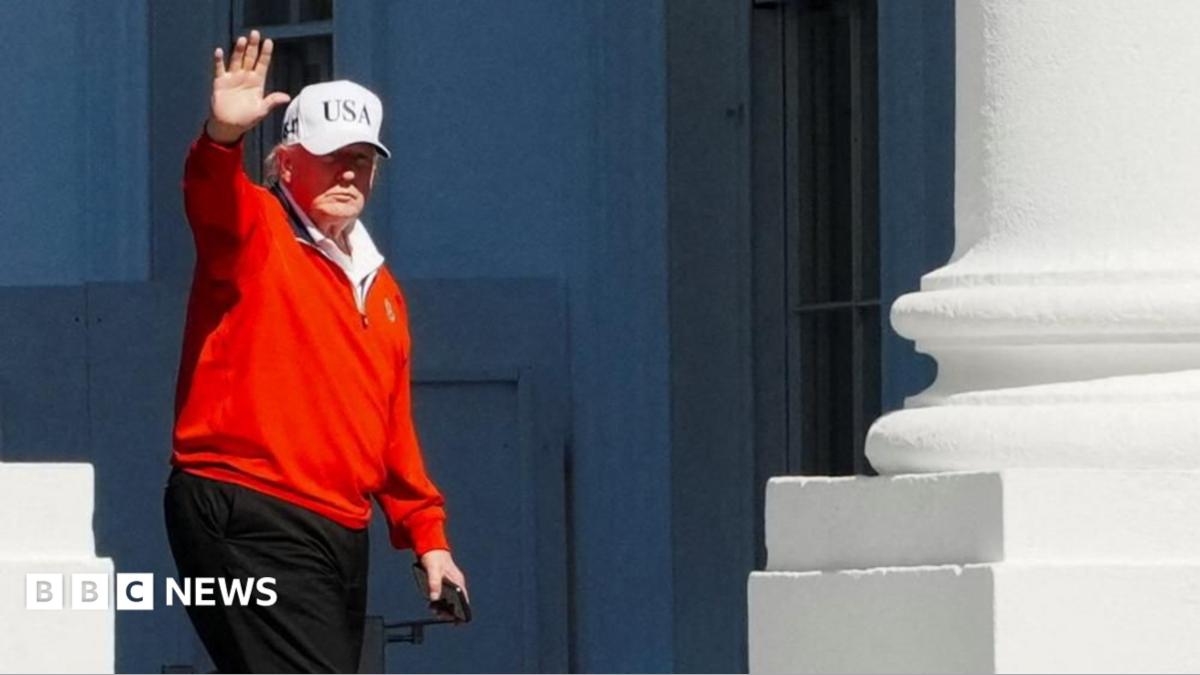
US justice department halts ‘anti-weaponisation’ fund after court ruling
The Rise of Lawfare: Is the Legal System Becoming a Political Weapon?
For decades, the courtroom was viewed as the ultimate neutral ground—a place where evidence trumped ideology and the law remained blind to political affiliation. However, we are entering a volatile new era where the legal system is increasingly viewed not as a shield for justice, but as a sword for political combat.
The recent controversy surrounding the Department of Justice’s (DOJ) attempt to establish a multi-billion dollar fund for “victims of lawfare” is more than just a budgetary dispute. We see a symptom of a deepening systemic crisis: the normalization of using judicial processes to neutralize political opponents.
Understanding ‘Lawfare’: The New Frontier of Political Conflict
The term “lawfare”—a portmanteau of law and warfare—refers to the use of legal systems and institutions to damage or delegitimize an opponent. While not a new concept, its application in domestic politics has reached a fever pitch.
When legal proceedings are initiated not to seek justice, but to exhaust an opponent’s financial resources, destroy their reputation, or keep them off a ballot, the rule of law begins to erode. This creates a dangerous precedent where the judiciary becomes an extension of the executive branch’s political strategy.
The Compensation Dilemma: Healing or Validating?
The DOJ’s proposal to set aside nearly $1.8 billion to compensate those targeted by political investigations is a bold, and highly controversial, move. On the surface, it appears to be an act of restitution—an admission that the state overreached and caused undue harm to individuals regardless of their party lines.
However, this approach introduces a perilous logic. If the government begins paying “reparations” for political prosecutions, it effectively acknowledges that the legal system is weaponized. This leads to a critical question: Does paying victims heal the wound, or does it validate the idea that the courts are merely tools for whoever holds power?
The Risk of a ‘Retribution Cycle’
One of the most concerning future trends is the potential for a “pendulum effect.” Imagine a scenario where every change in administration is accompanied by a new fund to compensate the “victims” of the previous administration’s legal strategies.
This would transform the federal budget into a scoreboard for political grievances. Rather than focusing on systemic reform to prevent political prosecutions, the government would simply treat the fallout as a cost of doing business.
For more on how judicial independence affects democratic stability, see our analysis on the pillars of a fair court system.
Predicting the Future: Three Trends to Watch
As the battle over lawfare intensifies, You can expect three primary shifts in the legal and political landscape:
1. The Expansion of ‘Political Victimhood’
We will likely see a surge in lawsuits claiming “political retribution.” As the precedent for government compensation grows, more individuals—from former cabinet members to grassroots activists—will seek financial redress for legal battles they deem politically motivated.
2. Increased Judicial Skepticism
Courts are already beginning to push back. The temporary halting of the DOJ fund by federal judges suggests that the judiciary is wary of becoming a mechanism for political payouts. We can expect judges to demand higher burdens of proof to distinguish between legitimate criminal prosecution and “lawfare.”
3. Legislative Guardrails
There will be an inevitable push for new legislation to limit the ability of the executive branch to initiate certain types of investigations without bipartisan oversight. Expect “Anti-Lawfare” bills to become a central talking point in upcoming legislative sessions.

Industry experts suggest that without these guardrails, the public’s trust in the Department of Justice and similar global institutions could reach an all-time low, mirroring trends seen in fragile democracies.
Frequently Asked Questions
What exactly is ‘lawfare’?
Lawfare is the strategic use of legal proceedings to intimidate, bankrupt, or discredit a political opponent rather than to seek a genuine legal remedy.
Can anyone claim compensation from these types of funds?
Typically, eligibility is based on proving that a prosecution was initiated with “malice” or without a reasonable basis in law, though the definitions of these terms are often hotly contested in court.
Is this happening only in the US?
No. Similar trends are observed globally, where ruling parties use “anti-corruption” laws to imprison opposition leaders, a tactic often criticized by international human rights organizations.
Join the Conversation
Do you believe government funds should be used to compensate victims of political prosecutions, or does this further politicize the legal system?
Share your thoughts in the comments below or subscribe to our newsletter for deep dives into the intersection of law and power.