

US Supreme Court: Major Rulings Shaping Donald Trump’s Power
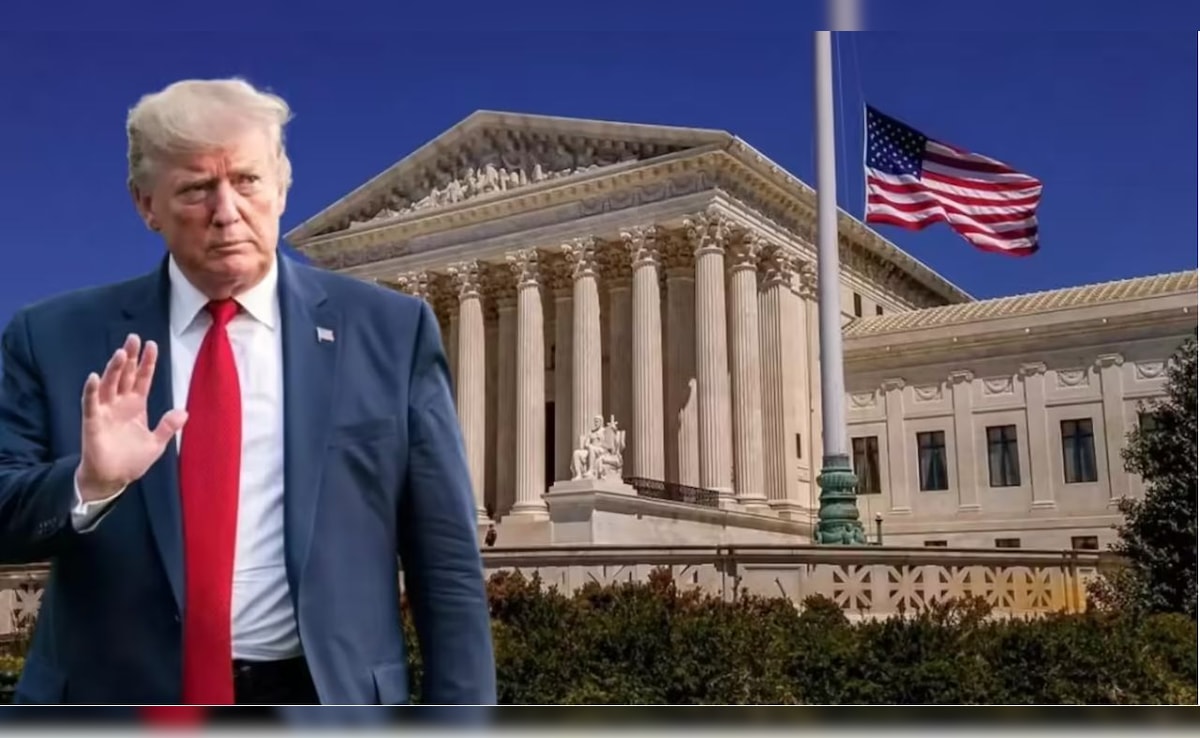
The U.S. Supreme Court will decide more than a dozen high-stakes cases over the next two weeks, including disputes over federal agency independence and birthright citizenship. According to NPR and CNN, these rulings will significantly impact President Donald Trump’s executive power and broader American legal precedents before the session ends by July 4.
Of the 58 cases handled this term, 22 remain pending according to NPR. CNN reports that eight of these remaining cases are considered large and principled.
Why did the Supreme Court rule against Trump’s tariffs?
In February, the Supreme Court ruled that President Trump’s global “punishment tariffs” on imports violated federal law. Chief Justice John Roberts and conservative justices Gorsuch and Barrett joined the liberal wing—Sotomayor, Kagan, and Jackson—to form the majority, according to CNN.

The New York Times reported that Trump responded to the decision by calling the judges who voted against him “fools and lapdogs.” Following the ruling, the president immediately introduced a new general tariff.
Can the President fire leaders of independent agencies?
The court is currently weighing the president’s power to remove officials in cases such as Trump v. Cook, involving the first Black woman on the Federal Reserve board, Lisa Cook, and Trump v. Slaughter, regarding the Federal Trade Commission (FTC).

Professor Adam Crews of Rutgers Law notes in an analysis that a victory for Trump could overturn a 90-year-old precedent from 1935. This may result in the Federal Reserve, the SEC, and the FCC losing their political independence.
What is at stake in the birthright citizenship case?
In Trump v. Barbara, the court is reviewing a presidential order to end automatic citizenship for children born in the U.S. to parents without legal residency. Trump argues the 14th Amendment’s citizenship clause applies only to children of former slaves, according to NPR.
All lower court judges who reviewed the order concluded the move is “obviously unconstitutional.” Trump became the first sitting president to personally attend oral arguments for a case in April, later complaining on social media about “mean, one-sided questions” from the justices, per the New York Times.
Which other legal disputes are awaiting a final decision?
The court is expected to rule on several other high-profile matters before the July 4 deadline:
- Transgender Athletics: West Virginia v. BPJ examines if state bans on trans women in girls’ sports are constitutional. The New York Times reports justices seemed inclined to allow these bans during January hearings.
- Immigration: Mullin v. Dahlia concerns the possible termination of Temporary Protected Status (TPS) for over 300,000 Haitians and 3,800 Syrians. Mullin v. Al Otro Lado addresses whether the administration can physically block asylum seekers at border crossings.
- Elections and Arms: Watson v. RNC looks at whether states can count post-election mail-in ballots, while Wolford v. Lopez examines bans on carrying weapons on private property open to the public.
Previously decided cases this term include a unanimous ruling that regular marijuana users cannot be denied gun rights under a 1968 law. Additionally, a March ruling allowed “conversion therapy” for LGBTQ+ minors after a religious advisor challenged a Colorado ban.
In a win for Republicans, the court also struck down Louisiana’s congressional map due to unconstitutional gerrymandering. NPR reports this has already led Republicans in several southern states to redraw districts to reduce the influence of Black voters.
Frequently Asked Questions
How many cases are left for the Supreme Court to decide this term?
According to NPR, 22 of the 58 cases handled this term are still awaiting a decision.
What was the outcome of the Louisiana voting map case?
The Supreme Court threw out the map due to unconstitutional gerrymandering, which NPR reports has weakened the Voting Rights Act of 1965 and led to the redrawing of districts in southern states.
Is conversion therapy legal in the United States?
Yes, following a March decision where the Supreme Court sided with a religious advisor challenging a ban in Colorado.
Do you believe the Federal Reserve should remain independent from presidential control?