

Valve Steam Machine Shows up in Vulkan Compliance Database, Launch Date Remains Elusive
The “Smoking Gun” in the Vulkan Database: What Valve’s New Hardware Means for the Future of Gaming
For anyone tracking the intersection of open-source software and high-end gaming, the Khronos Group database is essentially the industry’s “leak centre.” When a device appears there, it isn’t just a clerical entry—it’s a signal that the hardware is functionally ready for the real world. The recent appearance of the Valve Steam Machine in the Vulkan conformant products list is a massive tell.
This isn’t just about another box under your TV. By sporting Vulkan 1.4 support and integrating AMD Navi 33 GPU hardware, Valve is telegraphing a strategic shift. They aren’t just building a console; they are refining a standardized Linux gaming ecosystem that could eventually challenge the dominance of closed-loop systems like those from Sony or Microsoft.
Navi 33 and the Quest for Efficiency
The inclusion of the AMD Navi 33 GPU is particularly telling. In the world of silicon, Navi 33 represents a balance between power consumption and performance. It’s not designed to be a power-hungry monster that requires a dedicated cooling plant, but rather a streamlined chip capable of delivering high-fidelity visuals in a compact form factor.
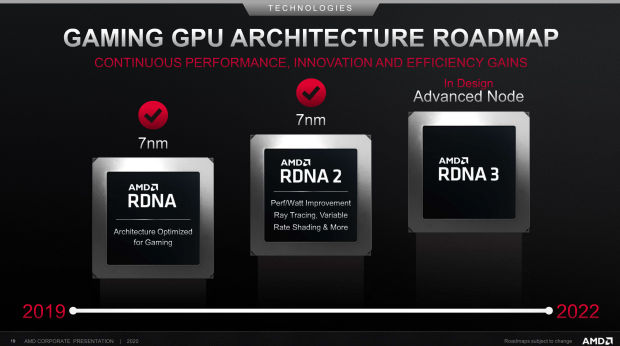
This suggests that Valve is prioritizing “performance per watt.” We’ve seen this philosophy succeed wildly with the Steam Deck. By applying this to a stationary “Steam Machine,” Valve is likely targeting a market that wants a seamless, “it just works” experience without the bulk of a traditional gaming PC.
When you pair this hardware with the latest Linux kernel (6.16) and SteamOS Beta 3.85, the picture becomes clear: the software stack is no longer in the “experimental” phase. We see now in the “optimization” phase.
Breaking the “Windows Tax” on Gaming
For decades, gaming has been tethered to Windows. Even the most ardent Linux enthusiasts had to jump through hoops—using layers like Wine or Proton—to get their library to run. Valve has spent years turning Proton from a curiosity into a powerhouse, and the new Steam Machine is the final piece of that puzzle.
By creating hardware that is natively designed for SteamOS and Vulkan, Valve is effectively removing the “Windows Tax.” They are creating a vertical integration where the hardware, the driver, the API, and the store all speak the same language.
This trend toward “Open-Hardware-ish” ecosystems is a game-changer. If Valve can prove that a Linux-based machine can outperform or match a Windows machine in user experience, it opens the door for other manufacturers to adopt open standards, potentially lowering costs for consumers across the board.
The Hardware Bottleneck: The RAM Crisis
Despite the software readiness, there is a lingering shadow: the global semiconductor supply chain. Specifically, the current RAM crisis and associated hardware shortages have plagued the industry. Even when a product is “ready” on paper, getting millions of units into warehouses is a different battle entirely.
We’ve seen this play out with previous GPU launches and the initial Steam Deck rollout. The “imminent launch” suggested by the Vulkan database may still be subject to the whims of silicon availability. However, the fact that the device is now listed as conformant suggests that Valve has at least locked in the hardware specifications and is now just waiting for the supply chain to catch up.
Future Trends: The Shift Toward Hybrid Living-Room Computing
Looking ahead, the Steam Machine represents a broader trend toward “hybrid computing.” We are moving away from the binary choice of “Console vs. PC.” Instead, we are entering an era of specialized hardware that offers the power of a PC with the simplicity of a console.

- Unified Ecosystems: Expect deeper integration between handhelds (Steam Deck) and home hubs (Steam Machine), allowing for seamless “save-and-switch” gameplay.
- API Dominance: As Vulkan 1.4 becomes the standard, we will see more developers optimizing for Linux from day one, rather than treating it as an afterthought.
- Modular Hardware: With the shift toward open standards, there is a growing possibility of more modular gaming hardware that is easier to repair and upgrade than current closed consoles.
For more insights on how hardware is evolving, check out our guide on the evolution of GPU architecture or explore our analysis of the state of Linux gaming in 2024.
Frequently Asked Questions
Q: What is the Khronos Group?
A: The Khronos Group is a non-profit industry consortium that manages open standards for graphics, such as Vulkan and OpenGL, ensuring that hardware and software from different vendors can work together.
Q: Why does the Linux kernel version matter?
A: The kernel is the core of the operating system. Version 6.16 includes critical updates for hardware compatibility and performance, specifically for newer AMD GPUs, ensuring the system is stable and fast.
Q: Will the Steam Machine replace the Steam Deck?
A: Likely not. It is intended to complement the Deck, providing a high-performance home base for gaming while the Deck handles portability.
Q: What is AMD Navi 33?
A: It is a GPU architecture designed for efficiency and mid-range performance, making it ideal for compact gaming machines that need to stay cool and quiet.
What do you think? Is the world ready for a Linux-powered living room, or is Windows still too entrenched in the gaming world? Let us know your thoughts in the comments below, or subscribe to our newsletter for the latest leaks and industry analysis!