

Watch Duty App Expands Disaster Tracking With New Flood Alerts
Watch Duty, the nonprofit disaster-awareness app, has expanded its real-time alert system to include flood notifications across the United States. By integrating data from the National Weather Service and the USGS with user-monitored water-level buoys, the service aims to solve “information overload” during weather emergencies, providing a centralized dashboard for residents in high-risk zones.
Why is Watch Duty expanding beyond wildfires?
For years, disaster alerts have been fragmented. If you live in a flood-prone area, you might check FEMA, the National Oceanic and Atmospheric Administration (NOAA), and the US Geological Survey (USGS) separately. According to Watch Duty CEO John Mills, this creates a scenario where people receive too much conflicting information, or they receive a warning when it’s already too late to act.
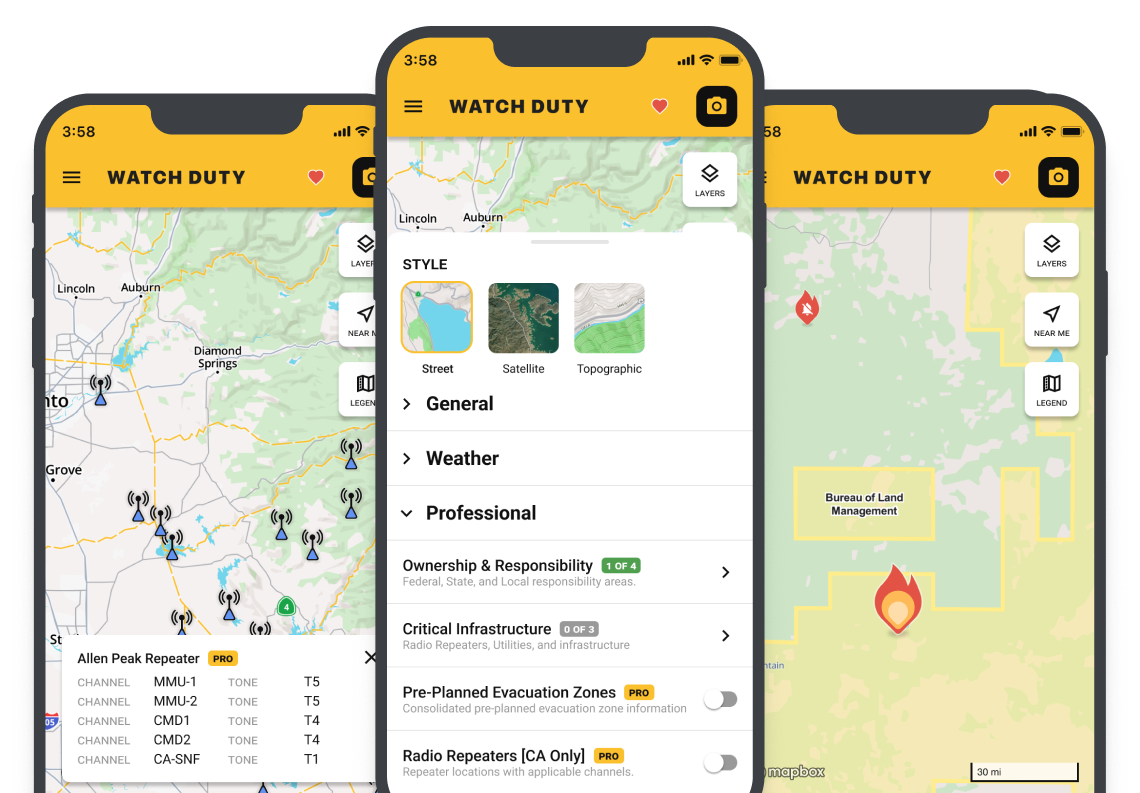
The app’s move into flood alerts is a strategic shift toward becoming a comprehensive disaster hub. While the nonprofit started in 2021 focusing on California’s wildfires, the infrastructure they built—a mix of paid reporters and dedicated volunteers—proved scalable. The goal is to distill complex agency data into a straightforward outlook that helps users make informed evacuation or safety decisions on a single screen.
How does flood tracking differ from fire monitoring?
Tracking a wildfire is like chasing a ghost; winds shift, and fire jumps lines in seconds. Floods, however, follow the laws of gravity and topography. John Mills notes that floods are generally “easier” to track because water moves in more predictable paths, provided there isn’t a sudden dam failure.

The technical approach has shifted from monitoring emergency radio scanners—the backbone of their fire alerts—to monitoring IoT (Internet of Things) sensors. Watch Duty now allows users to identify the nearest water-level buoy and set a push notification for when that buoy hits a critical threshold. This turns a passive government data point into an active, personalized alarm.
Comparison: Fire vs. Flood Monitoring
| Feature | Wildfire Tracking | Flood Tracking |
|---|---|---|
| Primary Source | Radio scanners & volunteers | Agency data & sensor buoys |
| Predictability | Low (highly volatile) | Higher (topography-based) |
| User Action | Immediate evacuation alerts | Water level threshold alerts |
The future of crowdsourced emergency response
The partnership between Watch Duty and Amazon’s Ring cameras points toward a future of “hyper-local” verification. When users can upload live video of a rising creek or a spotting fire, the gap between an event happening and the public knowing about it shrinks to seconds.
We are moving toward a model of community-verified intelligence. Instead of waiting for a government agency to verify a report and issue a press release, a combination of AI-filtered radio traffic and citizen imagery provides a real-time map of the crisis. This trend reduces the reliance on slow-moving bureaucracies during the first critical hour of a disaster.
What happens next for disaster-awareness tech?
Expect to see more “multi-hazard” integration. Since Watch Duty has already cracked the code on fires and floods, the next logical steps are tornadoes, hurricanes, or earthquake aftershocks. The challenge isn’t the data—it’s the synthesis. The value lies in taking data from NOAA and making it understandable for someone who isn’t a hydrologist.
As climate volatility increases, the demand for free, nonprofit-led tools will grow. The shift is moving away from generic “weather apps” toward “survival apps” that prioritize actionable intelligence over general forecasts. If you want to learn more about preparing your home for these events, check out our guide on essential emergency kits.
Frequently Asked Questions
Is the Watch Duty flood alert service free?
Yes, flood alerts are included as a free update to the existing app.
Do I need to keep the app open to receive flood warnings?
No, as long as you have location tracking enabled and push notifications turned on, the app will alert you when you are near a flood zone.
How accurate are the water-level buoy alerts?
The alerts rely on official data from agencies like the USGS. While highly accurate for water height, they are designed to provide a general threat level rather than granular, street-by-street details.
Do you rely on apps for emergency alerts, or do you prefer traditional news sources? Let us know in the comments below or subscribe to our newsletter for the latest in safety tech.