
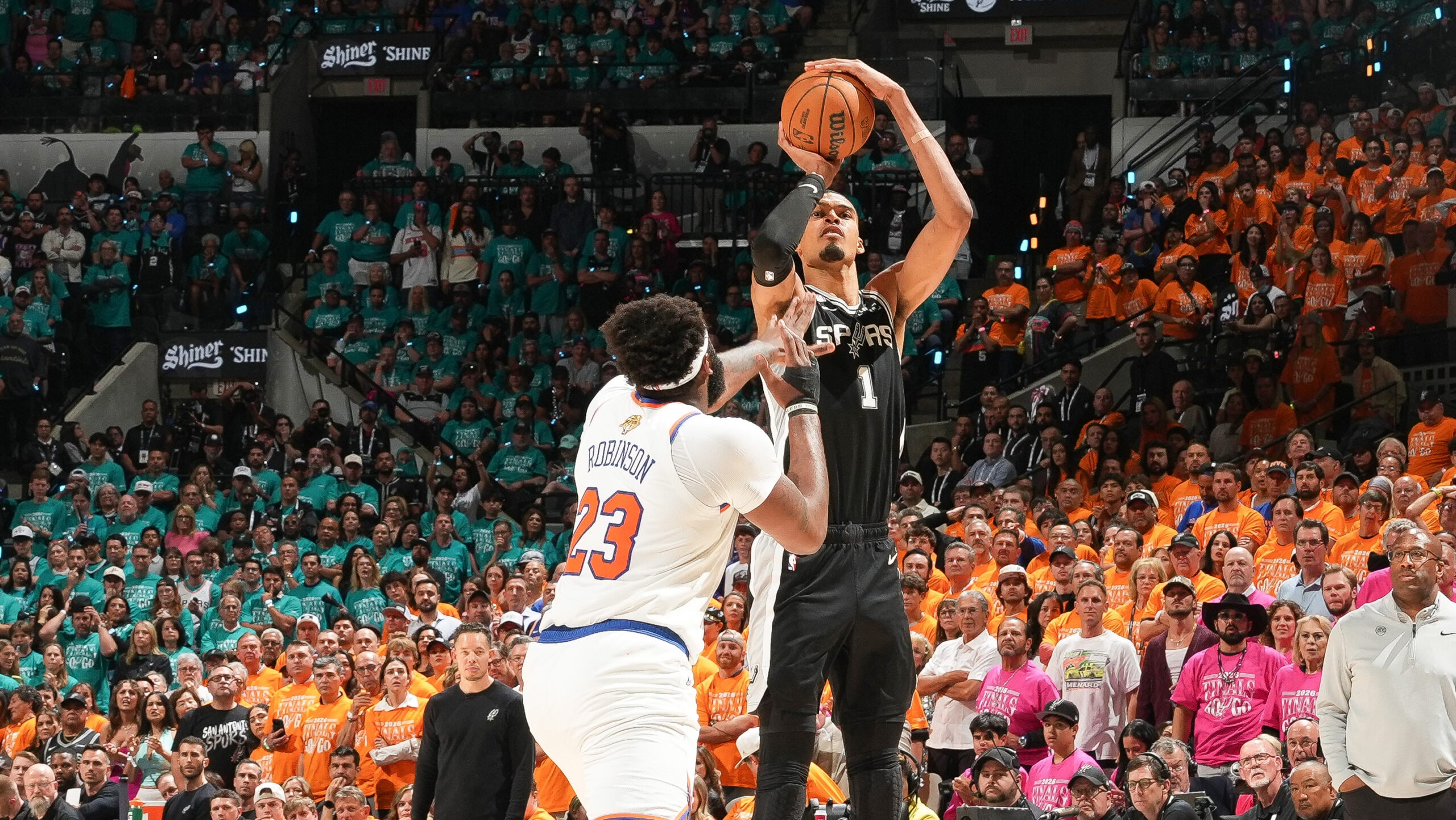
Wembanyama Must Dominate Both Ends for Spurs in Game 2
The New York Knicks secured a victory in Game 1 of the 2026 NBA Finals, though both teams struggled to find their offensive rhythm. While the Knicks took the win, it marked their worst offensive performance of the playoffs.
For the San Antonio Spurs, the outing was equally difficult, representing their third-worst offensive game across a 102-game season. Despite the “clunky” nature of the play, the contest remained intense, staying within five points in the final five minutes.
Wembanyama’s Struggle at the Rim
Victor Wembanyama faced a challenging night, shooting just 6-for-21 (29%). This stands as his third-worst shooting performance of the season for games where he took at least 15 shots.

A significant factor was his location on the floor. Only 43% of his attempts occurred in the paint, a notable drop from his 58% regular-season average and he made only four of those nine interior attempts.
The Knicks utilized a physical defensive approach, prioritizing rim protection to limit the 7-foot-4 center. Wembanyama occasionally drifted away from the basket during opportunities where he could have established post position.
The Battle of the Shot Clock
Head coach Mike Brown stated that the Knicks “want to play fast,” yet Game 1 featured an unusual amount of late-clock offence. New York took 34 shots in the final seven seconds of the shot clock, tied for the sixth-most in any game this season.
This strategy yielded mixed results, as the Knicks shot only 9-for-34 (26%) during those late-clock situations. At one point in the fourth quarter, the Spurs took the lead after the Knicks went scoreless on six straight possessions, all ending late in the clock.
Despite the inefficiency, Jalen Brunson ultimately sealed the game with a fadeaway shot against Devin Vassell in the final minute. The Spurs, by contrast, were less rushed, taking only 12 of their 89 shots in the final seven seconds.
Switching and Second Chances
The Spurs utilized a liberal switching strategy on ball-screens, which occasionally left Karl-Anthony Towns matched against smaller players. In one instance, a switch left Towns on De’Aaron Fox, allowing the Knicks’ big man to draw help and create an open three-pointer for Miles McBride.
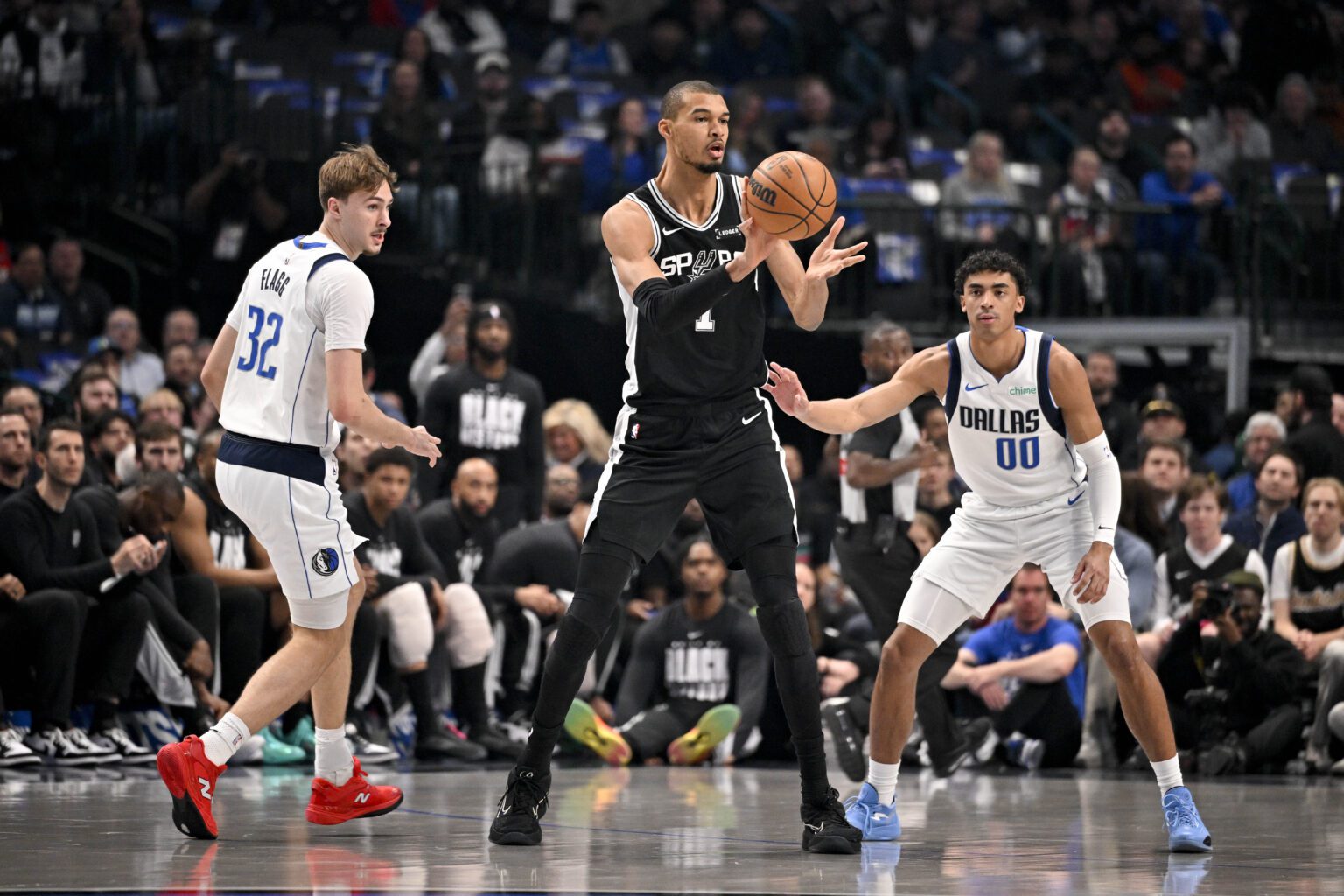
On the glass, the Spurs recorded more offensive rebounds (14) than the Knicks (10). However, New York proved more efficient in converting second-chance opportunities, outscoring San Antonio 23-14 in that category.
Looking Ahead to Game 2
As the series moves to Game 2 on Friday, the Spurs may need Wembanyama to play “bigger” on both ends of the floor to counter New York’s physicality.
The Knicks’ ability to execute in the final seconds of the shot clock could be a deciding factor. If they can improve their late-clock efficiency, they may be positioned to head back to New York with a 2-0 lead.
Frequently Asked Questions
What was Victor Wembanyama’s shooting percentage in Game 1?
Wembanyama shot 6-for-21, which is a 29% shooting performance.
How many late-clock shots did the Knicks take?
The Knicks took 34 shots in the last seven seconds of the shot clock, shooting 9-for-34 (26%).
Who won the battle for second-chance points?
The New York Knicks won the second-chance points battle 23-14, despite the Spurs having more offensive rebounds.
Do you think the Spurs’ switching defence is the right strategy to contain the Knicks’ offence?