
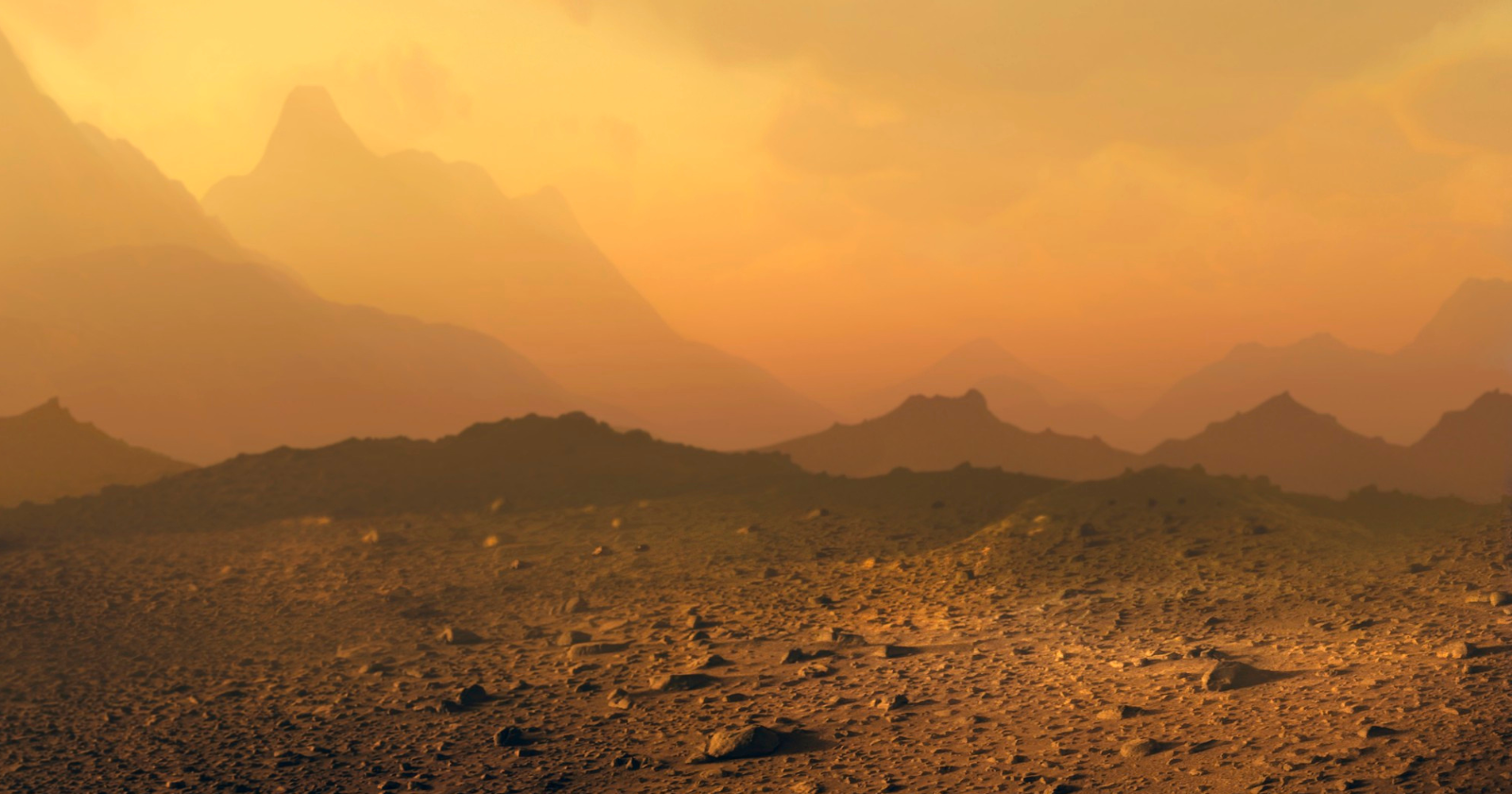
When Soviet engineers landed Venera 13 on the surface of Venus in 1982, they expected the probe to survive maybe thirty minutes in the planet’s lead-melting heat and crushing pressure – it survived 127 minutes and sent back the first color photographs ever taken from the surface of another planet
The Hellscape Challenge: Why Venus Remains the Final Frontier of Engineering
For over four decades, humanity has looked toward Mars with rovers and orbiters, yet we have largely ignored our “twin” planet, Venus. While Mars is a cold, dusty desert, Venus is a high-pressure furnace. The Soviet Union’s Venera 13 mission remains a masterclass in extreme engineering, surviving 127 minutes in conditions that would liquefy lead and crush a submarine.

As space agencies like NASA and private aerospace firms set their sights on the inner solar system again, the lessons from 1982 are more relevant than ever. We are entering a new era of “extreme environment” exploration, where the goal isn’t just to visit, but to survive.
Beyond Traditional Electronics: The Future of Venusian Tech
The primary barrier to returning to Venus is that modern silicon-based electronics fail almost instantly at 457 degrees Celsius. To go back, we cannot rely on the “pre-chilled” insulation methods used in the 1980s. Instead, engineers are looking toward Wide Bandgap (WBG) semiconductors, such as silicon carbide (SiC) and gallium nitride (GaN).
These materials can operate at high temperatures without the need for heavy, bulky cooling systems. By shifting from delicate processors to robust, heat-hardened circuitry, future landers could potentially survive for weeks rather than minutes, allowing for long-term seismological monitoring and atmospheric sampling.
Pro Tip: The Power of Mechanical Logic
Some researchers are proposing the use of mechanical computers—systems that use physical gears and levers rather than electrons—to process data on the surface. By avoiding electricity entirely for core functions, we could bypass the “thermal death” of semiconductors, creating machines that are essentially “immortal” in the Venusian heat.
Why Venus Still Matters for Earth’s Future
Studying Venus isn’t just about planetary science; it’s about understanding the “Runaway Greenhouse Effect.” Venus serves as a cautionary tale of what happens when a planet’s carbon cycle goes unchecked. By analysing the data captured by missions like NASA’s VERITAS and the European Space Agency’s EnVision, we gain critical insights into climate modeling that are directly applicable to Earth’s changing atmosphere.
The Data Gap: A 40-Year Silence
It is a startling reality that the colour images transmitted by Venera 13 in 1982 remain the only colour photographs of the Venusian surface. This lack of visual data creates a “blind spot” in our planetary records. Future missions aim to utilize high-resolution synthetic aperture radar (SAR) to map the surface in 3D, providing a global view that the Soviet landers could only dream of capturing from a single point on the ground.
Did you know? The atmospheric pressure on Venus is equivalent to being 900 metres underwater on Earth. This means any future lander must be built more like a deep-sea submersible than a spacecraft.
Frequently Asked Questions
- Why hasn’t anyone gone back to the surface of Venus since the 1980s?
- The extreme heat and pressure make the mission incredibly expensive and technically difficult. Most recent missions have focused on orbital mapping because the surface environment is so hostile to long-term hardware survival.
- Could we ever colonize Venus?
- Surface colonization is currently impossible. However, some scientists propose “cloud cities”—habitats floating 50 kilometers above the surface, where the temperature and pressure are remarkably similar to Earth’s.
- What made the Venera 13 design so successful?
- It was a combination of extreme structural reinforcement, pre-chilling the internal components, and conservative engineering margins that allowed it to outlast its 32-minute design life by nearly four times.
Join the Conversation
The story of Venera 13 proves that with enough ingenuity, we can overcome even the most hostile environments in our solar system. As we prepare for the next generation of space exploration, the question remains: what will we discover when we finally return to the surface of our neighbor?

What do you think is the biggest challenge for future Venus exploration? Share your thoughts in the comments below or subscribe to our newsletter for the latest updates on deep-space technology.