
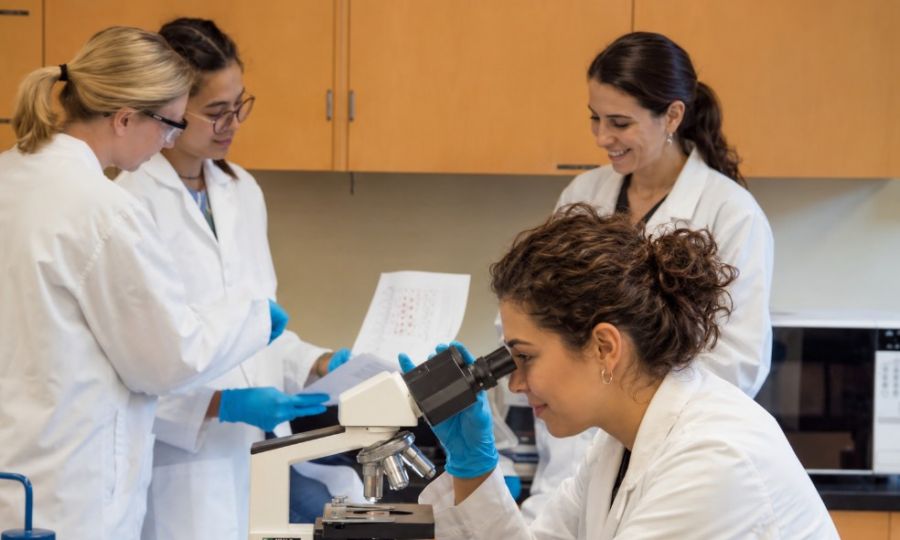
Women make up majority of science and technology workforce in Cyprus, KNEWS
New data from Eurostat reveals that women have reached a significant milestone in Cyprus, accounting for more than half of all science and technology workers in 2025. This shift highlights a growing presence of women in professional and technical roles that require advanced expertise, spanning fields from the physical and life sciences to the humanities and social sciences.
The Broader European Landscape
The trend in Cyprus reflects a wider pattern of growth across the European Union. In 2025, the total number of people aged 15 to 74 employed in science and technology occupations surpassed 81.6 million. This figure represents a 1.8% increase over 2024, adding approximately 1.5 million workers to the sector in just one year.
When viewed against historical data, the expansion is even more pronounced. Employment in these specialized fields has grown by 25.3% since 2015. Across the entire EU, women now represent 52.5% of this workforce, totaling 42.8 million individuals.
Regional Variations in Participation
While the overall trends are positive, participation rates vary significantly by region. Latvia currently leads with women accounting for 62.4% of its science and technology workforce. Other regions showing high representation include Hungary’s Great Plain and North region at 61.1% and Estonia at 60.5%.
Conversely, other areas report lower shares of women in these sectors. Corsica in France recorded a 42.7% share, while Malta and Italy’s Centro region followed with 46.0% and 47.2%, respectively. These figures suggest that while the sector is growing, the demographic composition of the workforce remains subject to regional economic and social dynamics.
Looking ahead, the sector is likely to see further shifts in workforce composition as the demand for advanced technical expertise continues to rise. Analysts may observe whether these current regional disparities narrow or persist as the broader EU workforce continues to expand.
Frequently Asked Questions
What constitutes the “science and technology” workforce in this data?
This sector includes occupations that require advanced professional or technical expertise, specifically covering areas such as the physical and life sciences, social sciences, and the humanities.

How much has the science and technology workforce grown in the EU since 2015?
Employment in this sector has seen a total growth of 25.3% when compared to 2015 figures.
Which regions currently have the lowest representation of women in science and technology?
Based on the latest data, the lowest shares were recorded in Corsica, France (42.7%), Malta (46.0%), and Italy’s Centro region (47.2%).
How do you think these regional trends might influence future employment opportunities in your own community?