
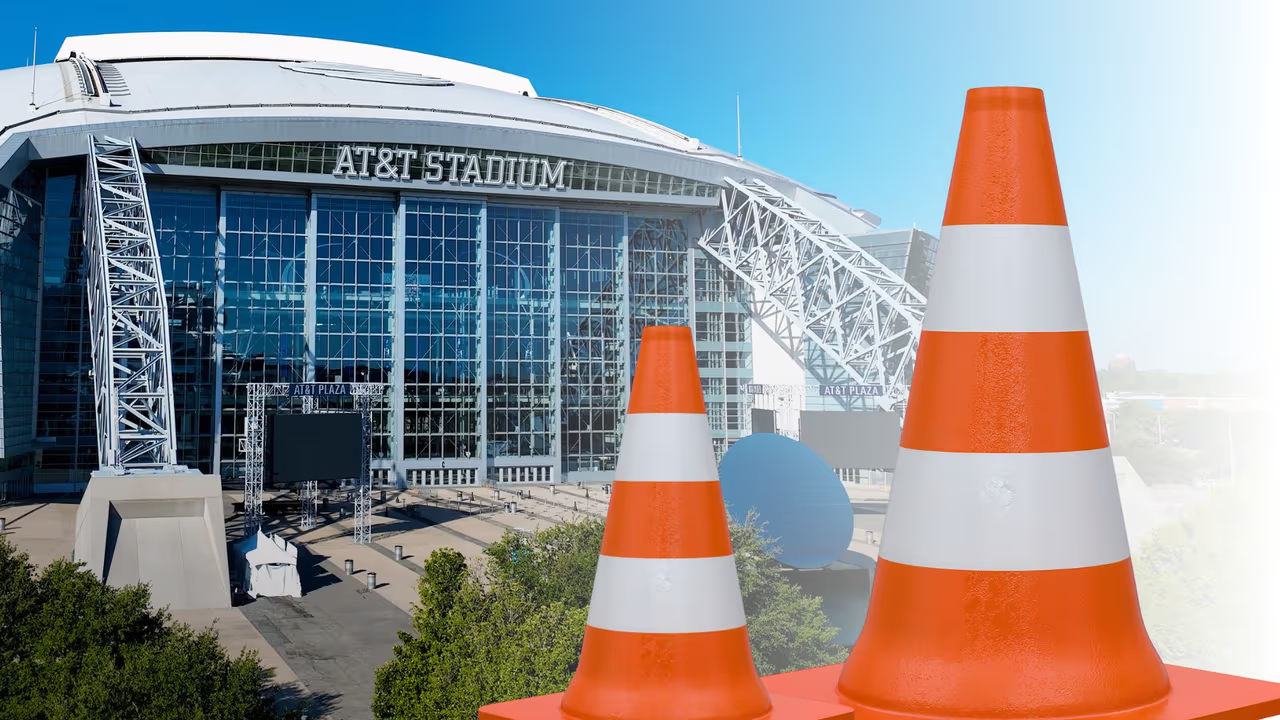
World Cup Road Closures: Dallas, Arlington, and Fort Worth Traffic Guide
Navigating a major metropolis during a global sporting event is often a gamble between strategic planning and total gridlock. As cities like Dallas, Arlington, and Fort Worth prepare for the influx of millions of fans, the temporary road closures and shuttle systems we see today are more than just logistical hurdles—they are a glimpse into the future of urban mobility.
The “World Cup effect” forces cities to stress-test their infrastructure in ways that normal daily commutes never do. From the integration of AI-driven traffic routing to the prioritization of pedestrian-first zones, the way we move through cities is undergoing a fundamental shift.
The Era of AI-Driven Traffic Orchestration
The days of relying solely on static signage and a hopeful GPS are fading. The future of mega-event management lies in dynamic traffic orchestration. We are moving toward systems where city grids “breathe” in real-time based on live data feeds.
Imagine a city where traffic lights aren’t on timers but are controlled by AI that analyzes drone footage and sensor data to clear bottlenecks before they even form. This isn’t science fiction; cities like Singapore and Seoul are already implementing “Smart City” hubs that synchronize transit flows to reduce congestion by up to 20% during peak events.
Predictive modelling vs. Reactive Management
Historically, traffic management was reactive: a road gets blocked, and police redirect cars. The trend is shifting toward predictive modelling. By using historical data from previous tournaments—such as the 2022 World Cup in Qatar—planners can now simulate “what-if” scenarios to determine exactly which intersections will fail first.
This allows authorities to implement “soft closures” and staggered entry times, ensuring that the “last mile” of the journey—the stretch between the train station and the stadium—remains fluid.
The Shift Toward Multimodal “Hub-and-Spoke” Transit
The reliance on the private vehicle is the biggest liability in event logistics. The future trend is the Hub-and-Spoke model, where cars are kept on the periphery and the city center becomes a multimodal sanctuary.
We are seeing an increase in “Park and Ride” ecosystems where massive peripheral lots connect to high-frequency shuttle loops or light rail systems (like the DART in North Texas). This minimizes the number of vehicles entering the “Red Zone” around stadiums.
The Rise of Micro-Mobility
Electric scooters, bike-shares, and autonomous pods are filling the gaps that buses cannot. In the coming years, expect to see “Micro-Mobility Corridors”—dedicated lanes that allow fans to zip from a transit hub to a fan festival without interacting with vehicle traffic. This not only reduces carbon emissions but significantly lowers the risk of pedestrian accidents during high-crowd events.
Case Study: Lessons from Global Mega-Events
If we look at the 2024 Olympics in Paris, the strategy was clear: radical pedestrianization. By restricting vehicle access to the Seine and creating massive “walking arteries,” the city reduced the chaos typically associated with such events.
Similarly, the 2022 World Cup in Qatar showcased the power of a fully integrated metro system. By designing the city around a high-capacity rail spine, they moved millions of people with surgical precision, proving that when the “car is removed from the equation,” the efficiency of a city skyrockets.
For those interested in how these trends apply to local growth, check out our guide on the evolution of North Texas urban planning or visit the Institute for Transportation and Development Policy for global benchmarks.
The “Fan Zone” as a Permanent Urban Asset
One of the most interesting trends is the transition of temporary “Fan Festivals” into permanent community assets. When a city invests in upgrading the infrastructure around a park or a convention center for a tournament, those improvements—better lighting, wider sidewalks, and improved drainage—remain long after the final whistle.
The “event-driven upgrade” allows cities to fast-track infrastructure projects that would normally take a decade to approve, effectively using the World Cup as a catalyst for urban renewal.
Frequently Asked Questions
Q: Why are some road closures permanent while others are only on match days?
A: Permanent closures are typically for security perimeters or media hubs (like the International Broadcast Center), whereas match-day closures are designed to manage the “surge” of pedestrian traffic and ensure emergency vehicle access.
Q: Will AI traffic apps actually help during a World Cup?
A: Yes, but with a caveat. While AI can find the fastest route, it can also lead thousands of drivers to the same “shortcut,” creating new bottlenecks. The best strategy is to use multimodal transport (train + walking).
Q: How do these event closures benefit residents in the long run?
A: They often lead to improved public transit frequency, better signage, and the discovery of alternative routes that reduce long-term dependence on congested main arteries.
Join the Conversation
Do you think the shift toward pedestrian-first cities is the right move for North Texas, or is the car still king? Let us know your thoughts in the comments below or subscribe to our newsletter for more insights on the future of our cities!