

Xiaomi EV Approved to Produce Extended-Range Electric Vehicles
Xiaomi’s automotive unit received approval from China’s Ministry of Industry and Information Technology (MIIT) to produce extended-range electric vehicles (EREVs). This regulatory shift allows the company to expand beyond battery electric vehicles (BEVs) into the family SUV market, targeting a 2026 delivery goal of 550,000 units.
Why is Xiaomi adding extended-range vehicles to its lineup?
The move targets “range anxiety,” a primary barrier for consumers in China’s large family SUV segment. Unlike pure BEVs, EREVs use a small internal combustion engine to charge the battery on the go. This technology bridges the gap for users who lack consistent charging infrastructure or frequently take long trips.
According to the MIIT’s list of pending production access changes released Wednesday, Xiaomi EV is now cleared to manufacture these hybrid powertrains. Until now, the company’s portfolio consisted solely of BEVs, specifically the SU7 sedan and the YU7 SUV.
What is the “Skynomad” brand and the Kunlun N3?
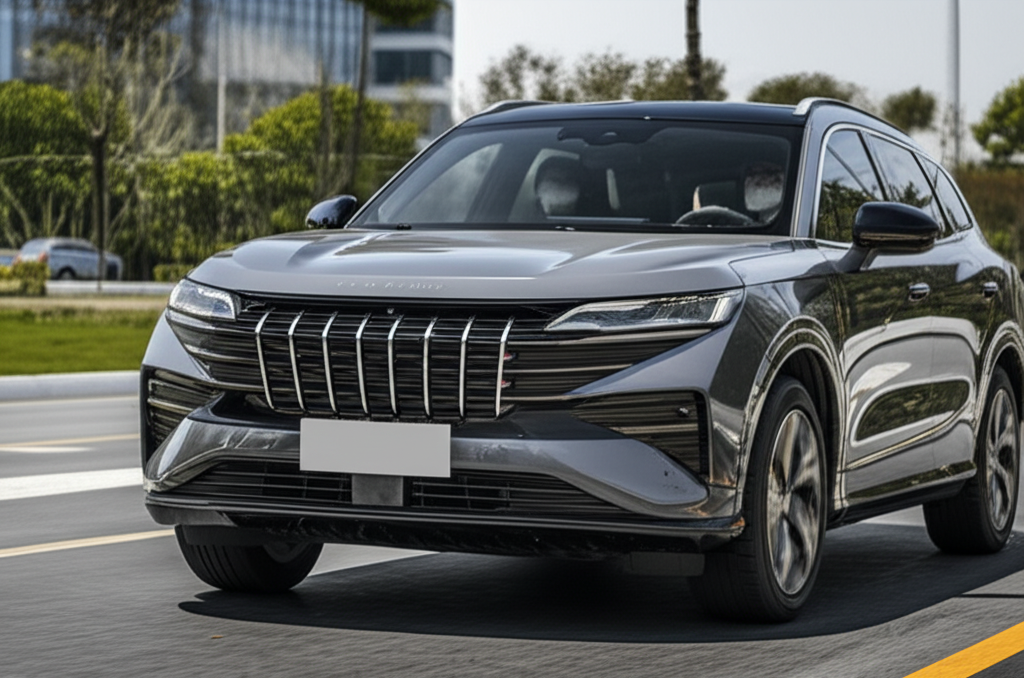
Reports from local media outlet 21jingji suggest Xiaomi may launch a second brand called Skynomad. This brand would focus specifically on the high-competition family SUV market. The first rumored model, codenamed Kunlun N3, is described as a full-size SUV measuring over 5.3 meters in length.
The Kunlun N3 is expected to feature a battery pack exceeding 70 kWh, providing a pure electric range between 400 and 500 kilometers. 21jingji reports an official launch is planned for the second half of 2026. This vehicle directly targets established competitors like the Li Auto L9.
Battery Supply Strategy
Xiaomi has already identified its primary battery partners for this new direction. According to 21jingji, Sunwoda will provide 60% of the supply quota, while CALB will handle the remaining 40%.
How does this fit into Xiaomi’s 2026 growth targets?
Xiaomi is aggressively scaling its delivery numbers. The company set a full-year vehicle delivery target of 550,000 units for 2026. This represents a 34% increase over the roughly 410,000 units projected for 2025.

Recent data shows the company is facing some volatility. According to the China Passenger Car Association (CPCA), Xiaomi delivered 32,759 vehicles in May. While this was a 16.94% increase year-on-year, it marked a 10.74% decline from April’s figures. Cumulative deliveries from January to May reached 150,317 vehicles, a 13.48% increase over the previous year.
Who are Xiaomi’s main competitors in the EREV market?
Entering the EREV space puts Xiaomi in direct conflict with Li Auto and Huawei-backed Aito. These two brands dominate the sector; seven of the top 10 best-selling extended-range SUVs in China in 2025 came from these companies.
Xiaomi President Lu Weibing confirmed during a first-quarter earnings call that a new mid-to-large-size model will launch in the second half of this year. Lu stated the model uses a new platform with multiple derivative versions to increase competitiveness.
Comparison: Xiaomi vs. Market Leaders
| Metric | Xiaomi (Projected/Current) | Competitors (Li Auto/Aito) |
|---|---|---|
| Primary Tech | Shifting BEV $rightarrow$ EREV | Established EREV dominance |
| 2026 Target | 550,000 units | High-volume established sales |
| Key Model | Kunlun N3 (Rumored) | Li L9 / Aito models |
Frequently Asked Questions
What is an extended-range electric vehicle (EREV)?
An EREV is an electric vehicle that carries a small gasoline engine used solely to charge the battery, ensuring the car doesn’t run out of power on long trips.
When will Xiaomi launch its new SUV?
President Lu Weibing announced a new mid-to-large model for the second half of this year, while the rumored full-size Kunlun N3 is expected in the second half of 2026.
Which companies are supplying Xiaomi’s batteries?
Sunwoda (60%) and CALB (40%) are the designated suppliers for the new models, according to 21jingji.
For more updates on the evolving EV landscape, check out our guide on the future of hybrid powertrains or explore Xiaomi’s broader ecosystem strategy.
Join the Conversation: Do you think extended-range vehicles are a necessary step toward full electrification, or a distraction? Let us know in the comments below or subscribe to our newsletter for the latest automotive insights.