
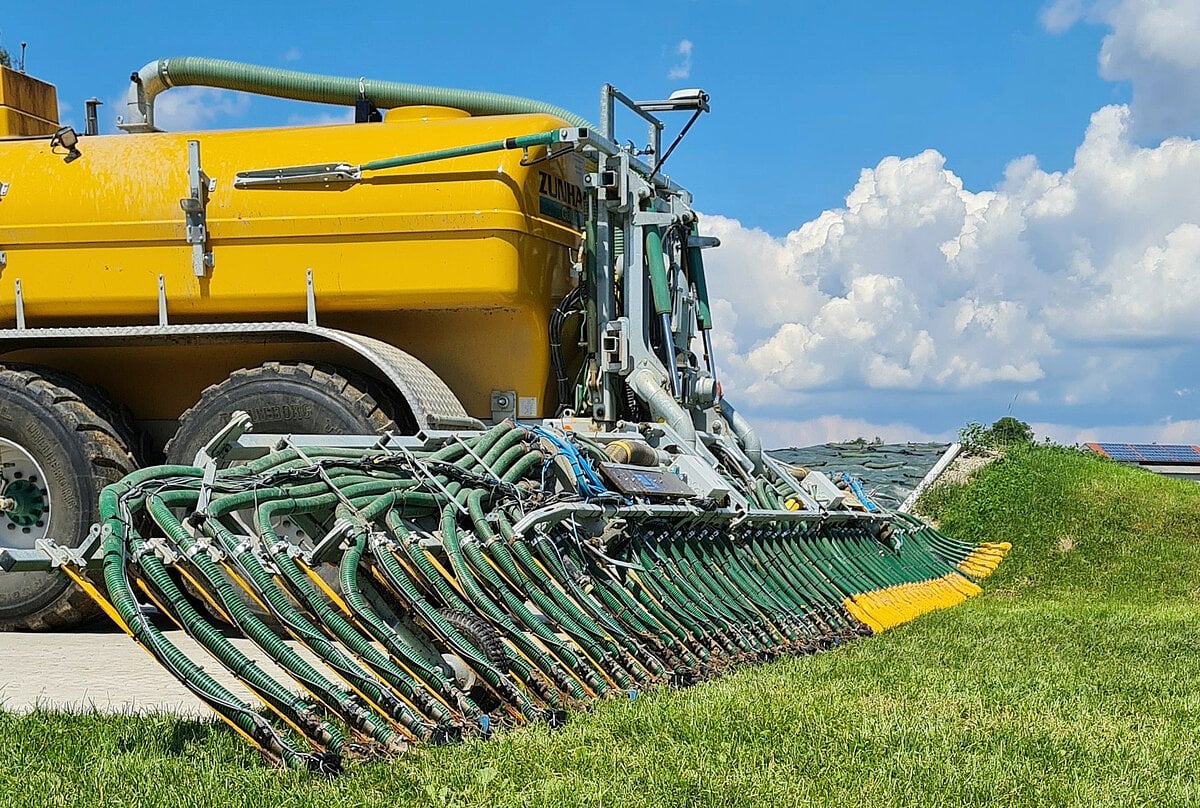
Aargau Subsidizes Trailing Shoe and Slurry Injection to Reduce Ammonia Emissions
As of January 1, 2024, Switzerland has mandated the use of trailing hose technology for spreading liquid manure, except in cases involving small farms or steep terrain. This regulatory shift aims to curb ammonia emissions, which pose significant risks to environmental health by polluting the air and causing soil acidification and over-fertilization. Such nitrogen-based contamination can damage sensitive ecosystems like forests and moors, often signaled by the aggressive growth of nitrogen-loving vegetation such as blackberries.
Advanced Techniques for Emission Control
Beyond the trailing hose, more precise methods are emerging to further reduce ammonia release. The trailing shoe utilizes spring-loaded, skate-like tools to part the grass, allowing manure to be deposited directly onto the soil surface or into the top layer. Even more effective is the practice of manure drilling, where the substance is injected one to four centimeters directly into the ground.
Economic Incentives and Future Outlook
To encourage the adoption of these advanced techniques, the Canton of Aargau has introduced a subsidy of 45 Swiss francs per hectare, intended to cover the cost difference between basic and advanced methods. Meanwhile, the Canton of Zug offers a subsidy of 15 francs per hectare. The financial support in Aargau has led to a sharp rise in demand, though some farmers express concern that high participation rates may eventually dilute the per-hectare payout or lead to the discontinuation of the program.
Looking ahead, the industry may see further shifts in standard practices. Given the evolution observed in other regions, such as the transition to manure drilling as the sole permitted method in Holland, Swiss regulations could eventually move toward even stricter injection-based mandates to further minimize environmental impact.
Frequently Asked Questions
Why is the government mandating new manure spreading technologies?
The mandate aims to reduce ammonia emissions, which contribute to air pollution and the degradation of soil health. Excess nitrogen can lead to acidification and over-fertilization, causing harm to forests, and moorlands.
What is the difference between a trailing hose and a trailing shoe?
A trailing hose spreads manure over the field, whereas a trailing shoe uses spring-loaded tools to open the grass cover. This allows the manure to be placed directly on the soil or slightly into the top layer, which significantly reduces ammonia emissions compared to surface-level spreading.
Is there financial support available for farmers upgrading their equipment?
Yes, certain cantons provide subsidies to offset the costs of upgrading. Aargau offers 45 francs per hectare for the use of trailing shoes and manure drilling, while Zug offers 15 francs per hectare.
How do you think balancing agricultural efficiency with environmental protection will shape the future of local food production?