
ADA CEO Apologizes After Scientists Ejected From Annual Meeting
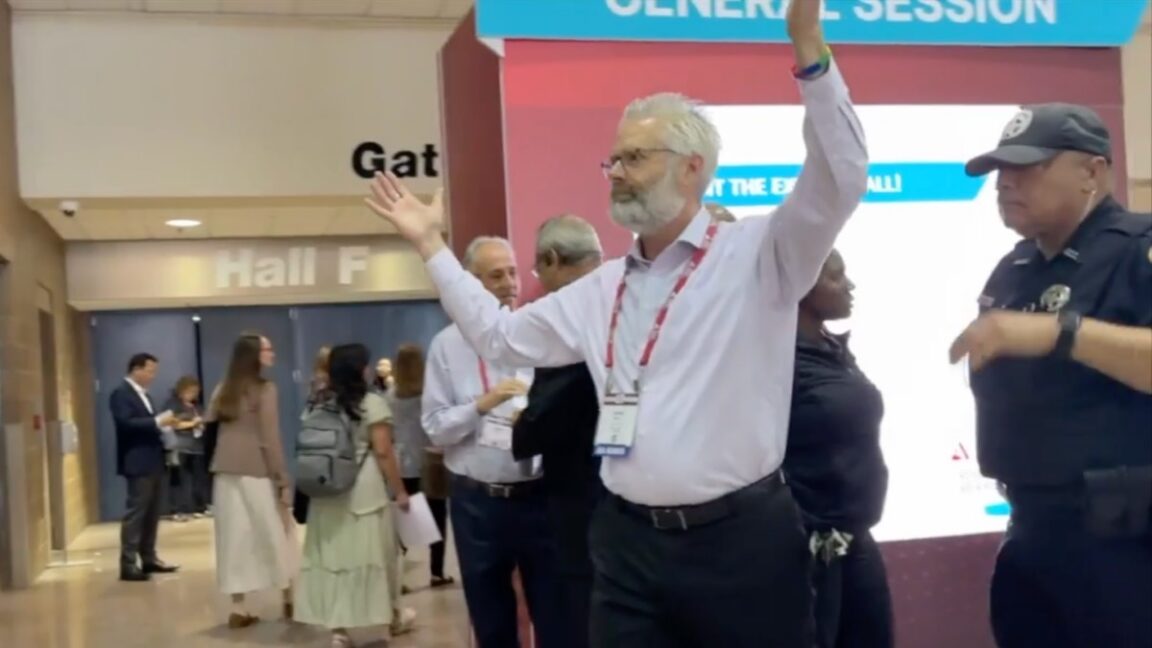
The American Diabetes Association (ADA) CEO Charles Henderson issued a public apology after the organization used police to remove five leading scientists from its annual meeting in New Orleans. The scientists were ejected for distributing an editorial from the ADA’s own journal, Diabetes Care, which criticized the Trump administration’s biomedical research policies.
Why did the ADA remove scientists for sharing its own journal?
Five scientists, including Diabetes Care editor-in-chief Steven Kahn and former ADA President Desmond Schatz, were escorted from the conference by police. According to reports from Ars Technica, the group was distributing copies of an April editorial that detailed the damage the Trump administration was causing to biomedical research.
The incident occurred outside the opening speech. That slot was originally reserved for Jay Bhattacharya, the National Institutes of Health (NIH) head under Trump, though senior official Rick Woychik eventually filled in after Bhattacharya canceled. Louisiana State Police told the New York Times that they removed the scientists at the specific request of the ADA.
The police didn’t just escort them out. Reports indicate officers shoved at least one scientist, seized conference badges, and threatened arrest if the researchers attempted to return. The ADA subsequently barred the five scientists—which also included Aaron Kelly, Justin Ryder, and Irl Hirsch—from the remainder of the event.
How does this reflect the tension between politics and biomedical research?
This clash highlights a growing friction between scientific autonomy and political leadership. The editorial in question specifically targeted the administration’s impact on the biomedical sector. When an organization’s leadership suppresses its own published research to avoid political friction, it signals a shift in how medical associations manage “neutrality.”
The timing of the ejection—occurring right before a speech by an NIH official—suggests a desire to sanitize the environment for political figures. This trend points toward a future where medical conferences may become more tightly controlled spaces, prioritizing political optics over the open exchange of academic critique.
The conflict of institutional interests
Medical associations often rely on government grants and legislative goodwill. When the ADA’s internal scientific voice (via Diabetes Care) contradicts the administration’s policies, the organization faces a choice: support its scientists or protect its relationship with the state. In this instance, the ADA initially chose the latter.
What happens when medical associations prioritize politics over academic freedom?
The immediate result is a breakdown of trust within the research community. The ADA’s response shifted dramatically over several days, revealing a disconnect between its public relations team and its executive leadership.
Initially, a media team told MedPage Today that the scientists were removed because they “demonstrated behavior not consistent with this code of conduct.” However, by Wednesday, CEO Charles Henderson released a video apology. He stated that the events were “not reflective of who I am, the values I hold, or the way I was raised.”
This contradiction suggests a trend of “crisis management” where organizations first attempt to justify censorship through administrative rules before pivoting to apologies once the backlash becomes too great to ignore.
Will this lead to new standards for medical conference conduct?
The fallout from the New Orleans event will likely force medical associations to redefine what constitutes “disruptive behavior.” If handing out a journal’s own content is deemed a violation of conduct, the definition of professional behavior has moved from “non-violent” to “non-critical.”
Future trends suggest a move toward more transparent “Free Speech” charters for medical meetings. Researchers may demand written guarantees that the distribution of peer-reviewed materials—especially those published by the hosting organization—cannot be grounds for removal.
Comparison of ADA’s shifting narrative
| Initial Response (via MedPage Today) | Final Response (CEO Video) |
|---|---|
| Cited “behavior not consistent with this code of conduct.” | Personal apology; stated actions didn’t reflect his values. |
| Justified the removal of the scientists. | Expressed a need to “bring our community back together.” |
Frequently Asked Questions
Who were the scientists removed from the ADA conference?
The group included Steven Kahn (University of Washington), Desmond Schatz (University of Florida), Aaron Kelly (University of Minnesota), Justin Ryder (Northwestern University), and Irl Hirsch (University of Washington).
Why were they escorted out?
They were distributing an editorial from the journal Diabetes Care that criticized the Trump administration’s policies on biomedical research.
Did the ADA apologize?
Yes. CEO Charles Henderson posted a video apology on Wednesday, contradicting earlier statements that the scientists had violated the conference’s code of conduct.
Do you think medical associations should have the right to restrict political speech at their events, even if that speech is based on their own published research? Let us know in the comments or subscribe to our newsletter for more updates on scientific freedom.