
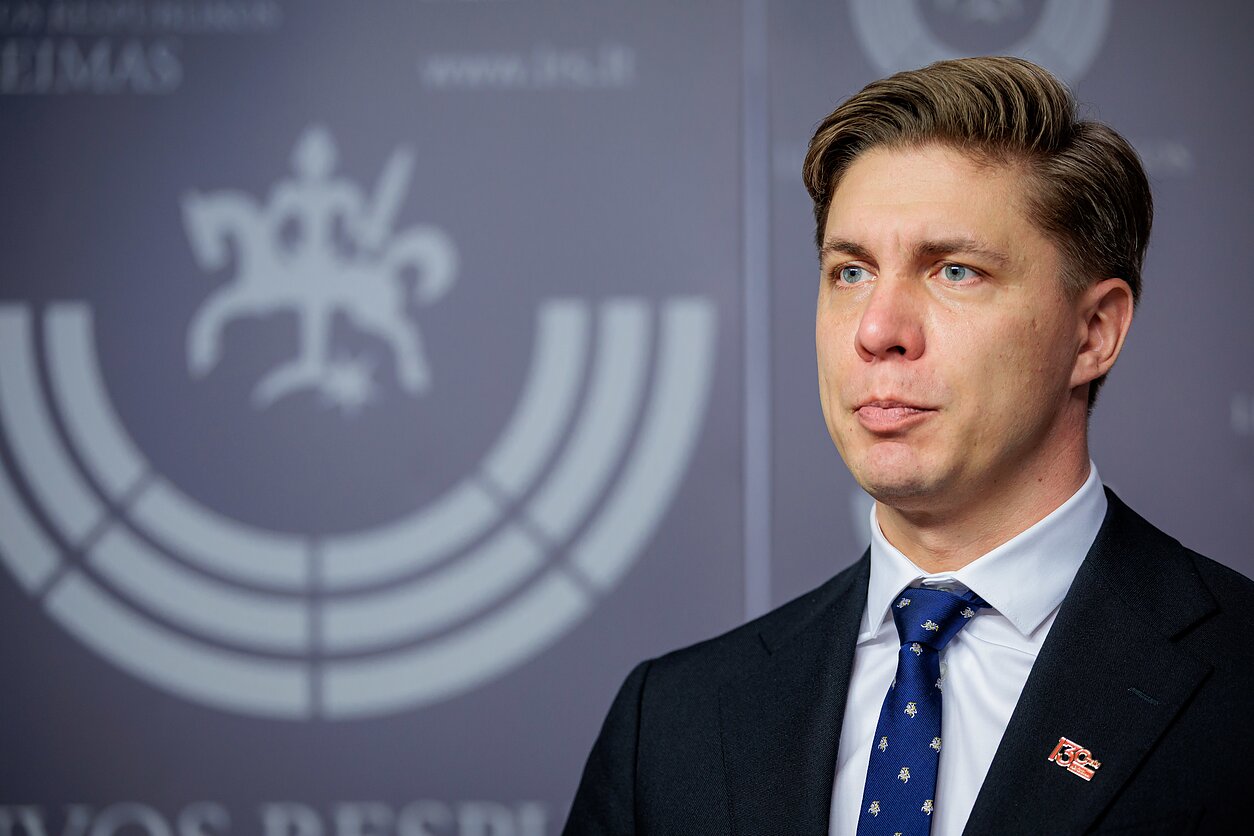
Andrius Tapinas Asks STT to Investigate Mindaugas Sinkevicius Legal Fee Funding
Public figure Andrius Tapinas has submitted a formal request to the Special Investigation Service (STT) calling for an evaluation of the funding sources used by Social Democratic Party leader Mindaugas Sinkevičius to cover legal fees in the so-called “receipts” case. Tapinas alleges that Sinkevičius has failed to provide proof that he paid for his own legal representation during the protracted multi-year litigation.
Mindaugas Sinkevičius was previously accused of misappropriating 1,487 euros from the Jonava District Municipality administration through 16 falsified expense reports, though the Supreme Court of Lithuania ultimately terminated the criminal case against him in March of last year.
The Basis for the STT Inquiry
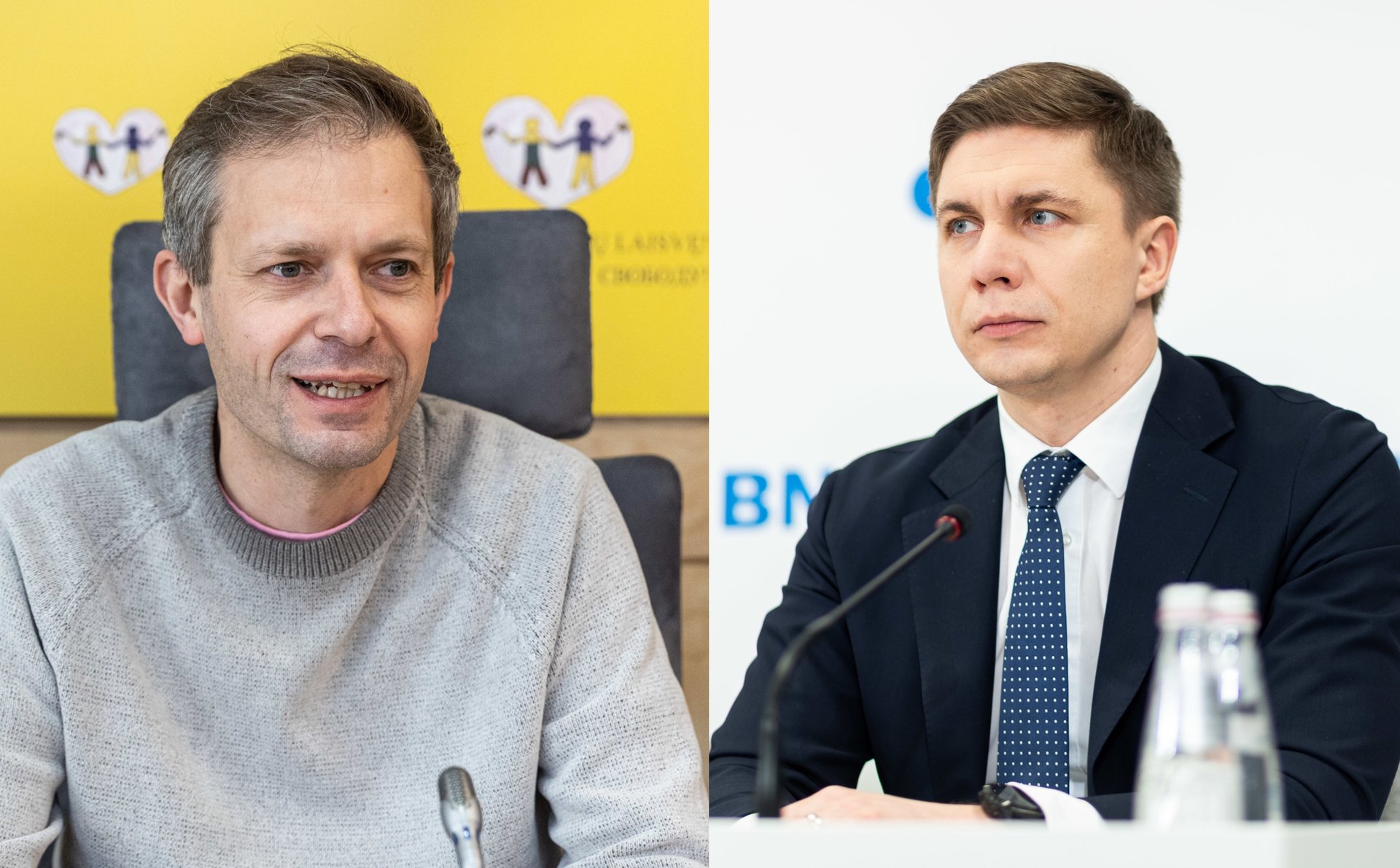
According to statements made by Andrius Tapinas on social media, the primary concern involves a potential discrepancy between the high cost of legal defense and the declared financial assets of the politician. Tapinas notes that Sinkevičius was represented by Arūnas Petrauskas, a partner at the law firm Ellex Valiūnas.
Tapinas estimates that legal costs for such a high-profile, multi-instance case likely ranged between 40,000 and 50,000 euros. In contrast, Sinkevičius declared only 16,800 euros in liquid assets in his 2023 financial statement. Tapinas is asking the STT to determine if there are grounds to initiate a pre-trial investigation into the source of the funds used to pay for the legal defense.
Samantha Carter notes that the intersection of political finance and personal legal liabilities often triggers intense public scrutiny. When a politician’s declared assets appear insufficient to cover the market rates of high-end legal counsel, it creates a transparency gap that, if left unaddressed, can influence public trust regardless of the previous court ruling that cleared the subject of criminal liability.
Context of the “Receipts” Case
In March of last year, the Supreme Court of Lithuania ruled that the actions of Mindaugas Sinkevičius did not warrant criminal liability. The court found that previous judicial instances had incorrectly applied the law, erroneously convicting the politician for abuse of office, document forgery, and misappropriation of assets.
Following the termination of the criminal case, Sinkevičius resumed his role as the mayor of Jonava and returned to the Social Democratic Party. He was subsequently elected as the party’s leader and, as of this past Tuesday, has formally announced his ambition to become the Prime Minister of Lithuania.
Potential Next Steps
The STT must now review the submission provided by Andrius Tapinas to determine if there is a legal basis for an investigation. If the agency finds sufficient evidence of potential criminal activity regarding the origin of the funds used for legal fees, it could open a formal inquiry. Conversely, if the STT determines the information provided does not meet the threshold for a criminal probe, the matter may conclude without further legal action. The outcome of this request could impact the political trajectory of Sinkevičius as he pursues the premiership.
Frequently Asked Questions
What is the core allegation made by Andrius Tapinas?
Tapinas alleges that Mindaugas Sinkevičius has not proven he paid for his own legal defense in the “receipts” case and questions whether his personal assets, which were declared at 16,800 euros in 2023, were sufficient to cover estimated legal fees of 40,000 to 50,000 euros.
What was the outcome of the original “receipts” case?
The Supreme Court of Lithuania terminated the criminal case against Sinkevičius in March of last year, ruling that his actions did not warrant criminal liability and that lower courts had incorrectly applied the law.
What is the current political status of Mindaugas Sinkevičius?
He is currently the leader of the Social Democratic Party, the mayor of Jonava, and has announced his intention to seek the position of Prime Minister.
How should political figures balance the need for high-level legal representation with the requirement for financial transparency?