
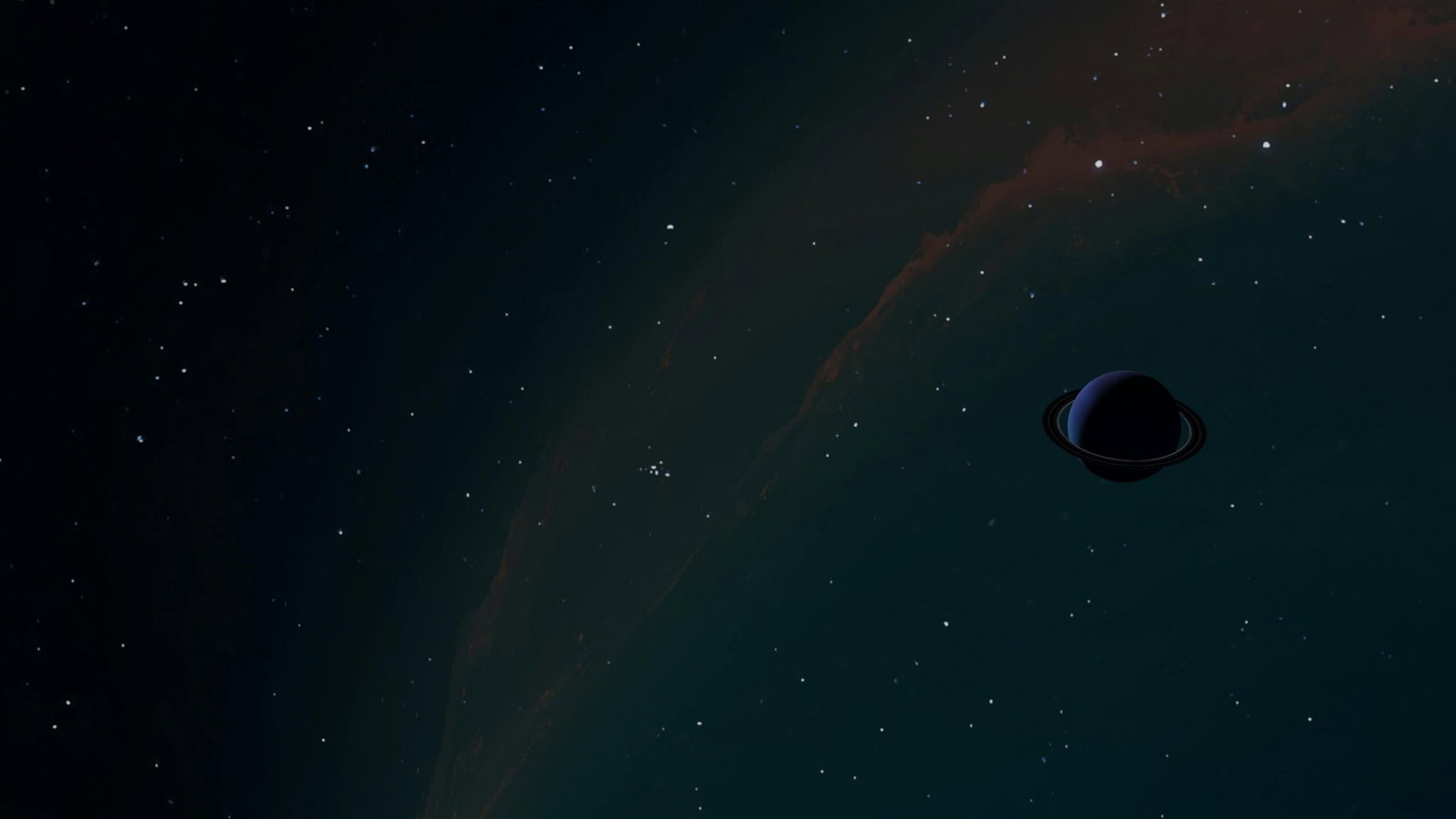
Astronomers Discover Seven Gas Giants With Winds Faster Than Jupiter
Beyond the Wind: The New Era of Planetary Magnetism
For decades, astronomers have been playing a cosmic game of “spot the planet,” identifying thousands of exoplanets by the way they dim their parent stars. But we are now shifting from simple detection to deep characterization. The discovery of seven gas giants with winds screaming at 25,000 km/h isn’t just a curiosity about extreme weather—it’s a breakthrough in how we “see” the invisible.
The real story here is the relationship between wind and magnetism. By observing how atmospheric currents are slowed down—essentially “braked” by magnetic fields—scientists have unlocked a proxy measurement for a planet’s internal engine. This marks the beginning of a trend where we no longer need to visit a planet to understand its core; we can simply read the wind.
Why Magnetic Fields are the “Holy Grail” of Exoplanet Hunting
While these gas giants are too hostile for life, the methodology used to study them is a game-changer for the search for “Earth 2.0.” A strong magnetic field is essentially a planetary shield. Without one, a planet’s atmosphere is slowly stripped away by stellar winds, leaving behind a barren rock like Mars.
The Shield Against Stellar Fire
As we look toward future trends, the focus will shift toward smaller, rocky planets in the “Goldilocks zone.” If we can apply this “wind-braking” analysis to terrestrial planets, we can determine if they possess the magnetosphere necessary to protect liquid water and biological life.

Recent data from missions like the James Webb Space Telescope (JWST) are already allowing us to analyze atmospheric compositions with unprecedented precision. The next step is integrating these chemical signatures with magnetic field data to create a complete “habitability profile” for distant worlds.
The Future of Astro-Meteorology: Predicting Galactic Storms
We are entering the age of “Astro-Meteorology.” Just as we predict hurricanes on Earth, we are beginning to model the global circulation patterns of planets light-years away. The concept of “tidally locked” planets—where one side is eternal day and the other eternal night—creates a permanent pressure gradient that drives these extreme winds.
Future research will likely focus on “Atmospheric Heat Redistribution.” Scientists want to know how efficiently these winds move heat from the day-side to the night-side. This balance determines whether the night-side freezes solid or remains a swirling cauldron of exotic clouds and vivid auroras.
For more on how we categorize these worlds, check out our guide on the different types of exoplanets and how they differ from our own solar system.
Visualizing the Invisible: The Aurora Connection
The mention of “dancing curtains of light” isn’t just poetic; it’s physics. Auroras are caused by charged particles from a star hitting a planet’s magnetic field. On these gas giants, the magnetic fields are significantly more powerful than Jupiter’s, meaning their auroras are likely visible from deep space.
The trend in imaging is moving toward multi-wavelength astronomy. By combining infrared data with radio astronomy, we will soon be able to “map” these auroras, providing a visual blueprint of the planet’s magnetic poles and the intensity of its internal dynamo.
Frequently Asked Questions
Can humans ever visit these planets?
No. These are gas giants with no solid surface and wind speeds that would shred any known spacecraft. They are laboratories for physics, not destinations for colonization.
How do we measure wind from light-years away?
Astronomers use Doppler shifting. By analysing the light spectrum as a planet rotates, they can see if the light is “shifted” by gases moving toward or away from us at high speeds.
What is a tidally locked planet?
It is a planet that rotates on its axis at the same rate it orbits its star, meaning the same side always faces the sun—similar to how the Moon always shows the same face to Earth.
Do you think we’ll find a magnetic shield on a rocky planet soon?
The search for a second Earth is heating up. Join the conversation in the comments below or subscribe to our cosmic newsletter for weekly updates on the frontiers of space exploration!