
Beyond Moore’s Law: Breakthrough in Monolithic 3D Silicon Chip Integration
The End of the Horizontal Era: Why the Future of Computing is Vertical
For over half a century, the semiconductor industry has been obsessed with a single goal: shrinking. By squeezing more transistors onto a flat plane, we’ve powered everything from the first moon landings to the smartphone in your pocket. This is the legacy of Moore’s Law.
But we are hitting a wall. As we approach the atomic scale, the laws of quantum mechanics are starting to behave like a speed limit we simply cannot ignore. Silicon, once the reliable workhorse of the digital age, is becoming temperamental. The industry has reached a crossroads, and the solution isn’t to make transistors smaller—it’s to stop building out and start building up.
Breaking the Thermal Ceiling
The primary barrier to stacking chips has always been heat. Traditional manufacturing requires temperatures near 1,000 degrees Celsius to create high-quality crystalline silicon. If you try to build a second layer on top of a finished chip at those temperatures, you’ll melt the delicate metal interconnects already in place.
For years, companies have tried to bypass this by using alternative materials—nanocrystalline oxides or carbon nanotubes—for the upper layers. The problem? They just don’t perform like silicon. They are slower, less reliable, and create a “mismatch” that kills efficiency.
The Nanomembrane Revolution
A breakthrough from the University of Illinois Grainger College of Engineering is changing the game. By creating ultrathin silicon nanomembranes—less than 10 nanometers thick—researchers have found a way to transfer crystalline silicon onto existing circuits at a mere 200 degrees Celsius.
Because these membranes are so thin, they are mechanically flexible. They conform to the underlying surface like a second skin, eliminating the voids and defects that have plagued previous attempts at wafer bonding. The result? A three-layer stack that delivers the same performance as traditional chips but with a significantly smaller physical footprint.
Why AI Demands 3D Architecture
If you’ve wondered why your latest AI-driven tasks—like training a Large Language Model (LLM)—consume so much power, the answer is often “data movement.” When a processor has to pull data from a distant memory bank, it creates a bottleneck. That energy cost is known as parasitic capacitance.
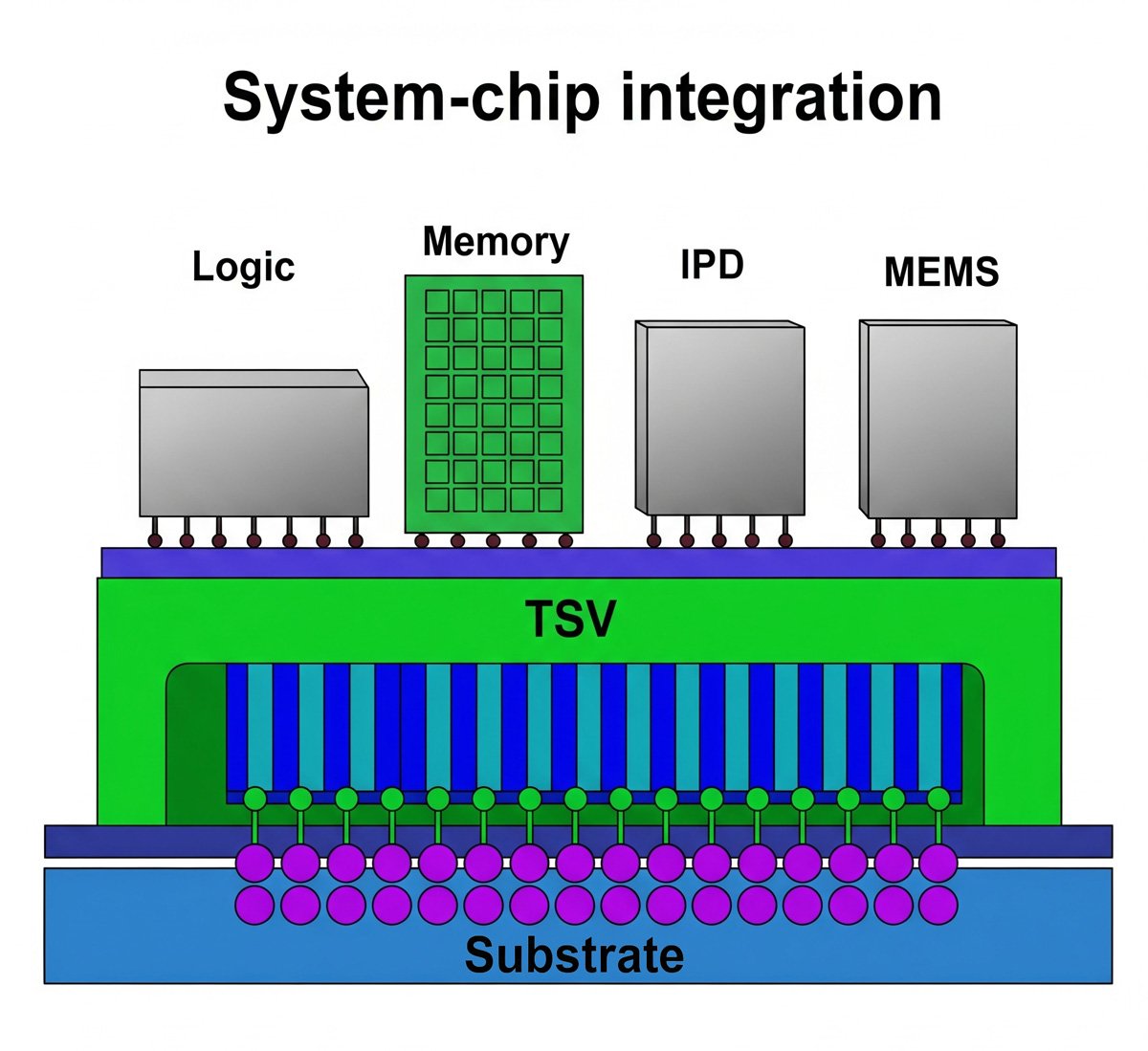
By stacking memory directly on top of logic processors, we drastically shorten the distance data must travel. It’s the difference between walking to a library in another city and having a bookshelf right next to your desk. This shift to 3D isn’t just about making smaller devices; it’s about making them faster and more energy-efficient for the age of artificial intelligence.
What In other words for the Consumer
You won’t see “3D Monolithic Silicon” on a box at your local electronics store tomorrow, but the transition is already underway. As the industry moves away from the physical limits of planar silicon, we can expect:

- Longer Battery Life: More efficient data paths mean less energy wasted as heat.
- Higher Performance: Faster communication between chip layers will push the boundaries of what local AI can do on a laptop or phone.
- Smaller Devices: As we go vertical, the need for massive, sprawling motherboards shrinks, allowing for even sleeker hardware designs.
Frequently Asked Questions (FAQ)
- What is the difference between current 3D chips and monolithic 3D integration?
- Current 3D chips (like AMD’s 3D V-Cache) involve bonding two pre-made chips together. Monolithic integration involves building the second layer directly onto the first, allowing for much denser, faster, and more precise connections.
- Why is silicon still the preferred material?
- Silicon is the most well-understood and reliable semiconductor material. It offers performance and stability that alternative materials, like carbon nanotubes, have yet to consistently match in large-scale manufacturing.
- When will this reach mass production?
- The technology is currently moving from academic research labs into industrial foundries. With partners like IBM, Intel, and TSMC involved, we are likely looking at a rollout within the next generation of high-end processor development.
The computing landscape is shifting from a sprawling horizontal landscape to a high-rise skyline. What are your thoughts on the future of chip architecture? Leave a comment below or subscribe to our newsletter for the latest deep dives into the world of semiconductor innovation.