
Beyond Royal Jelly: How Specialized Wax Shapes Honeybee Queens
New research suggests that the development of a queen bee is influenced by more than just its specialized diet. While royal jelly has long been viewed as the primary catalyst for creating a queen, the physical and chemical properties of the development chamber also play a critical role.
Beyond the Royal Diet
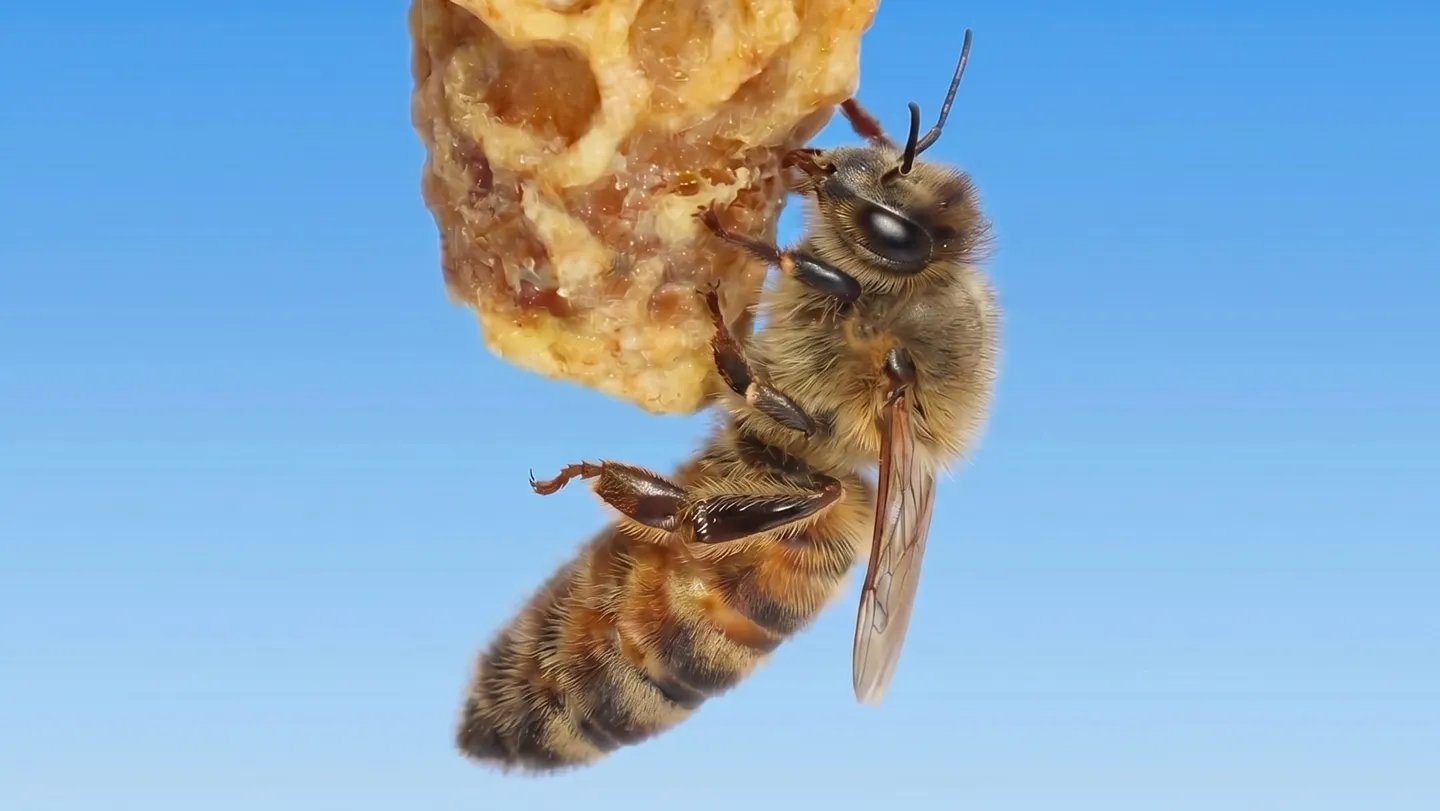
Researchers reporting in Nature on June 3 have challenged the long-held belief that royal jelly alone determines a larva’s path to royalty. By analyzing the peanut-shaped chambers where queens develop, the team discovered that the wax itself steers development.
The study focused on western honeybees (Apis mellifera) and eastern honeybees (Apis cerana). Analyses revealed that queen-cell wax is chemically distinct, softer and less dense than the wax used for worker cells.
The Role of the Royal Nurses
The construction of these “royal cribs” is a high-energy investment for the colony. Entomologist Boris Baer of the University of California, Riverside, noted that the energy spent on these cells suggests they are more than just larger food containers.
The evidence suggests that these specialized workers are adapted to modify the wax they work with, effectively engineering the environment to support the future queen.
Evidence of Environmental Engineering
To test the impact of the wax, researchers allowed queen-destined larvae to develop on royal jelly for four days. They then replaced the caps of artificial cells with either worker-cell wax or queen-cell wax.
The results were stark: up to two-thirds of larvae under worker-cell wax died, compared to roughly a third under queen-cell wax. Those under worker-cell wax developed into smaller pupae, while those under queen-cell wax more closely resembled queens in natural cells.
Implications for the Superorganism
These findings indicate that bees do not simply feed their queens but actively engineer them. This suggests that the division of labor within these superorganisms is far more complex than previously acknowledged.
The biological coordination required to mobilize specialized workers to shape the next generation highlights a complex system of collective influence over individual development.
What May Happen Next
Researchers may now seek to trace exactly when during the development process the wax environment exerts its primary effects. This could lead to a deeper understanding of the timing of biological triggers.
future analysis could investigate whether the distinct chemical scents found inside the cells influence the queen’s senses. This may include exploring if these scents prepare her for mating or if the developing larva is actively communicating with the workers building her chamber.
Frequently Asked Questions
What is the difference between queen-cell wax and worker-cell wax?
Queen-cell wax is softer, less dense, and chemically distinct from the wax used in worker cells.
How does the wax affect the survival of the larvae?
In experiments, up to two-thirds of larvae under worker-cell wax died, whereas only about a third died under queen-cell wax. Those under worker-cell wax also developed into smaller pupae.
What are “royal nurses”?
Royal nurses are specialized bees that build the queen’s chambers; they run hotter than other bees, spend more time on construction, and show distinct gene activity.
Do you think the environment plays as large a role as nutrition in the development of leadership within a community?