
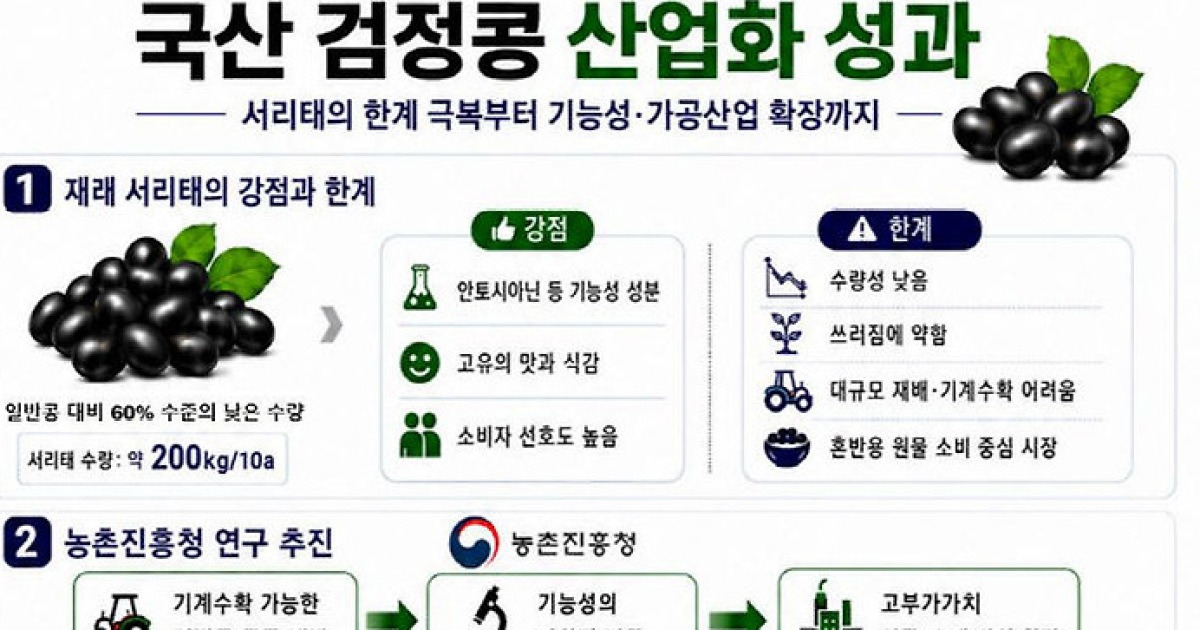
Boosting Domestic Black Soybean Industry with High-Yielding Cheongja 5 and Soman Varieties
The Rural Development Administration (RDA) has successfully scaled up the production of two domestic black soybean varieties, “Cheongja-5” and “Soman,” to bolster the national supply chain and meet rising consumer demand. According to the agency, these varieties are specifically engineered for mechanized harvesting and paddy field cultivation, marking a shift toward large-scale agricultural efficiency and expanded use in the food processing industry.
Did You Know? The “Cheongja-5” variety offers a significant yield advantage over traditional crops, producing approximately 343 kilograms per 10 acres—a 70% increase compared to the 200-kilogram yield typically seen with standard Seoritae soybeans.
Scaling Production Through Mechanization
The primary driver behind the adoption of these varieties is their compatibility with modern farming equipment. The RDA reports that “Cheongja-5” was developed to overcome the physical limitations of traditional Seoritae, particularly by improving suitability for combine harvesters. This shift has led to a rapid increase in cultivation, with the total area growing twelvefold from 314 hectares in 2020 to 3,703 hectares by 2025. Consequently, the estimated production value has climbed from 10.7 billion won to 127 billion won over the same period.

Commercial Applications and Future Growth
Beyond agricultural efficiency, these varieties are finding a foothold in the health and wellness market due to their unique nutritional profiles. Animal testing conducted by the RDA indicates that “Cheongja-5” may help improve conditions related to obesity and metabolic syndrome, while “Soman” has shown potential in inhibiting tumor growth. The commercial impact is already visible: the number of products utilizing “Cheongja-5,” such as soy milk and bean paste, increased from six types in 2023 to over 20 in 2025. One soy milk manufacturer reported a surge in sales from 200,000 units in 2020 to 5.5 million units in 2024 following the adoption of these beans.
Expert Insight: The transition toward varieties like “Soman”—which boasts high levels of isoflavones and anthocyanins—suggests a strategic pivot for the agricultural sector. By prioritizing functional traits, producers are shifting focus from commodity crops to high-value ingredients for specialized markets like senior-friendly foods and plant-based beverages, potentially stabilizing long-term economic returns for farmers.
What Happens Next
The RDA plans to continue expanding the industrial use of these soybeans through field verification projects. Current research is evaluating “Soman” for use in diverse products including natto, soy oil, and powdered health foods. Officials, including RDA manager Go Jong-min, have stated that the agency intends to develop further varieties focused on high protein content and reduced beany flavors. This strategy aims to solidify the foundation for a high-value domestic soybean industry capable of meeting future food production demands.
Frequently Asked Questions
Why are “Cheongja-5” and “Soman” considered better for large-scale farming?
Both varieties are specifically developed to be compatible with mechanized harvesting, such as combine harvesters, and are suitable for cultivation in paddy fields, which allows for more efficient, large-scale production compared to traditional varieties.
What health benefits have been associated with these varieties?
According to RDA animal studies, “Cheongja-5” has shown potential for improving obesity and metabolic syndrome, while “Soman” has demonstrated effects related to the inhibition of tumor growth.
How has the market responded to these new soybean varieties?
The market has seen substantial growth; for instance, the cultivation area for “Cheongja-5” expanded 12 times between 2020 and 2025, and a soy milk manufacturer using the variety saw sales increase from 200,000 units to 5.5 million units over four years.
How might the increased availability of these high-functional soybeans change the types of health products available to consumers in the near future?