
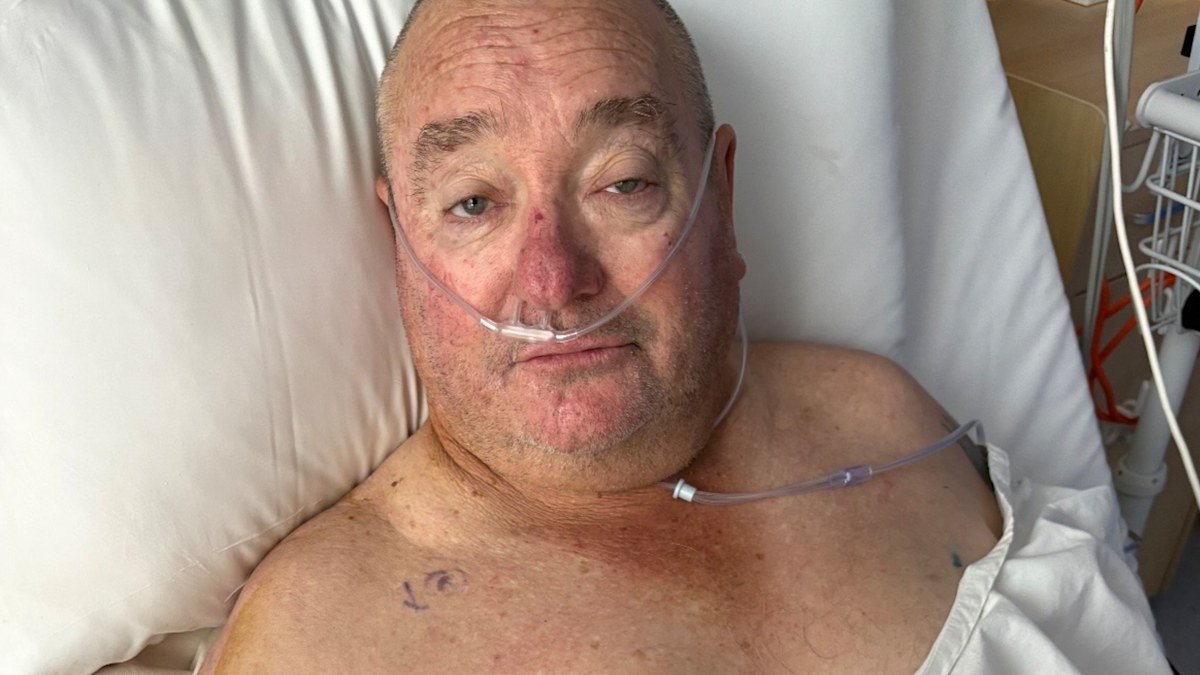
Breast cancer in men in Australia: Phil Smith had no idea men could get breast cancer – then it happened to him | Exclusive Interview
Phil Smith, 64, of Parkes, NSW, was diagnosed with stage 3 aggressive breast cancer after noticing blood stains on his clothing in December 2025. According to Breast Cancer Trials, male breast cancer accounts for approximately 1% of all cases, often diagnosed at advanced stages due to a lack of awareness and the absence of screening programs for men.
Why is male breast cancer often diagnosed at later stages?
Lack of awareness and social stigma contribute to delayed diagnoses in men. Dr. Nick Zdenkowski, a medical adviser and oncologist with Breast Cancer Trials, told nine.com.au that men may not self-examine or may ignore lumps because they assume there is no cause for concern.
The condition is frequently viewed as a “women’s cancer,” which Dr. Zdenkowski says can discourage men from seeking medical attention. This stigma may negatively impact men’s mental health and perpetuate a lack of public awareness.
Data from Breast Cancer Trials shows that half of all male breast cancer cases are diagnosed at stages 3 or 4. In 2025, men accounted for 207 of the 20,336 new breast cancer cases diagnosed in Australia.
What are the symptoms and risk factors for men?
Symptoms in men are similar to those in women, according to Dr. Zdenkowski. These include nipple discharge, abnormal lumps, persistent skin redness, nipple inversion, or lumps under the arm.

Phil Smith reported having no pain or lumps; his only symptom was discharge from the nipple. His wife, Donna, first noticed a pinprick-sized blood spot on his white undershirt in December 2025.
Genetic factors play a significant role. Smith tested positive for the BRCA2 gene, which increases the risk of breast, ovarian, prostate, and pancreatic cancers. Smith noted that his brother died of pancreatic cancer at age 55.
How is male breast cancer treated and managed?
Treatment often involves a mastectomy, though Dr. Zdenkowski noted that surgery in men can be more difficult due to limited breast tissue. This can make it harder for surgeons to achieve clear margins and may lead to asymmetry.
Smith underwent a mastectomy in March 2026. He suffered complications including dangerously low blood pressure and internal bleeding, which required a second emergency surgery to drain 800ml of blood from his chest.
Because his cancer was hormone-receptive, Smith was prescribed Tamoxifen to lower estrogen levels for at least five years. He did not require chemotherapy or radiotherapy as the cancer had not spread to his lymph nodes.
What happens next for those with the BRCA2 gene?
Individuals who test positive for the BRCA2 gene may require lifelong monitoring for multiple cancer types. Smith will now undergo regular check-ups for prostate and pancreatic cancer, alongside three-month screenings to ensure his breast cancer does not return.

The genetic discovery also affects family members. Because there is a 50-50 chance the gene is passed to children, Smith’s children may need to undergo genetic testing.
Public figures are also speaking out to reduce stigma. Actor Tyler Mane recently shared his diagnosis via Instagram, noting that his doctors initially dismissed the symptoms until his wife pushed for the removal of a lump.
Frequently Asked Questions
Can men get breast cancer if they have no lumps?
Yes. Phil Smith reported no pain or lumps; his only symptom was blood discharge from the nipple.
What is the BRCA2 gene’s impact on men?
The BRCA2 gene increases the risk of developing breast, prostate, and pancreatic cancers, as well as ovarian cancer in women.
Why is surgery more complex for men?
According to Dr. Nick Zdenkowski, the smaller amount of breast tissue in men can make it difficult for surgeons to achieve clear margins during surgery.
Do you think increased public awareness from celebrities could encourage more men to seek early screenings?