
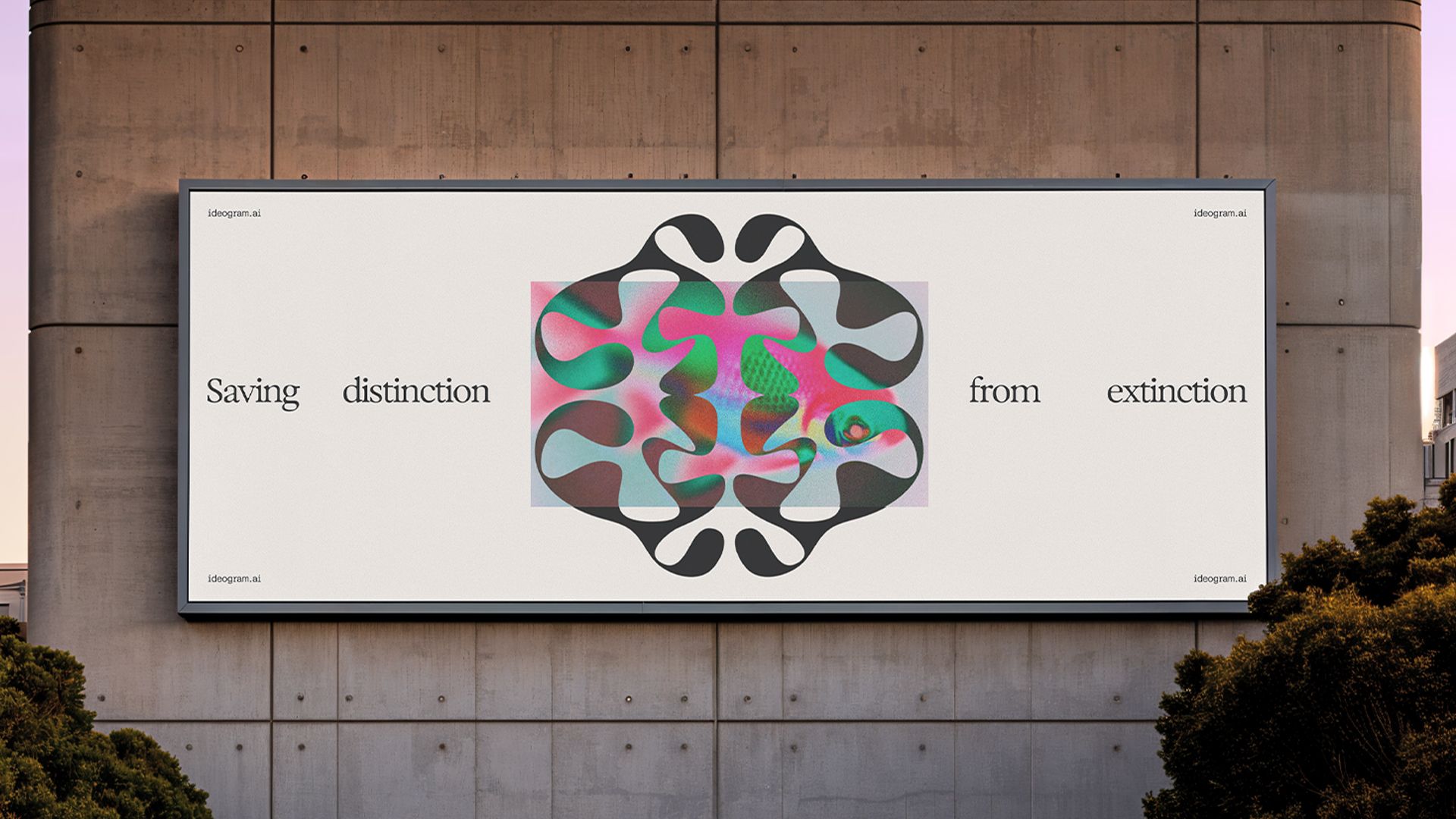
Cautious adoption, not blind enthusiasm”: how to build an AI rebrand in a sea of sceptics
The AI Paradox: Why Human Creativity is More Valuable Than Ever in a Generative World
For years, the design industry has been locked in a standoff with artificial intelligence. From the fear of job displacement to the ethical dilemmas of training data, the tension is palpable. Recent statistics paint a sobering picture: roughly 73% of designers express anxiety about their future, with nearly half fearing that manual production could be entirely obsolete within five years.
But a quiet shift is occurring. Rather than running from the machines, some of the most respected creative studios are choosing to lean in. The recent collaboration between the branding agency How&How and the AI platform Ideogram offers a masterclass in how to navigate this uncomfortable intersection of technology and human soul.
The Shift from Anxiety to “Cautious Adoption”
The industry is moving past the binary of “pro-AI” versus “anti-AI.” Instead, we are entering an era of cautious adoption. For Cat How, founder of How&How, the decision to take on a generative AI brief wasn’t about blind enthusiasm; it was about curiosity. By getting close to the technology, designers are discovering that the fear often stems from the unknown. Once you understand the edges of a tool, it stops being a looming threat and starts being an instrument for efficiency.
Why AI Brands Need Human Designers
Perhaps the most fascinating trend in 2024 and beyond is the “humanization” of AI branding. Even companies built on machine learning are realizing that their platforms feel cold, sterile, and unapproachable. They are turning to human agencies to inject what algorithms currently lack: taste, strategy, and instinct.
When an AI company hires a human studio to build its brand, it’s a tacit admission that while AI can generate assets, it cannot generate meaning. The future of design isn’t machine-made; it is human-directed. The most successful brands will be those that use AI to handle the “grunt work” while reserving the high-level creative direction for human intuition.
The Future: Craft, Instinct, and Strategic Thinking
Looking ahead, the role of the designer is evolving from “creator” to “curator.” The ability to prompt an image is becoming a commodity; the ability to build a brand identity that resonates with human emotion is becoming a luxury service. As we move forward, expect to see:
- Hybrid Workflows: Seamless integration where AI handles repetitive tasks, freeing up hours for deeper conceptual work.
- The Premium on “Human-Made”: As AI-generated content floods the internet, brands will lean into “human-certified” design to build trust with their audience.
- Ethical Design Standards: Studios will increasingly use “moral compass” frameworks—like the one utilized by How&How—to vet the projects they take on.
Frequently Asked Questions
- Will AI completely replace graphic designers?
- Highly unlikely. While AI can replace manual production tasks, it cannot replicate the strategic thinking, empathy, and contextual understanding that human designers bring to a project.
- How can designers overcome AI anxiety?
- The best way to combat fear is through education. By treating AI as a tool rather than a competitor, you can learn its capabilities and limitations, which effectively removes the mystery behind it.
- What is the most important skill for a designer in the AI age?
- Curatorial taste. As the barrier to creating visual content drops, the ability to discern what is “good,” “on-brand,” and “effective” becomes the primary value proposition for any creative professional.
What’s your take? Are you embracing AI in your creative process, or do you prefer to keep it at arm’s length? Let us know in the comments below, or sign up for our weekly newsletter for more insights into the future of the design industry.